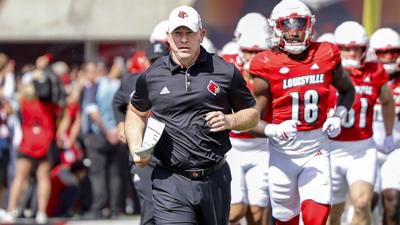



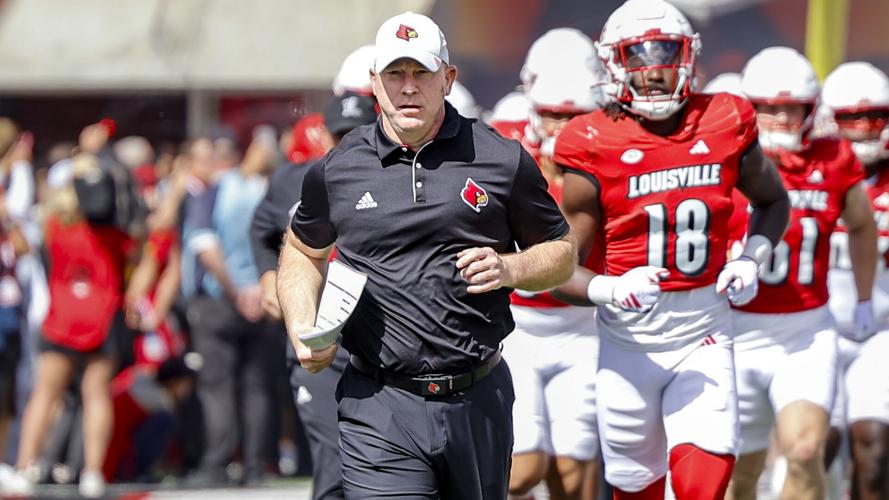
LOUISVILLE, Ky. (WDRB) — There are grand moments in college athletics. Stadiums shaking. Marching bands blaring. Coaches carried off on shoulders. And then there are the quiet victories. Like a contract finally getting signed.
Jeff Brohm has a new one now, and if it doesn't come with fireworks, it ought to at least come with a sigh of relief.
Because this thing had begun to feel like one of those family arguments that starts over Thanksgiving dinner and lingers until someone finally says, "Are we really still doing this?"
Louisville and its football coach were. Until Thursday. Now they aren't. And in the modern economy of college sports, that counts as progress.
Louisville | Kentucky | Indiana | Eric Crawford
The numbers are big, of course. They always are. You don't wander into this neighborhood without a few million dollars in your pocket and a calculator with fresh batteries.
The eight-year deal comes with base pay of $64.8 million and averages about $8.1 million a year, climbing from roughly $6.3 million at the start to about $7.8 million by the end. There are retention bonuses that start small and grow to a steady $1 million handshake every December.
There are incentives for winning, the kind that don't just pat you on the back, but follow you home and move into your base salary permanently.
Which is to say: winning still pays. And in this contract, it pays permanently. Those incentives for postseason advancement don't just hand out a check and walk away. They move into Brohm's base salary and stay.
Win enough, and he can climb toward $12 million a year — where the contract caps annual salary.
But the real story isn't the size of the contract. It's the shape of it.
This thing is built like a mortgage. The payments get heavier later.
That's not a coincidence. That's a confession.
Because right now, in college athletics, everybody is a little short on cash and a little long on ambition.
There are players to pay. There are rosters to rebuild annually, like used cars. There are assistants, analysts, strength coaches, nutritionists, and the guy who tracks sleep cycles who all need to be paid something that begins with a number higher than you think.
So Louisville and Brohm agreed to do what sensible people do when the bills are due today. They pushed some of the bill to tomorrow.
Somewhere in the middle of all this, there was a negotiation. You could tell by the language.
Josh Heird said both sides were "principled." Which is what people say right before they admit they were also stubborn.
And for a while, maybe they were. Long enough for the whole thing to feel unnecessary.
Because Brohm didn't suddenly become a better coach while the talks dragged on. He was already 28-12. He had already taken Louisville to an ACC Championship game. He had already beaten the kinds of teams you're supposed to beat if you're serious about this sort of thing.
The delay threatened to add unnecessary noise. And in recruiting, noise is expensive.
But in the end, this was never about whether Louisville wanted Brohm. And it wasn't really about whether Brohm wanted Louisville.
He's from here. He played here. He came back when he didn't have to, for less money than he was offered elsewhere, which is the closest thing to a romantic gesture this business allows.
But romance has its limits. Even in Louisville.
Because somewhere out there is always a school with a checkbook and a wandering eye and an extra $12 or $13 million lying around, and even the hometown hero has to at least listen when that doorbell rings.
That's not disloyalty. That's the market. So Louisville did what it had to do.
It paid him. It structured the deal so it could still pay everybody else. It made the commitment real enough to matter and flexible enough to survive.
In other words, it behaved like a program that understands the game it's playing.
Which, in 2026, is not always a given.
Copyright 2026 WDRB Media. All Rights Reserved.


