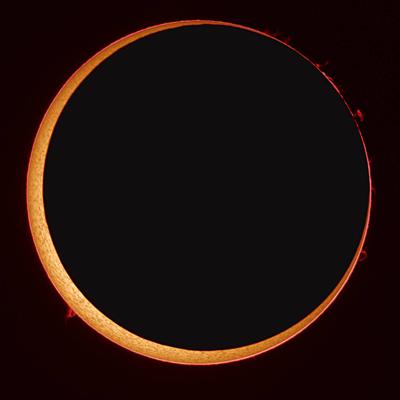
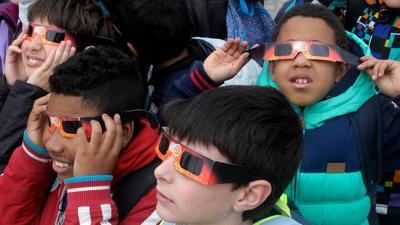
The annular solar eclipse happened Saturday afternoon, and for many of you the view was blocked by clouds. However some folks in our area were lucky enough to see the eclipse and capture a photo! Click through the photos below to take a look:
Annular Solar Eclipse Seen in Our Area
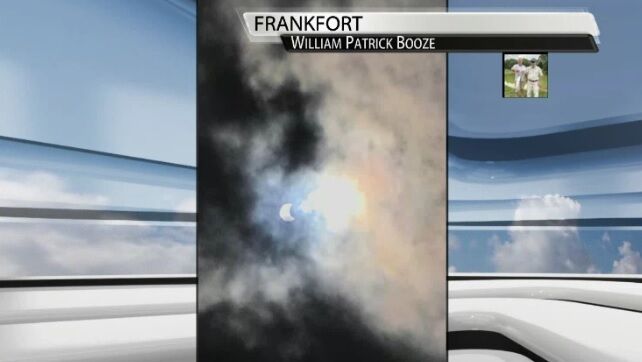
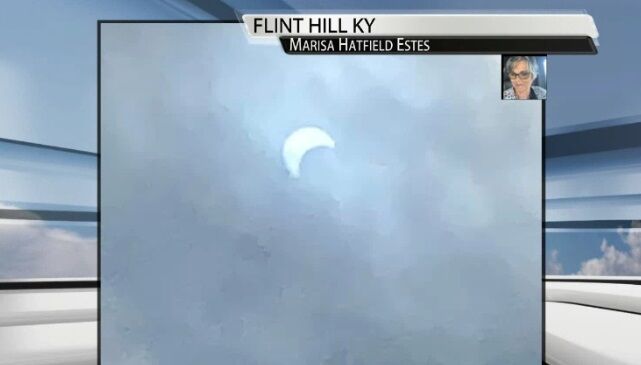
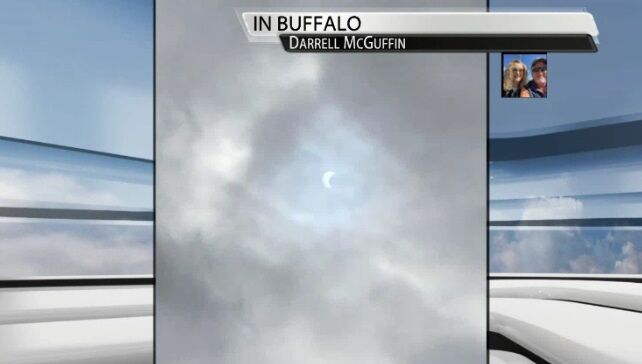
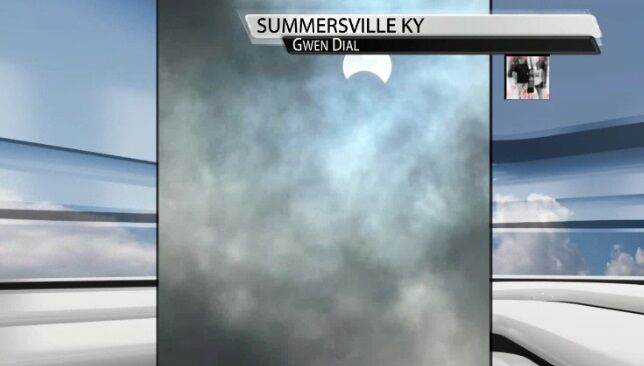
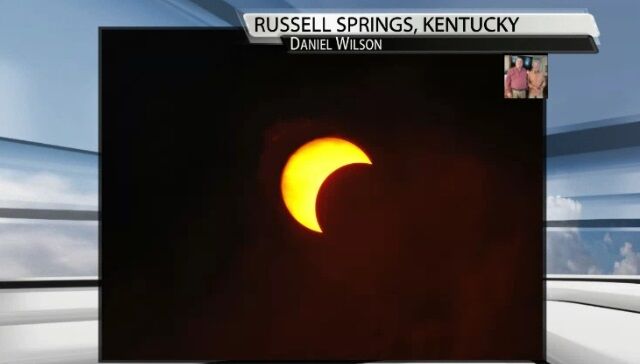
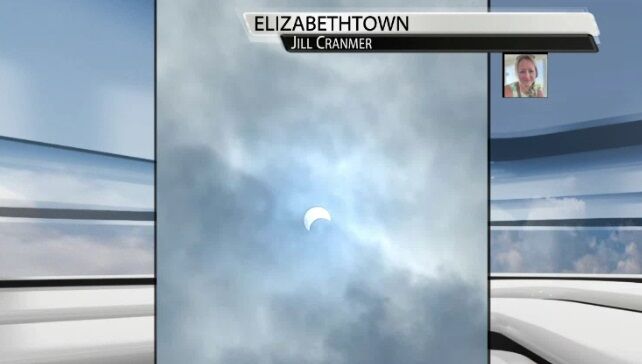
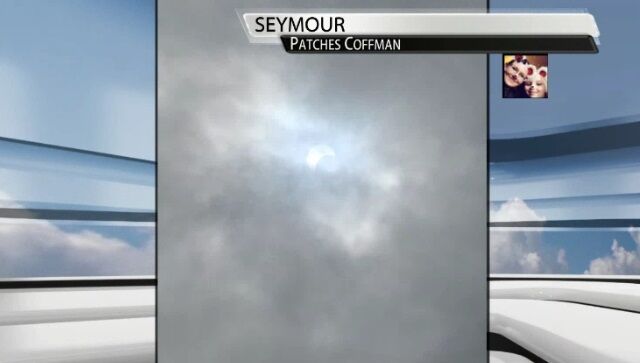
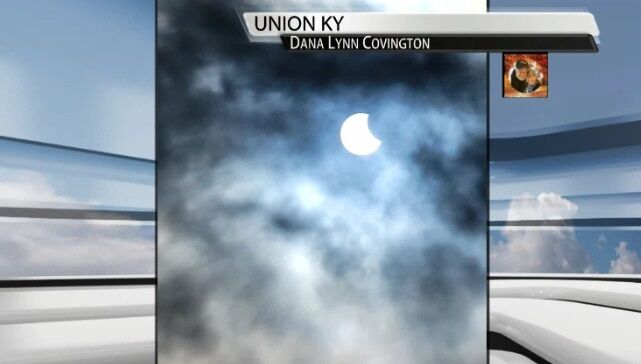
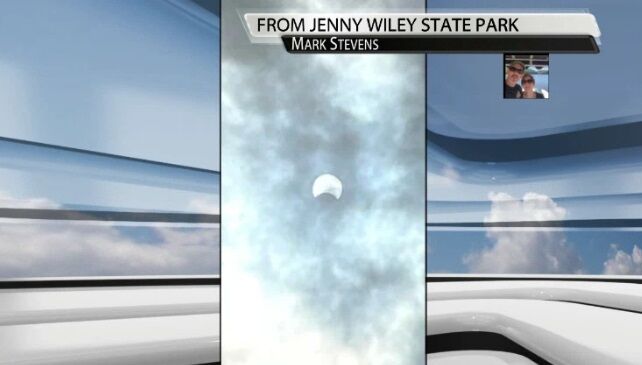
"Annular" is a particular type of solar eclipse. According to NASA, "an annular solar eclipse happens when the Moon passes between the Sun and Earth, but when it is at or near its farthest point from Earth. Because the Moon is farther away from Earth, it appears smaller than the Sun and does not completely cover the Sun. As a result, the Moon appears as a dark disk on top of a larger, bright disk, creating what looks like a ring around the Moon." That's what happened Saturday, and it's different than the total solar eclipse we will see in our area next April. "A total solar eclipse happens when the Moon passes between the Sun and Earth, completely blocking the face of the Sun (...) The sky will darken, as if it were dawn or dusk. Weather permitting, people in the path of a total solar eclipse can see the Sun’s corona, the outer atmosphere, which is otherwise usually obscured by the bright face of the Sun." An eclipse would be called "partial" when only part of the sun is blocked. That happens, depending on your location, in either kind of eclipse (annular or total).


