
In the last week there have been claims on social media that someone is able to predict an upcoming earthquake, and some of you have even asked whether that is possible. Especially considering how close we are to the New Madrid fault and how long it's been since the last big earthquake, that's important to know. Thanks to the U.S. Geological Survey for this great article explaining why earthquake predictions fail.
First, predicting an earthquake is not like predicting weather. The USGS defines an earthquake prediction has having three specific elements: 1) the date and time, 2) the location, and 3) the magnitude. The USGS has this to say about people or services who claim to be able to predict earthquakes:
"Yes, some people say they can predict earthquakes, but here are the reasons why their statements are false:
They are not based on scientific evidence, and earthquakes are part of a scientific process. For example, earthquakes have nothing to do with clouds, bodily aches and pains, or slugs.
They do not define all three of the elements required for a prediction.
Their predictions are so general that there will always be an earthquake that fits; such as, (a) There will be a M4 earthquake somewhere in the U.S. in the next 30 days. (b) There will be a M2 earthquake on the west coast of the U.S. today."
When you see these "predictions," remember the expression that a broken clock will be right twice a day. Earthquakes happen more often than you might be aware of, so suggesting an earthquake will happen in a region in the next month or few months is not a skilled or specific forecast. Only getting one or two pieces right of that three-part prediction is not an accurate forecast. "Neither the USGS nor any other scientists have ever predicted a major earthquake. We do not know how, and we do not expect to know how any time in the foreseeable future. "
So what can we do? Scientists can give probabilities of an earthquake happening based on previous data, but that's not the same as a prediction of an earthquake occurring. Scientists can also pinpoint which fault lines are likely to produce another earthquake in the future based on how long it's been since the last quake and how much strain is built up on that plate or fault. They can get close on the location and may even be able to estimate possible magnitude, but the time and date of the eventual quake is the problem. That is the part we can't do yet.
The article linked above also has a great explanation about strange things some people might say are a precursor to an earthquake happening (like strange animal behavior) and why those also don't help forecast earthquakes.
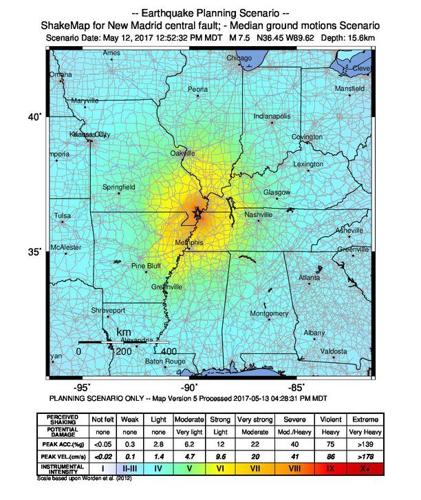
Here's the real map of impacts for areas near the New Madrid Fault if a 7.5 magnitude earthquake occurred along the fault.

Image Credit: USGS
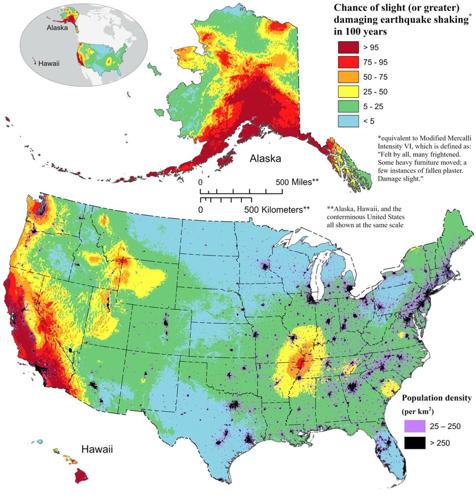
Here's another map from the trusted source of the USGS that shows where the "Chance of slight (or greater) damaging earthquake shaking in the next 100 years" are possible:

Image Credit: USGS
Reliable Sources
Let me (Bryce) just add this as well:
Be careful where you're getting your "information" from when it comes to weather and natural disasters. Tik Tok creators especially, that do not have a degree or job in a weather-related field including natural disasters like Earthquakes, are not reliable sources. Many use scare tactics in order to get views/clicks. For more information on Earthquakes, you'd want to turn toward an actual Seismologist.
Degreed meteorologists like those that work for TV stations or for the NWS and other private organizations of course are reliable for weather information, but just be sure to do your research on who is spewing this information out to you and whether or not they are reliable.


