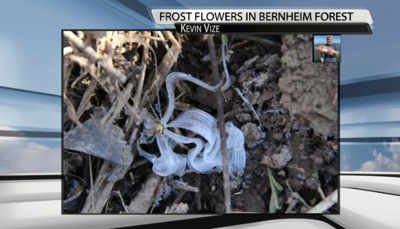

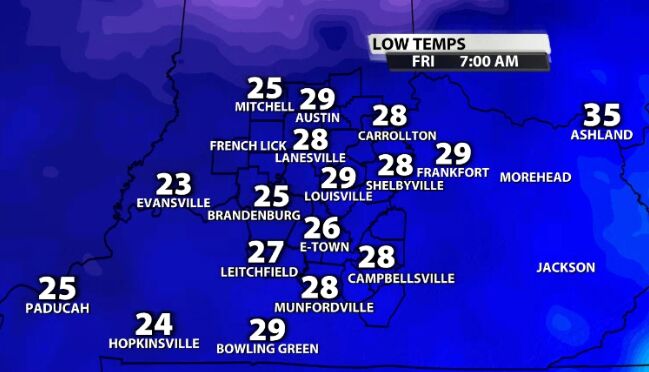
With air temperatures down in the 20's this morning and the ground being wet, but not frozen, we saw some frost flowers in our area! I have to give a huge shout-out to Kevin for sending us the picture below of the frost flower in Bernheim Forest. If you ever see something like this, please send us your pictures so we can show them on TV!
What is a frost flower and where do you look?
The National Weather Service put together a very cool article about Frost Flowers. This rare phenomena is explained in an article by Glen Conner, a state Climatologist Emeritus for Kentucky:
Frost flowers are thin layers (perhaps credit card thickness) of ice that are extruded through slits from the stems of white or yellow wingstem plants, among others. Their formation requires freezing air temperature, soil that is moist or wet but not frozen, and a plant's stem that has not been previously frozen. (Practically speaking, a once per year event, although not all individuals produce frost flowers on the first day of good conditions).
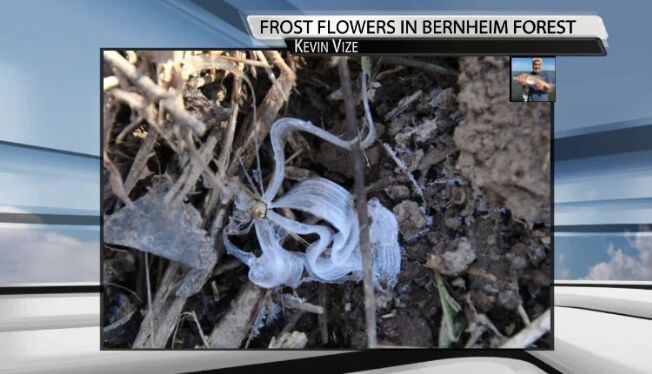
The water in the plant's stem is drawn upward by capillary action from the ground. It expands as it freezes and splits the stem vertically and freezes on contact with the air. As more water is drawn from ground through the split, it extrudes a paper thin ice layer further from the stem. The length of the split determines if the frost flower is a narrow or wide ribbon of ice. It curls unpredictably as it is extruded, perhaps from unequal friction along the sides of the split, to form "petals". These flowers, no two of which are alike, are fragile and last only until they sublimate or melt.
To find them, look for tall weeds, especially in locations that are seldom mowed. They seem to like the same habitat purple ironweed, blackberrries and wingstems with the actual frost flowers forming on the wingstems.


