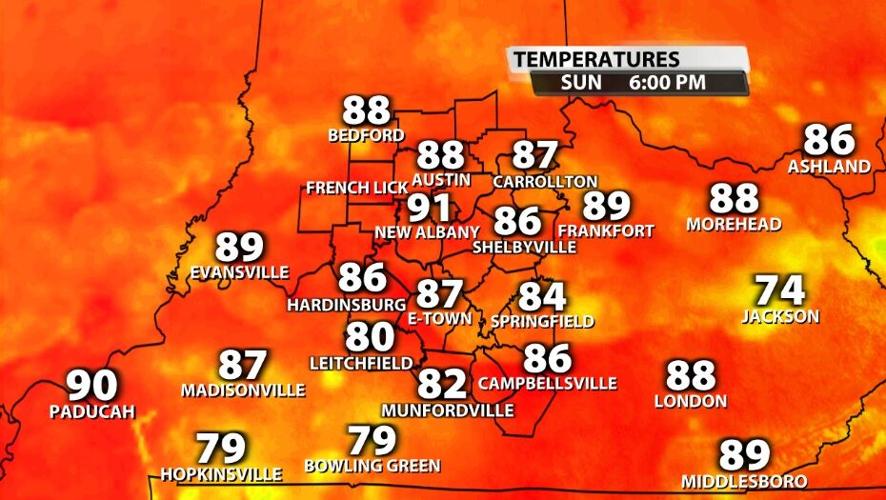
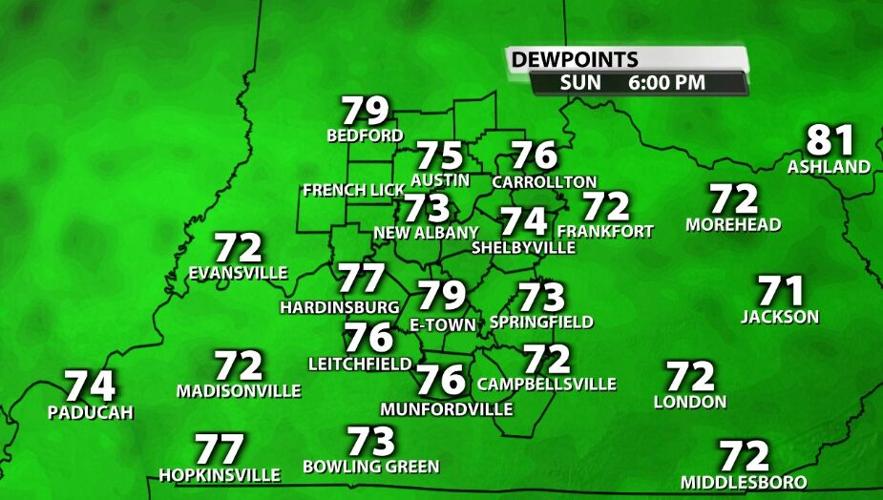
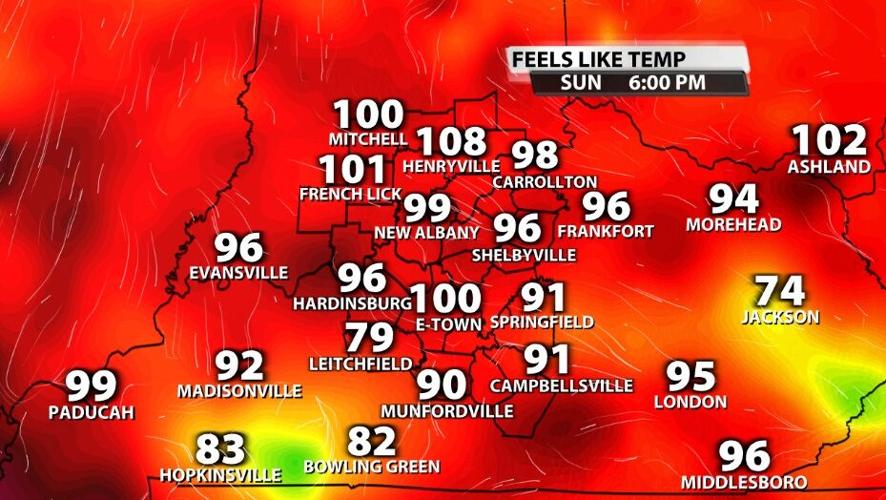
Sunday was the first day in a while we've had to talk about the heat index being so much higher than the temperature, and there was a lot of confusion and misinformation about it on social media. Today we will look at how heat index is calculated, what it means, and how you should use that information.

Have you ever heard someone say "it's a dry heat," meaning the high temperature doesn't feel as bad because the humidity is so low? Heat index is also called "apparent temperature" or "feels like temperature" because it's trying to tell you what the air actually feels like to your body. Regular old temperature only measures how much energy (heat) is in the air; it's not meant to measure how taxing the air will be on your body if you spend time outside. That's what the heat index tries to do - give you a better idea of how uncomfortable the air feels. To do that it needs to look at more than just the air temperature, though that's part of the equation.

You'll notice here at WDRB we rarely talk about the relative humidity percentage; we use dewpoint a lot more often because it's a better measure of how the humidity in the air affects you. If the air temperature is 90ºF and the dewpoint is 65ºF, the relative humidity is 44% and the heat index is 92ºF. If the air temperature is 90ºF and the the dewpoint is 75ºF, the relative humidity is 62% and the heat index is 102ºF. 62% RH doesn't sound miserable, but a "feels like temperature" of 102 when the thermometer only says 90 does sound pretty miserable. Thanks to this page for doing the RH calculation to save me some time. Relative humidity is also harder to calculate than most people realize. It's not just the temperature divided by the dewpoint times 100. There's an equation you have to solve two different ways, then plug your answers into a third equation. It's in that second link above.

Why does any of this matter? When your body gets too hot, it cools itself by sweating. The sweat evaporates, a process that steals heat away from the atmosphere around it to make the phase change from liquid to gas. As your sweat evaporates, it cools your body. But if the air already has a lot of moisture in it (high dewpoint), the sweat won't evaporate as efficiently so you won't cool as quickly or completely.
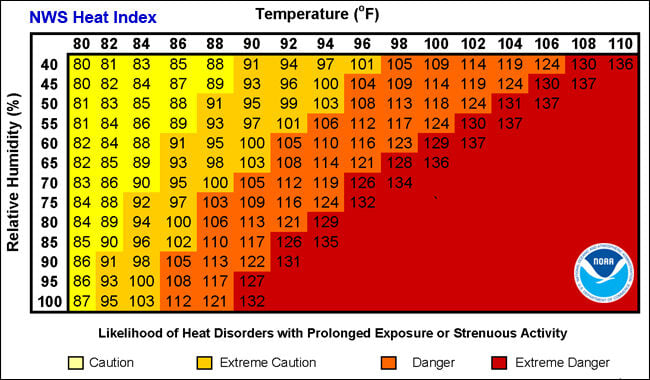
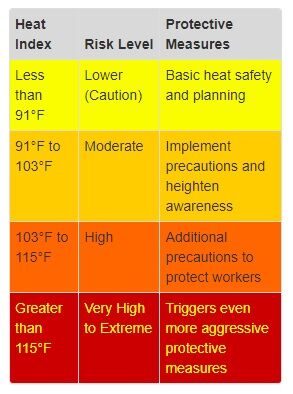
The table above from the National Weather Service shows the heat index based on the temperature and dewpoint (along the sides). NWS adds, "It surprises many people to learn that the heat index values in the chart above are for shady locations. If you are exposed to direct sunlight, the heat index value can be increased by up to 15ºF." If you know the temperature and dewpoint, you can plug those numbers in here to find the exact heat index. OSHA (Occupational Health and Safety Administration) even has guidelines for outdoor workers based on heat index values, so these are important numbers to watch. The table below is the guidance from OSHA's website about how to adjust work conditions or expectations based on high heat index values.
The air will feel like 100º+ again this week, and Thursday could be the hottest day we've had so far this year! As the humidity climbs again, we will keep sharing the "feels like temperature" with you.


