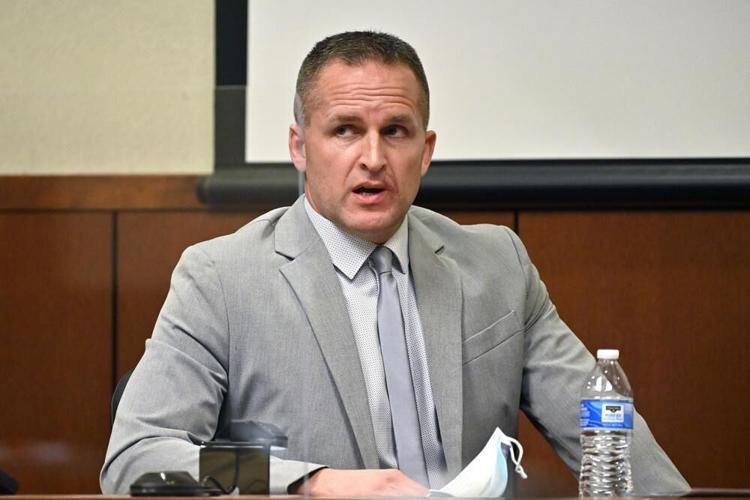
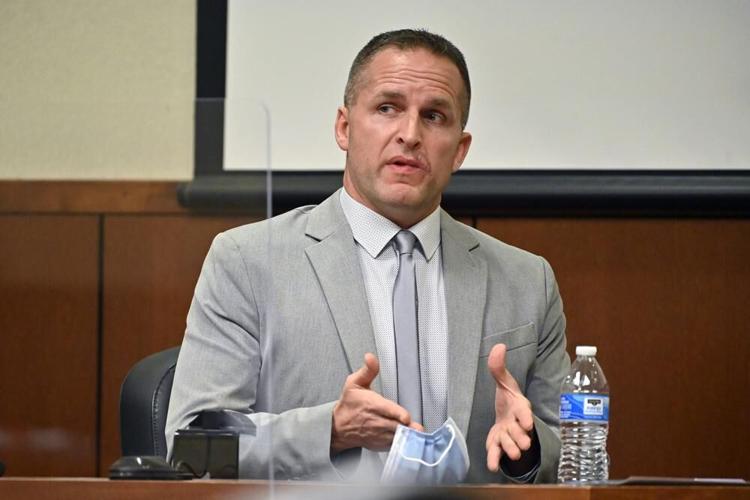


LOUISVILLE, Ky. (WDRB) -- Former Louisville police detective Brett Hankison testified Wednesday that he feared his fellow officers were being “executed” by a person who fired at them after police broke down the door and entered Breonna Taylor’s apartment to serve a search warrant.
Hankison said as police entered the home, he saw a “large muzzle flash” — which he believed at the time came from an assault rifle — as well as a figure in a shooting position. Sgt. John Mattingly, a friend of Hankison’s who is now retired, immediately went down, yelling that he had been shot.
"I knew Sgt. Mattingly was down and I knew they were trying to get to him,” Hankison told jurors on the fifth day of his wanton endangerment trial. “And it appeared to me that they (police) were being executed with this rifle. ... I returned fire."
Hankison repeatedly choked up while describing the events of the night Taylor was killed, March 13, 2020, but stood firm that he did nothing wrong.
“Absolutely not,” he told the jury, saying he "clearly identified an active threat" and was “protecting” fellow officers.
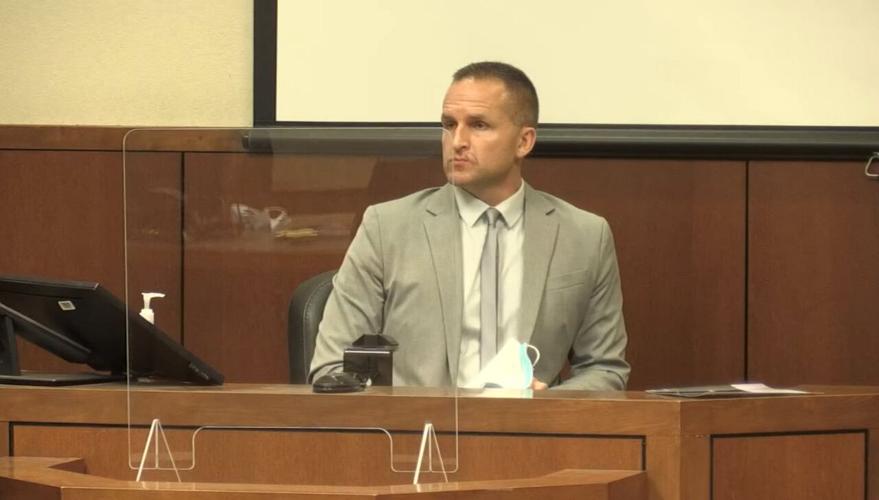
Hankison was the defense's main witness and finished testifying Wednesday afternoon. The case will be presented to a jury for deliberation Thursday after closing arguments.
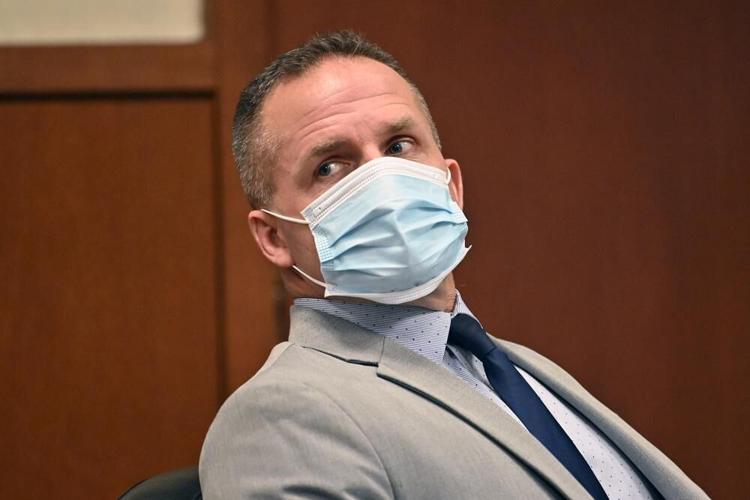
During questioning by his attorney, Stew Mathews, Hankison often turned to face jurors when answering. Several times, he teared up and had to compose himself before answering.
While Hankison believed officers were in a "firefight" with someone armed with an rifle, he was wrong in this assessment. Taylor’s boyfriend, Kenneth Walker, fired his 9mm one time, hitting Mattingly in the leg, saying later he believed the couple was being robbed.
Hankison, 45, is charged with three counts of wanton endangerment for firing into a neighbor's apartment during the botched raid. Taylor, a 26-year-old Black woman, was fatally shot by two other officers. He faces one to five years in prison for each count.
No drugs were found in the home. The city of Louisville paid $12 million to Taylor's family and implement numerous reforms in the police department to settle a wrongful death lawsuit. No one was charged in her death.
During his testimony, Hankison twice said he was “shook” upon learning certain information after the shooting.
First, Hankison said officers were told that Taylor was in the apartment alone and upon learning that Walker had fired and she had been killed, Hankison said, “that kind of shook me. There was only supposed to be one person in that apartment and now there was allegedly a girl dead inside and that's not why we were there.
"We were there to get documents and/or items related to a boyfriend that was drug trafficking."
And he subsequently learned that among his 10 shots, some went into a neighboring apartment, nearly hitting one man while a woman and small child were nearby in bed. Hankison said he didn't even know there was an apartment next to Taylor's where he was firing.
“I felt horrible,” he said. After watching the couple, Cody Etherton and Chelsey Napper, testify during this trial, Hankison said "he felt sincere empathy for them."
"... That was something, if my daughter was shot at, or if bullets came into our house, that would be very concerning and I apologize to her for that."
In an interview Wednesday night, Louisville attorney and former assistant U.S. attorney Brian Butler said Hankison didn't have to testify in his own defense but had something to prove to the jury.
"(He wanted to ) try to bring the jury back to that moment in time and about how chaotic and how fast-paced and how scary it was," Butler said.
The world is paying close attention to this case because of the months of protested that erupted after Taylor's death, but Butler said that testimony won't determine whether Hankison is convicted, acquitted or if the case will end in a hung jury.
"Jurys aren't there to decide greater societal issues," Butler said. "That's for all of us to decide, our legislator and our governors to decide. ... I anticipate this jury is going to decide this case best on what they heard in that courtroom."
Hankison described the entire incident as a tragedy and said Taylor “didn’t need to die that night.”
The prosecution objected and Hankison did not elaborate.
Under cross-examination, Assistant Attorney General Barbara Whaley repeatedly questioned Hankison on where he was positioned and what he knew when he was shooting from outside Taylor's apartment.
"What were you aiming at?" she asked.
Hankison said he targeted the muzzle flashes where he had initially seen the shooter when police first entered the apartment.
She also hammered Hankison for immediately leaving the apartment door when shots were fired, noting he left fellow officers behind.
"The other officers stayed in the breezeway and you left?" she asked.
"That's my understanding," Hankison responded, though he later said he felt he needed to get to a safe place to return fire and help other officers.
After Mattingly was shot, Hankison moved around a corner and away from the front door, saying he wanted to get out of the "fatal funnel."
"You want to get out of that area as quickly as possible," he said.
He believed his colleagues were still getting shot at from inside so he fired multiple bullets from outside in the direction of the apartment where he saw muzzle flashes, aiming toward a hallway through sliding glass doors and a bedroom window.
"After I fired through that bedroom window, the threat stopped," he said. "All firing ceased at that time."
Attorney General Daniel Cameron found that Walker fired a single shot from a 9mm pistol. It was the only shot he fired, according to Walker’s own statement and Cameron’s conclusions.
Hankison was fired a few months after the early morning March 13, 2020, narcotics raid for firing “blindly” into Taylor's apartment.
Matt Gelhausen, a firearms instructor with Louisville police, said Tuesday that officers are taught to make sure a perceived threat is isolated “from any others that are in close proximity.”
During opening statements last week, prosecutors emphasized to jurors that the case is not about the killing of Taylor or police decisions that led to the raid. They said the focus should be on Hankison’s shots and the harm they nearly caused.
Whaley asked Hankison if he had was able to identify an active threat from outside looking into Taylor's bedroom window. He said he did, as muzzle flashes illuminated the shooter.
And when asked if he was worried he would accidently shoot a fellow officer, Hankison told her "absolutely not."
Related Stories:
- Breonna Taylor neighbor: police raid 'so scary and crazy'
- Alleged victim testifies in Brett Hankison trial that police were 'reckless' night of Breonna Taylor raid
- Former LMPD chief testifies Brett Hankison was 'physically shaking' following Breonna Taylor raid
- Jury visits Breonna Taylor's apartment in trial for officer accused of firing 'wildly'
Copyright 2022 WDRB Media. All Rights Reserved.


