LOUISVILLE, Ky. (WDRB) -- For the second time, a wrongful conviction lawsuit against a corrupt former Louisville police detective was thrown out because a pardon by ex-Kentucky Gov. Matt Bevin did not make clear the person was innocent.
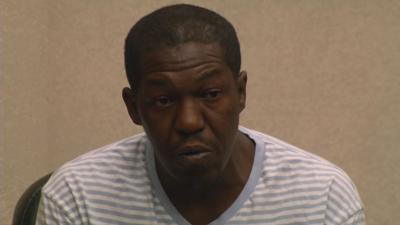
Keith West had filed suit against former Detective Mark Handy, who pleaded guilty in March of last year to tampering with physical evidence in West’s two 1997 manslaughter convictions. Bevin pardoned West before he left office in late 2019.
But Handy’s lawyers argued that Bevin’s pardon does not mention that West is innocent or that the conviction should be erased, an argument that was used successfully in a similar case last year.
And U.S. District Court Judge Greg Stivers agreed, ruling Tuesday that the pardon issued by Bevin did not invalidate West’s conviction.
“West’s pardon from Governor Bevin makes no reference to his guilt or innocence,” Stivers ruled. “A general gubernatorial pardon in Kentucky does not necessarily indicate that the recipient is innocent.”
And Stivers referenced a federal judge’s dismissal of a similar lawsuit last summer brought by Johnetta Carr, who sued the city and several Louisville police officers after Bevin pardoned her in December 2019.
Despite Carr’s claims that there is plenty of evidence pointing to her innocence in the 2005 slaying of her boyfriend when she was 16, Bevin’s pardon simply restored her rights as a citizen and noted that Carr was a good person and “God clearly has his hand on her.”
In July, U.S. District Judge Charles Simpson declined “to find that the mere issuance of a pardon, without language that questions or discredits a judicial finding of guilt, appropriately invalidates a criminal conviction,” according to the ruling.
In the West case, Bevin wrote he was granting a “full and unconditional pardon” and restoring his rights as a citizen.
Both dismissals have been appealed.
Elliot Slosar, a Chicago-based attorney who represents West and Carr, has said the law regarding whether a lawsuit can be filed based on a pardon is largely settled in other parts of the country and dismissing the Carr case was simply a way for the Sixth Circuit to create its own precedent.
While pardons have previously been used as proper grounds for wrongful termination lawsuits, in those instances governors cited evidence, such as DNA test results, or specifically ordered the conviction be erased or set aside, according to Simpson’s ruling.
In West and Carr’s pardons, like many of the former governor’s pardons, Bevin does not discuss the cases much at all.
Bevin’s more than 650 pardons or commutations drew national criticism, rebuke from both Democrats and Republicans and prompted an FBI investigation.
Handy also pleaded guilty to perjury in the wrongful conviction of Edwin Chandler, who spent nearly a decade in prison for a murder he didn't commit after Handy lied to a jury in his 1995 murder trial.
While Handy was sentenced to one year in prison, he spent only a few weeks incarcerated before the Kentucky Department of Corrections moved him to its electronic monitoring program last year.
West served about seven years in prison and “lost decades of his life due to the egregious misconduct of (former Det. Mark Handy) and others in the Louisville Police Department," according to his suit.
The lawsuit argues that Handy taped over recordings of two eyewitness statements and coerced them into specific testimony prior to trial.
Copyright 2022 WDRB Media. All Rights Reserved.


