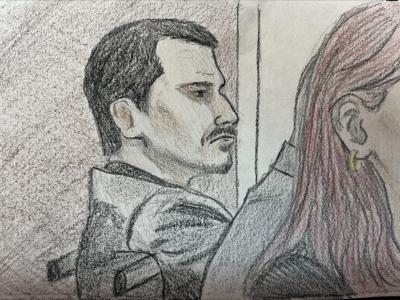


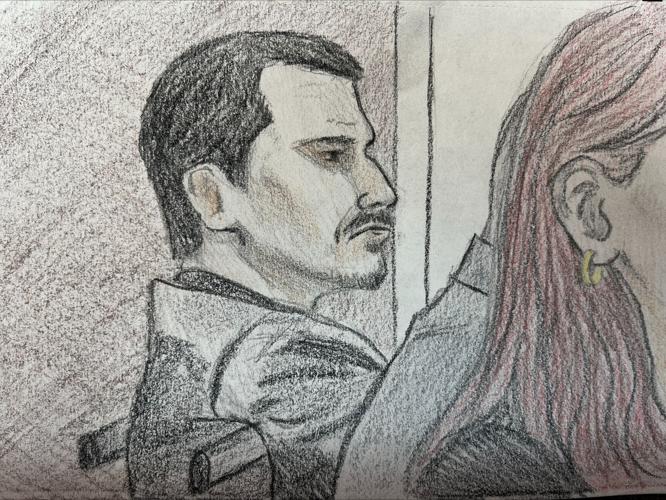
LOUISVILLE, Ky. (WDRB) – Joseph Lawson, one of three men convicted in the murder case of Crystal Rogers, has asked a judge throw out the jury’s guilty verdict or grant him a new trial.
Lawson, who last week was convicted of conspiracy to commit murder and tampering with physical evidence, should not have been tried with Brooks Houck, who was dating Rogers and the last person to see her alive, according to a motion made public Wednesday.
The trial included recorded statements Houck made to investigators but, given Houck didn’t testify during the trial, provided Lawson no way to defend himself against these statements, attorneys Kevin Coleman and Bobby Boyd wrote.
"The overwhelming amount of evidence presented at trial was not otherwise admissible in (Joseph Lawson's) trial and clearly had a spillover effect," according to the appeal. Lawson was denied "his right to have a fair determination of his culpability free from the taint of having been tried jointly with Brooks Houck."
On July 8, a Warren County jury found Houck and Lawson guilty in the 2015 murder of Crystal Rogers and recommended the maximum prison sentences.
The jury of six men and six women found Houck, 43, guilty of murder (principal or accomplice to the crime) and complicity tampering with physical evidence.
The jury recommended maximum sentences for both men: life in prison plus five years for Houck and 25 years for Lawson. Both would have to serve 85% of their sentence before being eligible for parole.
A final sentencing hearing will be held Aug. 21. The motion made by defense attorneys Kevin Coleman and Bobby Boyd asks that their motion be heard at or before the sentencing date.
Steve Lawson, Joseph's father, was given his own trial in May and was convicted of the same charges as his son. He was sentenced to 17 years in prison. Attorneys for Steve Lawson have already appealed his conviction.
Rogers, a 35-year-old mother of five from Nelson County, was last seen alive during the Fourth of July weekend in 2015 with her boyfriend, Houck.
Days later, her car was found abandoned — still running — on the side of the Bluegrass Parkway. Her purse and other belongings were inside. Despite years of searching, she's never been found.
In their motion, the defense attorneys argued Judge Charles Simms III erred in not striking jurors who had knowledge of Steve Lawson’s trial.
"S. Lawson's conviction was an elephant in the room the entire trial," according to the appeal.
The trials were moved from Nelson County to Warren County because of the massive amount of media publicity the Rogers case has received in the last decade.
But after Steve Lawson's trial in Bowling Green, prospective Warren County jurors who may not have known much about the Rogers case were tainted by the conviction of Lawson, the defense claims.
And Joseph Lawson was unable to bring up the inconsistencies Steve Lawson provided to investigators – so many that prosecutors withdrew a promise of immunity if he was honest with investigators.
During his trial, Steve Lawson acknowledged he was guilty of tampering with physical evidence for helping his son move Rogers' vehicle after she disappeared. Joseph Lawson drove Rogers' car, and his father picked him up when the vehicle had a flat tire, leaving it on the side of Bluegrass Parkway, he testified.
Before they left, Steve Lawson said he reached into Rogers' car and moved the driver's seat forward — because Rogers was short — and removed a miniature Louisville Slugger bat his son carried around regularly. At his son's urging, he called Brooks Houck at about midnight and told him the job was done, Steve Lawson said. He previously denied to investigators he had any involvement in moving the vehicle.
Since he was tried separately, Steve Lawson's testimony was not allowed to be shown to jurors in this trial.
Steve Lawson was mentioned during the most recent trial far more than Joseph Lawson.
"His name didn't even come up until the third day of trial," Boyd told the jury during his closing arguments on July 7. "You probably forgot we were on trial the last couple weeks. I've never been in this situation before."
Joseph Lawson’s fingerprints were not found on the steering wheel of Rogers’ vehicle. No DNA of either of the Lawson’s was found in the car. A fingerprint found on Rogers’ phone did not belong to either man.
Boyd used his closing arguments to say only a handful of witnesses even mentioned Joseph Lawson and most of those weren't credible, as they were bullied, coerced and threatened by Kentucky State Police investigators. He called two of the witnesses who mentioned Joseph Lawson — Charlie Girdley and Heather Snellen — two of the most untrustworthy witnesses he's ever seen.
The appeal argues the judge erred in allowing Snellen’s testimony that she overheard Steve and Joseph Lawson talking about moving a body with a skid steer at the Houck farm.
Investigators repeatedly searched the farm but never found evidence of a crime. Snellen admitted to being on drugs when she heard the conversation and was coerced by Kentucky State Police, the defense argued. Her story changed multiple times.
The appeal argues the most concrete evidence presented was phone records showing Joseph Lawson was nowhere near the area where Rogers' car was found on the Bluegrass Parkway.
During the trial, the defense - and an expert witness - argued Steve Lawson was more likely to have been on Boston Road, which runs parallel to Bluegrass Parkway, rather than up on the freeway.
Detective Tim O'Daniel, a digital forensic expert with the Louisville Metro Police Department, testified during the first week of trial he was never given access to Joseph Lawson's phone like he was given for Brooks Houck and Steve Lawson.
Joseph Lawson called his father three times between 11:06 p.m. July 3 and 12:03 a.m. July 4, and not one of those calls showed up in the cellphone tower data, according to trial testimony.
But in his closing, prosecutor Shane Young told jurors "O’Daniel told you it’s very possible (Steve and Joseph Lawson) were going down the Bluegrass."
In fact, the defense wrote in its motion, the detective actually said it was “somewhat possible.”
During the trial, Boyd went as far as to call the case "a witch hunt" against Joseph Lawson in which there is no DNA evidence, no witnesses tying him to the case and phone records that clear him.
"It's shocking to me," Boyd said.
He implored jurors to use their common sense, look at the phone data, the changing witness statements and "send Joey home."
In the motion filed in Nelson Circuit Court, the defense argues that Joseph Lawson should have been given a directed verdict (or acquittal) by the judge after the prosecution finished its case.
"The government failed to meet its burden of providing a mere scintilla of evidence of an agreement and/or plan" to kill Rogers or stage a crime scene, according to the appeal.
The story will be updated.
Related stories:
Brooks Houck's mother used burner phone when Crystal Rogers was killed, state
Focus shifts to Tommy Ballard murder after verdict in Crystal Rogers case
Brooks Houck and Joseph Lawson found guilty of all charges in Crystal Rogers' murder
Prosecutor calls Brooks Houck a murderer: Crystal Rogers 'left with him' but 'didn't come home'
Copyright 2025 WDRB Media. All Rights Reserved.


