


CLARK COUNTY, Ind. (WDRB) -- As Indiana's abortion ban law is debated in court, some legislators are working to expand access to birth control.
While Indiana's abortion ban is on hold pending a decision from the state Supreme Court, lawmakers are looking to bolster services that would prevent those pregnancies in the first place.
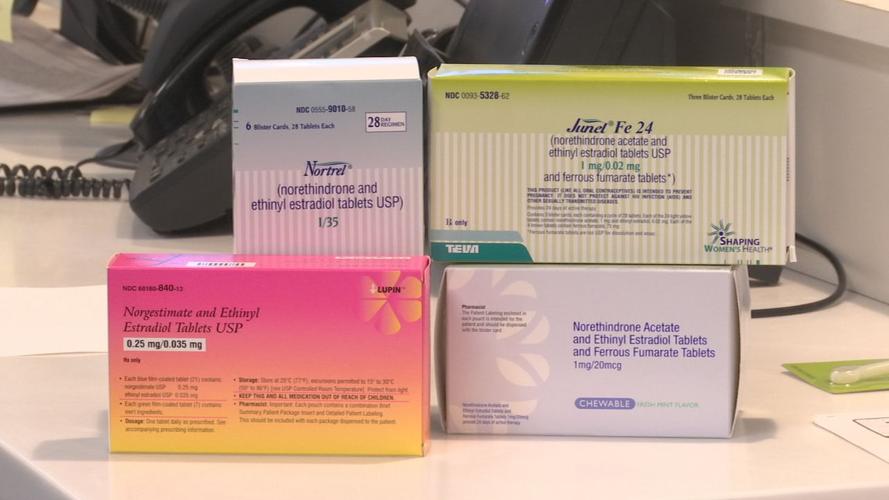
A bipartisan bill working its way through Indiana's House would allow pharmacists who meet certain requirements to prescribe birth control.
"We have dismal statistics for maternal mortality, infant mortality and, oftentimes, poor outcomes relate to poor preparation," said Democratic Rep. Rita Fleming.
Fleming, a former OB-GYN who has delivered thousands of babies, believes those poor outcomes often occur with unplanned pregnancies.
According to the Centers for Disease Control and Prevention (CDC), Indiana's infant mortality rate in 2020 was 6.75 infant deaths per 1,000 live births, or 531 deaths. The Indiana Department of Health's Maternal Mortality Annual Report for 2022 said of the reviewed pregnancy-associated deaths in the state in 2020, 79% were preventable.
Additionally, the report said the pregnancy-associated mortality ratio in Indiana in 2020 was 117.1 per 100,000 live births. The pregnancy-related mortality ratio in 2020 was 22.9 per 100,000 live births.
"Someone not planning a pregnancy, not being prepared for a pregnancy, and much of that unpreparedness occurs because of lack of access to contraceptives for women," Fleming said.
Fleming said the latest Pregnancy Risk Assessment Monitoring System (PRAMS) study from the Indiana Department of Health shows 53% of pregnancies, more than half in the state, are unplanned. She said giving pharmacists the ability to prescribe birth control increases access for women.
Traditionally, women have to see a doctor to get a prescription, which can involve taking time off work and other barriers.
"All of that makes it very, very difficult for the woman who works, or the woman who's providing child care, to be able to get her contraceptives when she needs them," said Fleming, who signed onto House Bill 1568, written by Republican Rep. Elizabeth Rowray.
The bill would allow pharmacists, who have undergone certain training, to prescribe patch or pill birth control. It would also allow pharmacists to opt out of authorizing the medication if they object on religious or ethical grounds.
The idea is something that's been efforted in the Indiana legislature for years. Darren Covington, executive vice president of the Indiana Pharmacy Association, said this is the first year that it "really got a hearing."
The state's Public Health Committee took up the bill on Tuesday, voting to move it forward to the House. Covington feels the legislation is progressing further this time because of the debate surrounding Indiana's abortion laws since the U.S. Supreme Court overturned Roe v. Wade in the summer of 2022.
"In working with legislators, you know, we want to provide more avenues for patients to be able to get contraception to prevent unintended pregnancies, which is a leading driver of the demand for abortion," he said. "Pharmacists can help bridge that gap ... to be able to provide that service will help us, we think, improve women's health and reduce maternal and infant mortality rates in the state."
Covington added that this isn't a new concept.
"Contraception prescribing by pharmacists is something that is going on (in) 3,500 pharmacies around the country, and almost half the states already," he said.
Fleming said some of those states are starting to see an uptake in contraceptive use and prescribing.
"They're also starting to see a decrease in the rate of unintended pregnancies and a savings to the state," she said. "So there's a lot of precedent for this. And we need to start following these states and help our moms and babies be healthier and safer."
The Public Health Committee did, however, make some changes to the bill before moving it forward on Tuesday. Indiana Right to Life, the state's largest anti-abortion organization, said it opposed the bill until the legislation specified birth control could not be “used as an abortifacient,” lobbyist Jodi Smith said last week.
“Additionally, there are not the proper safeguards in place to ensure that a pharmacist who may abuse this new authority are held accountable for their actions, as physicians are,” Smith said.
To address those concerns, the bill was amended so that a state pharmacists will lose their license if they knowingly prescribe a drug to cause an abortion, an action that is already illegal under Indiana state law.
An addition made to the bill would make a pharmacist's prescription would last six months and they could not provide another prescription after a year, unless the patient has been seen by a physician or another type of medical provider.
Another amendment said pharmacists who work at sites which, during regular business, have a provider on-site who is a physician, advanced practice registered nurse or a physician assistant, and is available to provide patient care and prescribe birth control, should suggest that the patient seeking birth control speak with that person over the pharmacist.
Additionally, another change to the bill would require pharmacists to go through screening protocols before issuing prescriptions for birth control to talk about a patient's family medical history to screen whether or not they may have a bad reaction to birth control.
"I wish we didn't have these amendments, these restrictions," Fleming said about the prescription time limit. "But, still, if we have to have them, it's far better than what we have now."
Still, Fleming is hopeful that with bipartisan support, Indiana will soon allow pharmacists to take on this role.
"The time has come and I think the legislators will acknowledge that this is a good idea," she said.
Proponents of the bill are aiming to include changes so pharmacists could bill health insurance companies for medical assessments they do before prescribing the birth control. Some also hope to broaden the type of birth control that could be prescribed at a pharmacy to incorporate long-acting reversible contraceptives.
The Indiana House will take up the bill on Thursday. To read the amended version of House Bill 1568 that will be considered, click here.
Copyright 2023 WDRB Media. All Rights Reserved.


