


LOUISVILLE, Ky. (WDRB) — A Kentucky mom says thousands of students are shut out of state sports because they’re homeschooled. Now, she's pushing to change the law.
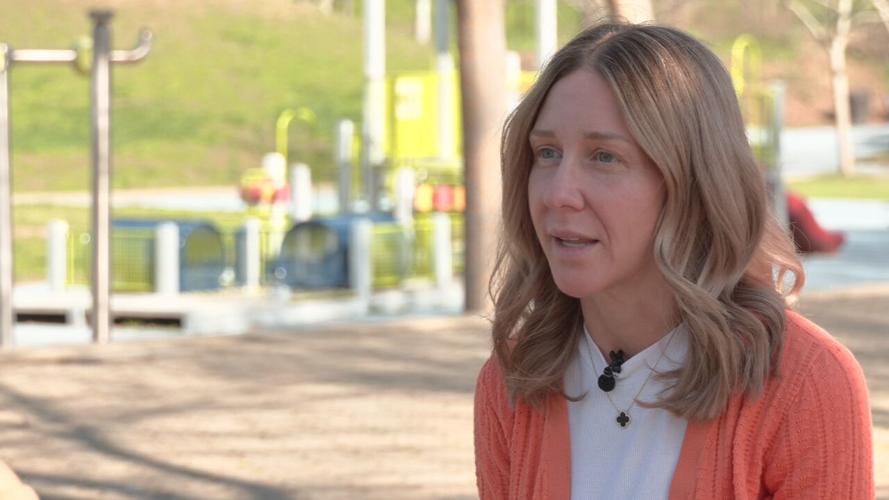
Lisa McIntyre says homeschooling changed everything for her family. She says three of her four children have dyslexia and struggled in public and private schools before switching during the COVID pandemic.
"She’s reading my books now and whizzing through them and we were at a point where we were in tears doing lessons," McIntyre said.
Her children are active in sports — all four wrestle competitively through a club, and her youngest is nationally ranked.
At the elementary and middle school level, they can compete in certain state events. But that changes in high school.
"I don't think they understand, 'hey you won't be able to wrestle in high school,'" she said.
The Kentucky High School Athletic Association requires student athletes to be full-time students at the school they represent.
Homeschooled students can sometimes participate in regular-season events depending on the sport, but state championships are only open to enrolled students.
"They're getting shut out at the point they can get scholarships, start looking at colleges and begin getting recruited," McIntyre said.
Participation rules vary by district at the elementary and middle school level. In Jefferson County Public Schools, homeschooled students are not allowed to participate, regardless of grade.
McIntyre and other homeschool families are advocating for House Bill 421, also known as the Fair Play Act.
The bill would allow homeschooled students to try out for public school sports and extracurricular activities while meeting the same eligibility requirements as enrolled students.
"It's brought up a lot of conversations. 'Do we move? Do we not homeschool,'" McIntyre said.
Reports say 30 states have passed similar laws. But the bill has repeatedly stalled in Kentucky’s statehouse. This year, it has not received a committee hearing.
"Getting a committee hearing is a joint decision by the Committee Chair and House Leadership. About 70-80% of bills never get heard. Obviously, this is disappointing to the sponsors. We will try again next year," said bill co-sponsor John Hodgson.
Supporters say the legislation is about fairness.
"This legislation is simply about basic fairness. These families already pay taxes to their local school districts and should be allowed to participate in the programs they choose," bill co-sponsor Steven Doan said. "They select homeschooling for legitimate educational reasons, and allowing participation harms no one while strengthening home school children's community ties."
Doan said he previously proposed a similar amendment that failed on the House floor.
"Kentucky homeschool families deserve better. I remain committed to advocating for equal access and will continue pushing for a hearing and passage of the Play Fair Kentucky Act in future sessions," he said.
The KHSAA maintains that changes would require legislative action and raised concerns about academic accountability.
Commissioner Julian Tackett said in a statement:
"KHSAA is a membership-based organization with 291 member schools, and any change would take legislative action because the current law charges the association with regulating interscholastic sports between schools and requires full-time enrollment to compete. Interscholastic athletics is a privilege, not a right. Those students who attend a member school have the privilege of participating. Legislative action would be required to make those changes.
"We have offered and discussed options with lawmakers for more than a decade, but our school administrators oppose this current bill because it lacks accountability for students' academic performance, that even compares to that of full-time enrolled students. Saying that a parent "saying" a student is progressing, compared with being able to compare a full-time enrolled student with peers weekly on the basis of documentation, is not a logical comparison. Right now, he said, every participating student must have their grades checked weekly to remain eligible. Full-time enrolled students have to continually make academic progress, and that’s always been the big issue: academic accountability.
"Other states have found models, including those in Indiana, that work by requiring a tie to the academic day, such as part-time enrollment and even a standardized assessment, to truly compare academic progress and prevent circumvention due to athletic prowess. But the KHSAA membership has been pretty firm in opposing a completely open system, though the door is not shut on the concepts.
"There are definitely paths there, but it’s going to take some people coming to the table with different ideas and further definitions of what it means to be connected to a school than simply throwing the barn door open and saying anybody can come play for our member schools to embrace the idea. The current rules, which we worked hard with the General Assembly to craft, already allow homeschool athletes to compete against KHSAA members in the regular season, for example, in track meets, wrestling meets, or even in team sports as homeschool groups, but postseason competition like state championships remains a member-school benefit open only to enrolled students."
McIntyre said she just wants her children — and others — to have the same opportunities.
"It's been kind of pushback that we opted out the minute we started homeschool. Well, we didn't opt out of taxes," she said.
Copyright 2026 WDRB Media. All Rights Reserved.


