

LOUISVILLE, Ky. (WDRB) -- Some children are already getting vaccinated against COVID-19.
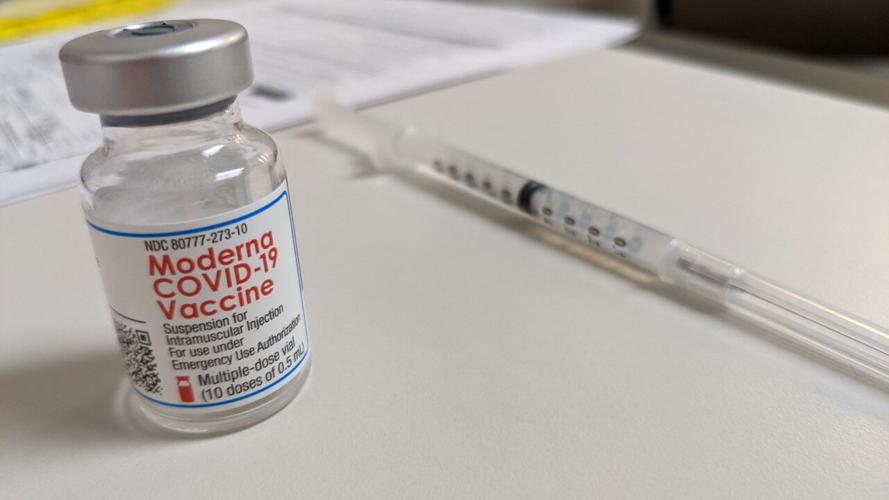
About 6,750 children in the United States and Canada are among the first to be vaccinated against the virus as part of Moderna's pediatric COVID-19 vaccine trial.
The kids taking part in the trial are between the ages of six months and 11 years old.
The vaccine trial is taking place in two parts, according to CNN.
In the first, different dosages of the vaccine are being tested on children between the ages of six months and 1-year-old. They will be given two doses of the vaccine, spaced about 28 days apart at either a 25, a 50 or a 100 microgram level. Children between the ages of 2 and 11 will also receive two doses of the vaccine spaced about 28 days apart at either a 50 or a 100 microgram level.
The findings of the first part of the trial will be used to determine which dose will be used in part two. For part two, the trial will expand to include children who will be given a saline placebo, which does nothing. The children will be followed for 12 months after their second dose.
The goal of Moderna's trial is to find out if the vaccine protects kids from getting sick if they come into contact with the virus.
The Moderna vaccine was authorized by the U.S. Food and Drug Administration (FDA) for use in adults back in December of last year. It also approved the Pfizer vaccine for emergency use in people ages 16 and older.
The Pfizer vaccine is also being studied in children, and Johnson & Johnson — which was approved for emergency use in adults 18 and older in February — has announced plans to study the vaccine in adolescents ages 12 to 18.
U of L Health's Chief Medical Officer Dr. Jason Smith weighed in on the vaccine trials during WDRB News at 4 p.m. on Tuesday.
Q: Moderna announced it has vaccinated the first children in its pediatric trial. The Pfizer vaccine is also being studied in kids too. Explain to us how these trials work and why researchers are just now looking into this.
"So this is, you know, really kind of the next step in the evolution of the vaccine itself. We already know it's very safe. What we're trying to find out is how efficacious it is in children, knowing that they carry kind of a smaller burden overall of disease, and definitely a smaller burden of severe disease. So all three of the vaccine manufacturers will be moving in this direction to find out kind of what's the utility and how young or what the timing should be for children getting the vaccine," Smith said. "It's basically trying to find, for us, is it just as effective in children as it is in adults? And it's not that the vaccine is not effective, but we know that the disease process itself is very different in kids compared to what it is in adults and that's what the important part of this trial will tell us."
Q: Thousands more kids in our area are about to be back inside school buildings, mostly on hybrid schedules — talking about Jefferson County Public Schools. Could vaccine approval for children make a difference in getting all of them back in the classroom at the same time?
"I think the most important part is making sure that the overall adult staff is taken care of. Which, you know, the state has done a good job doing," Smith said. "That really will get them in and we know, as I said, kids don't get effected by this nearly as severely and really to the extent that adults do, so it would be helpful, but I don't think it's the limiting factor in getting kids back to school."
Q: What's your best guess on if or when these vaccines could be approved for children?
"You're probably talking some time in the fall at the earliest," Smith said. "I think, you know, these are smaller studies than you had to do in adults because you have to prove a lot of things first in the adults before you move in the pediatric populations, so the studies in the pediatric population can be a smaller number. If they go kind of the same way that the adults went, you're really talking about fall when that information would be available and they would move into that group of people."
Q: Spring break is right around the corner for Kentuckiana families. The CDC recommends staying home. What's your advice? Travel, don't travel? Take extra precautions? Does it vary based on if you're vaccinated or not?
"Well, I would love to tell you that it varies based on vaccination, and it kind of does, but the simple fact of the matter is that the vaccine really hasn't been deployed across the population to the extent that we would love to see it as far as opening up travel," Smith said. "I think you still have to be careful. You have to really consider that this is kind of a make or break period as far as getting the vaccine out and minimizing the infection moving forward, I remind people (we're) real close, a few more months and we'll have a big dent in this. I wouldn't jump the gun just yet and consider traveling all over."
You can watch Smith's full interview below.
Copyright 2021 WDRB Media. All Rights Reserved. CNN contributed to this report.


