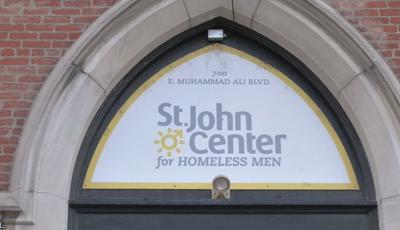
LOUISVILLE, Ky. (WDRB) -- Those who lead St. John Center for Homeless Men are glad to see that 'homeless solutions' are on Louisville Metro Council's highest to-do list.
"Many Louisvillian's see that homelessness is on the increase. The visible need is undeniable," said Maria Price, who has spent 13 years as executive director of the St. John Center for Homeless Men in Louisville.
Price and her team have identified homeless and houseless challenges and the much-needed subareas.
“We need more mental health services, we need more recovery on demand in this community," Price said.
Her teams' ideas are combined with thousands of others, which have been submitted to Metro Council in recent weeks for the millions of federal coronavirus aid dollars that Louisville must decide how to spend.
"With this $388 million we have the opportunity to take ideas that were once reserved for 'someday' and turn them into reality now," said Louisville Mayor Greg Fischer, who made the announcement Monday.
Bill Hollander, Chair of the Metro Council Budget committee, said it's too early to determine which of the four areas would be receiving the most money, and in the meantime, he is encouraging collaborative efforts.
"We need organizations who are well-versed in each of these priority areas to work together and make concrete proposals," he said.
Price says the center, like many organizations, have already teamed up. "We have this opportunity now to use these one-time funds for long-term solutions,” said Price.
It is too soon to know what projects will qualify for what money. Fischer says there is now a 'framework' for making these types of decisions.
"This is a process that will take us well into the latter part of this year,” said Fischer.
The four focuses include:
- Homelessness and affordable housing: Fischer said this approach aims to “significantly reduce” the number of homeless people in Louisville. “That includes transitional housing, permanent supportive housing, and other forms of affordable housing, particularly directed at Louisville’s lowest-income residents and those suffering from mental health and substance use disorders who have been disproportionately affected by the COVID-19 public health emergency.”
- Workforce development: Fischer said a “big focus” will be on Black and other minority businesses and communities, as well as spending on broadband and supporting small businesses.
- Health: This area includes improving access to health care and childcare, as well as mental health and substance abuse services and suicide prevention, Fischer said. It also will also promote “healthier living environments” in communities hardest hit by the pandemic.
- Public safety: “This priority area will build on the work we are already doing to reduce violence and increase safety in every neighborhood. It will include recommended investments in violence prevention and intervention, and new policing technology and deflection and diversion programs,” Fischer said.
Metro Council has already decided how to spend about 10% of the federal money. It'll go towards COVID-19 related health needs, vulnerable residents, and economic recovery.
If you would like to provide feedback on how the city funds should be spent click here.
Related Stories:
Copyright 2021 WDRB Media. All Rights Reserved.


