


LOUISVILLE, Ky. (WDRB) — Louisville athletics put a number on the modern college sports problem this week: Roughly $30 million.
That, essentially, is what the University of Louisville athletic department laid before its board of trustees Thursday: a projected Fiscal Year 2027 budget deficit approaching $30 million, one expected to be covered largely through borrowing.The number could be as much as $9 million less, depending on different revenue opportunities.
The striking part? Nobody tried to hide it.
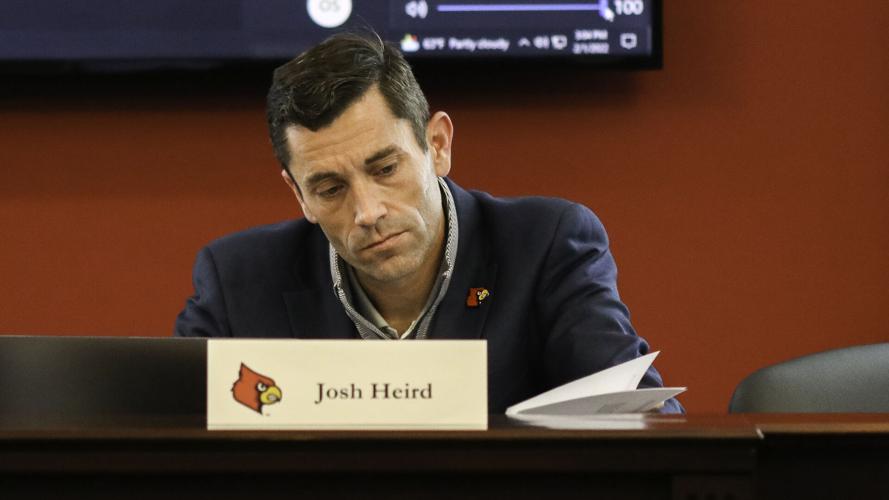
Not athletics director Josh Heird. Not university president Gerry Bradley. Not board chair Larry Benz. Not athletics CFO Heidi Huebner, whose presentation was starkly transparent.
For years, schools across the country have patched together these budgets with one-time transfers, accounting maneuvers, deferred costs, hidden subsidies and hopeful projections.
Louisville did some of that, too, in the past.
Last year's projected athletics deficit also hovered just below $30 million. But it was softened by a one-time $10 million university transfer, a new student athletic fee, and a new $25 million line of credit, to be used over two years.
This year, the bandages came off.
The student fee is now baked into the budget. The one-time money disappeared. A couple of football home games disappeared, too. Some previously stripped-down expenses — particularly financial aid — had to come back.
Just as importantly, university leadership has drawn a line.
Bradley emphasized repeatedly that Louisville would not continue using university funds to offset athletics deficits, describing last year's $10 million transfer as one-time money tied to a larger surplus payment from the hospital system.
"We're not using general funds to offset deficits within athletics," Bradley told trustees.
Benz echoed the point, reminding trustees that the board's goal was to avoid directing additional university operating dollars into athletics moving forward.
What remains is the clearer picture Louisville officials are now willing to say out loud: This is roughly a $30 million-a-year problem, until something changes.
Not because Louisville suddenly became reckless. But because the business model of college athletics changed almost overnight.
After its annual increase, House settlement revenue sharing means $21.3 million in athlete compensation next year. Health insurance costs jumped 19%. Debt-service costs are climbing. And athletics officials admitted they cut financial aid too aggressively last year trying to absorb the new landscape, then realized they had to restore some of it.
In another era, an athletic department facing this kind of deficit might slash spending, retreat from the arms race and try to stabilize.
But Josh Heird told the board the problem with that strategy.
"If we don't have talent on the field or the basketball court … we have no opportunity at all to increase our revenue streams," he said. "If you stop spending now, you lose."
That may be the truest sentence spoken about college athletics this year.
Heird, Bradley and Benz have carried that same message beyond Louisville, in a position paper and before the Knight Commission on Intercollegiate Athletics in Washington, D.C., last week. On Thursday, they delivered it to their own board.
Because Louisville's athletic budget presentations no longer sound like higher education.
They sound like venture capital.
Borrow now. Louisville will look to extend the line of credit it opened a year ago. Compete now. Hope future growth covers the investment later.
There's a whole new vernacular in college sports. Revenue share. Cash flow. Outside event revenue. Incremental fundraising opportunities. And the big one: external financing options.
This is no longer the old language of athletic administration. It is the language of leveraged entertainment businesses.
And Louisville is far from alone.
Across the ACC, schools are wrestling with the same math. Bradley, fresh off league meetings, described administrators there as "banging their heads off the table."
Because everyone understands the trap.
If you stop spending, you fall behind competitively. If you keep spending, you deepen the financial hole.
So Louisville is making the bet many major programs are making: that future television money, playoff distributions, donor growth and expanded commercial opportunities will eventually justify the borrowing happening now.
The budget presentation itself practically laid out the roadmap.
Football playoff participation could bring millions. ACC payouts for finishing in the Top 25 matter. Men's basketball tournament success matters.
Meanwhile, Louisville is also trying to save money through regional travel and holding positions open.
That's modern college athletics in one image: a billion-dollar entertainment industry clipping coupons while financing its future.
And looming quietly in the background of all this is Cardinal Ventures and a still-forming new athletics support entity, the one trustees broadly authorized in April. On Thursday, the board empowered the president to put that entity into action through any measures he deems necessary to complete its formation.
In plain English, Louisville is preparing a new vehicle to help athletics find money outside the traditional university budget.
That language now reads differently than it did a month ago.
Because after hearing this week's presentation, it becomes easier to understand why Louisville is exploring new structures, new financing tools and new ways to support athletics beyond the traditional university model.
The old system is breaking apart in public.
Louisville just happens to be one of the few schools honest enough to show everybody the numbers.
Copyright 2026 WDRB Media. All Rights Reserved.


