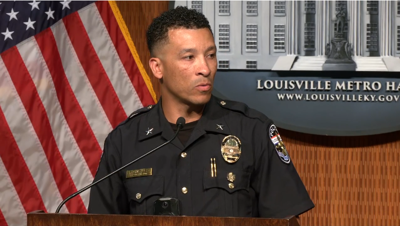


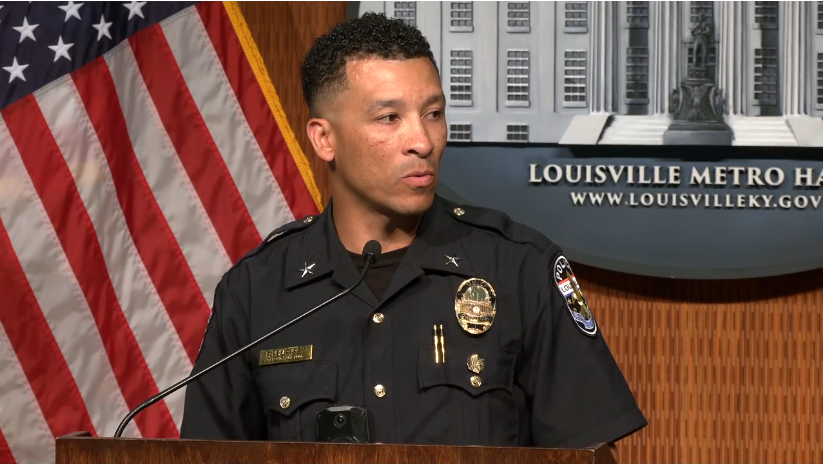
LOUISVILLE, Ky. (WDRB) -- One of Louisville's own is taking the reins to be the department's next leader that has seen six chiefs, on a permanent or interim basis, in four years, and hopes to be the one to ultimately rebuild community trust.
On Monday morning, Mayor Craig Greenberg announced Paul Humphrey as LMPD's next Chief of Police.
Humphrey joined LMPD in 2006 and spent several years as a 1st and 6th division officer in the Newburg and Russell neighborhoods. In 2010, he joined the SWAT team and became the team's commander in 2017.
In June, Greenberg named Humphrey as acting chief after he placed former LMPD Chief Jacquelyn Gwinn-Villaroel on paid administrative leave for how she, "handled a workplace sexual harassment allegations involving LMPD officers."
After accepting the role as Chief Monday morning, Humphrey announced there will be numerous promotions on Sept. 27, calling it one of the ''largest command staff movements" in the history of the department.
"We are going to move, promote or change 16 of 24 command staff members," Humphrey said.
Mayor Craig Greenberg announced Humphrey's permanent status on Sept. 16
In a one-on-one interview with WDRB, Humphrey explained choosing his command staff, was less about having personal bonds with the individuals, and finding people loyal to LMPD's mission.
"Bonds are important, you have to be able to trust people, and it's not trust you're my friend, it's trust that you're loyal to the mission. You're not loyal to me, you're loyal trying to take care of people," Humphrey said. "That's the staff we're trying to build, is people who understand where we're trying to go and how to get there and will hold me accountable to what I'm supposed to do, and we can hold each other accountable."
Asking people to trust LMPD, is something Humphrey acknowledges needs to be worked on.
"I absolutely understand why people feel that way and I get it, I don't always agree with why they feel that way, but I understand we all have our reasons," Humphrey said. "The thing is you've seen, we just need to talk about what we do and why. People can appreciate you doing things they don't agree with if they understand why you're doing it. I think that goes a long way. So from my level, to the officer level on the street, being willing to explain the decisions you make is very simple, can be difficult at times, but bad news doesn't get better with time. When things happen let's talk about it and let's come to a conclusion."
LMPD also faces staffing shortages. Humphrey said it will take a look at how to best utilize its resources and tackle violent crime.
"Something as simple as looking at our beat alignments and how we distribute man power, all the way down to what we're asking officers to do and how we utilize technology to maximize what they can do. But what we know is that proactive officers reduce crime, they keep people safe," he said. "There's only so many people that can do what we do. So we need to be aggressive in our proactivity both in an enforcement way as well as a community contact way."
Humphrey said addressing gangs in Louisville is about adapting.
"As gangs change their strategies we'll change our strategies or tactics to make sure we come after them and get the right people. The changing nature of gangs, the changing nature of crimes is different, you know, we're not stage coaching anymore and things like that, so we don't have that kind of police anymore. We're not dealing with the same things as in the 80s, the crack epidemic and boom, so we're not policing that way anymore. So this is more intelligence based and targeted to make sure we know exactly who we're going after. But that needs to go down all the way to that street level cop. I need that streel level cop riding a patrol car to be out there making contact, stopping people and getting bad guys off the street," Humphrey said.
When asked about his number one priority as chief, Humphrey said its all encompassing.
"It's easy to set violent crime as a priority, we have to get that under control. But the thing is it's all of those things that support our efforts to alleviate violent crime, it is. So it's giving officers clear direction of where we want them, what we want them to do. How we utilize technology to make sure we supplement those places we can't put people," said Humphrey. "How are we utilizing civilian staff to make sure they are supporting that officer on the street. It's gotta be all encompassing plan that is also surrounded by keeping people safe."
Humphrey added the support he's been shown by the community and officers on the street, opened his eyes to this role, and said it has been humbling.
Related Stories:
- Mayor names Paul Humphrey Louisville police chief; calling him a 'proven leader'
- Louisville interim police chief addresses gang violence, transparency and reforms
- Louisville police 'not going to allow' dangerous street racing, burnouts to continue, interim chief says
- Greenberg voices support for LMPD Interim Chief Humphrey, not searching for replacement
- Louisville police chief said she leaves with 'heavy heart' after mayor asked for her resignation
- Louisville police chief resigns amid sexual harassment lawsuits, interim chief named
- LMPD chief had 'deeply concerning' response to major's sexual harassment allegation, attorney says
- LAWSUIT: LMPD officer sexually harassed at 'adult pool party' by superiors in open marriage
Copyright 2024 WDRB Media. All Rights Reserved.


