

LOUISVILLE, Ky. (WDRB) – As COVID-19 spreads, more people are asking questions about how the coronavirus tests work and why the tests are not administered more often.
Local doctors and infection prevention specialists explain that the tests do not provide instant results, not everyone currently qualifies for a test, and there is a difference what an emergency room can sample and how the test is performed.
WHO CAN BE TESTED
Tests are limited to those who meet Centers for Disease Control and Prevention criteria, which include if someone has been directly exposed to a COVID-19 positive patient or has traveled to areas where patients have been infected. The tests are also being used for patients who show compromised health issues and need advanced care or treatment in a hospital.
Dr. Mary Rademaker, executive medical director for Norton Immediate Care Centers, emphasized that the test cannot be used on health people worried about the coronavirus.
“If you are not ill,” she said, “you should not come to be tested, because there are certain criteria for testing.”
If you are feeling symptoms and believe you could meet the criteria for coronavirus, officials asked that you call your primary care doctor, the urgent care center, the hospital or the hotline. This will allow medical professionals to best guide you to the correct location, and it will provide warning that doctors will need to minimize any potential exposure to other people.
The Kentucky COVID-19 hotline number is 800-722-5725.
HOW DOES THE TEST WORK
If doctors believe a patient could have the coronavirus, the patient will be given a mask and put in a room for safety. Then doctors will perform other tests first to rule out possibilities such as the flu.
Mark Spievak, the clinical nurse manager for the Jewish Hospital Emergency Department, said physicians would order a rapid flu test and a respiratory viral panel.
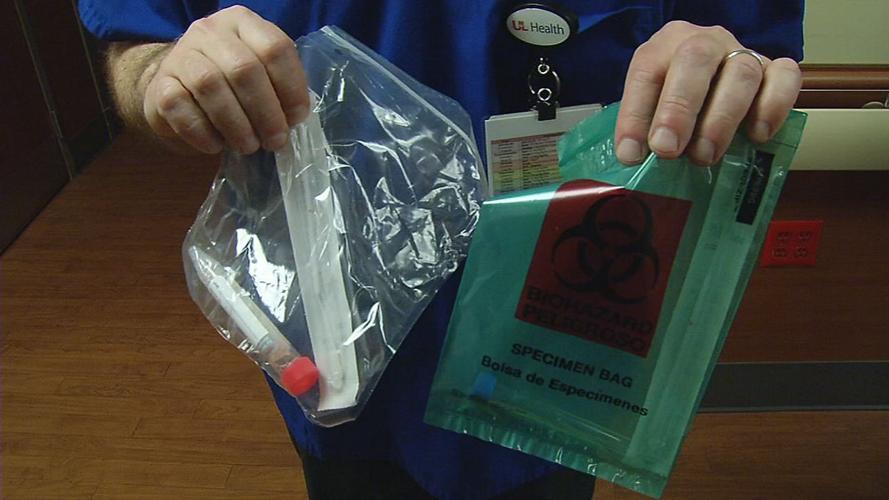
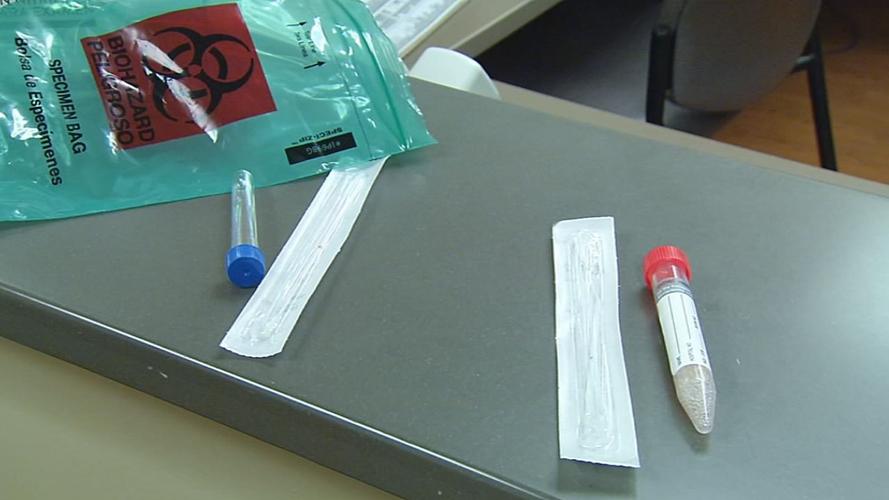
Doctors would take a nasal swab through both nostrils, similar to the flu test. Then they would put those swabs in a test tube that has a medium in it to preserve the sample, which would be sent to a lab. The preliminary samples would be tested in U of L’s laboratory.
If those flu and viral tests come back negative, then doctors can pursue a coronavirus test.
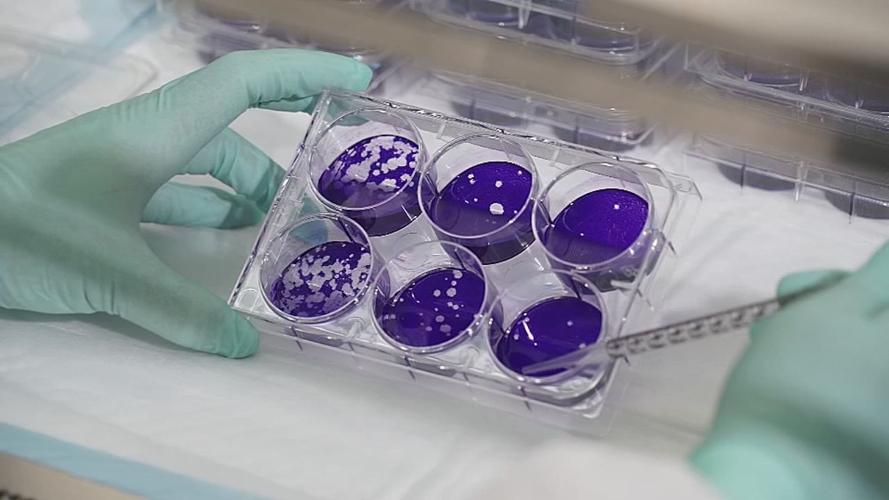
Crystal Heishman, the director of infection prevention at Jewish Hospital, said doctors and nurses in contact with the patient would contact the hospital’s infection preventionist. That person would alert the Kentucky Cabinet for Health and Family Services to run through questions and CDC guidelines. If that patient qualifies for coronavirus testing, the sample would be sent to the state lab in Frankfort to be tested for COVID-19.
Dave Langdon, a spokesman for the Louisville Metro Department of Public Health and Wellness, said a shortage of test kits at the state health department lab and the CDC labs means that only people with symptoms are being sampled by local hospitals. Hospitals are not given test kits, because doctors can only take samples and send them to the labs.
Rademakersaid tests must be performed at a hospital because the samples can be taken only in certain air and ventilation conditions.
“It isn’t as if tests are being withheld from people," she said. "In order to do the test properly, it has to be done in a very particular way.”
Both healthcare networks are strategizing for how to handle high-volume testing once it becomes available.
TEST MYTHS
There is a shortage of test kits delivered to doctors' offices: False. Doctors can only take nasal swabs and those are sent to a lab to be tested. There are not "test kits" being delivered to physician offices. Heishman added that Jewish Hospital and U of L do not have a shortage of the swabs needed to perform these tests.
The test requires a blood draw: False. The test is a nasopharyngeal swab. If the coronavirus test comes back positive, doctors may ask for blood tests to monitor the patient.
Any lab will do the test: False. Samples are not being tested by hospitals or the Louisville Metro Department of Public Health and Wellness. Until CDC guidelines change or until a commercial test makes it more widely available, approved samples must go to the state lab.
Copyright 2020 WDRB Media. All Rights Reserved.


