


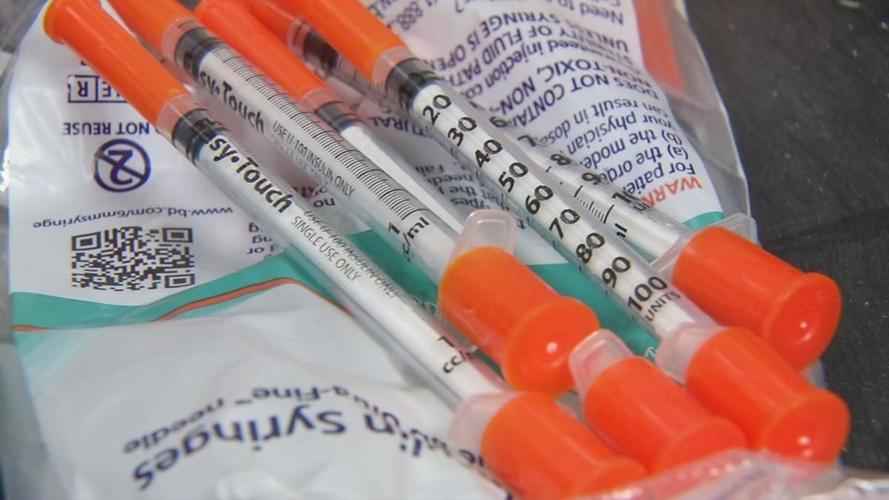
JEFFERSONVILLE, Ind. (WDRB) — Clark County's syringe exchange program has long served as a gateway to addiction treatment and a way to keep used needles off the streets. Now, local officials say new state rules are making it harder to reach people.
In Jeffersonville, William Noble walks his dog through a city park every day, and too often he spots used needles near the trails.
"In that tree line over there," he said. "Basically about anywhere."
The drop has been dramatic. In May and June 2025, Clark County recorded 726 referrals for treatment or medical care. During the same two months this year, that number fell to just 145, according to the health department.
Health leaders said one major reason is the new one-to-one exchange requirement: In order to get clean needles, a person now has to bring in a used one.
"That is if somebody is new to the program and they don’t know the rules when they get to the site… and they don’t have anything to start with, we can’t give them anything," said Health Director of the Clark County Health Department Doug Bentfield.
Bentfield said not only is that a policy change, it's a lost opportunity to connect someone with treatment when they're ready to ask for help.
Participants also now need valid identification to take part, something Bentfield said can be difficult for people without stable housing or personal documents. He said helping people obtain identification can also connect them with services that support recovery and employment.
Indiana has tightened where syringe service programs can operate. They must now be at least 1,000 feet from a school, church, or daycare, unless that nearby site gives permission. Bentfield said the county has already faced formal objections under the new rules.
The Clark County exchange operates from a van in a church parking lot on the west end of town, a setup Bentfield said can make privacy harder.
"The anonymity… is a little less," he said.
Back at the Park, Noble said it feels quieter this year but he’s not sure that’s a good sign. To Noble, fewer people using the program doesn't necessarily mean the problem has gone away. It may simply mean fewer people are getting connected to help.
Copyright 2026 WDRB Media. All Rights Reserved.


