



LOUISVILLE, Ky. (WDRB) – Less than a year after the Southeastern Conference stunned the world of college sports by announcing it would add Texas and Oklahoma in 2024, the Big Ten Conference is putting the final strokes on a deal that will add UCLA and USC to its ranks in the same season.
The swift and stunning news broke early Thursday afternoon, out of The Mercury News in San Jose, Calif., and sent shock waves through the college sports landscape. A news alert from The New York Times says the move will “remake college sports’ competitive and economic landscape,” and that is no overstatement.
Later Thursday evening, the Big Ten announced that it has received requests from both schools to join the league and that league presidents have approved the addition of both schools.
With the unstable world of conference realignment now officially once again in motion, the question becomes, where does it stop?
The SEC just inked a 10-year deal, $3 billion deal with Disney/ESPN. The Big Ten Network’s deal with FOX (and to a lesser degree, ESPN) is up next year.
There’s speculation – not completely unfounded – of those two leagues engulfing most major college football programs and leaving the rest on the outside of the power grid.
Fans of the Big 12, Pac 12 and ACC may be justifiably worried. Five thoughts on what this all means for local programs, and college sports in general.
1). MORE INSTABILITY. While the immediate payoff for both the SEC and Big Ten is more high-profile programs and more revenue possibility, the shifting landscape those programs leave behind means that the movement may only be beginning.
Will the SEC move on Clemson and Florida State, and perhaps Miami and North Carolina? Does the Big Ten have interest in other Pac 12 schools, or perhaps Kansas, Baylor, Oklahoma State or others. Does the Big Ten look toward the ACC and Pitt, Virginia, Duke or Syracuse?
2). WHAT ABOUT “THE ALLIANCE?” Sure, last year the Big Ten, ACC and Big 12 entered an “alliance,” to cooperate and avoid future instability.
“What we really need is for things to be more stable,” Big Ten commissioner Kevin Warren said.
Alliances never work. The Big 12 and Pac 12 are now a shadow of the leagues they were. And the ACC is on the clock. The league is bolstered a bit because of the long-term grant of broadcast rights signed by its members. But like alliances, legal agreements are made to be broken.
If the SEC comes after Clemson or Florida State or Miami or North Carolina, or any ACC member, the league could begin to unravel. The same if the Big Ten decides to expand eastward with Pitt, Syracuse, Virginia or others.
The Alliance is dead. The struggle for the ACC now will be to stay alive. But with today’s actions, that seems a lot less likely than it did a year ago.
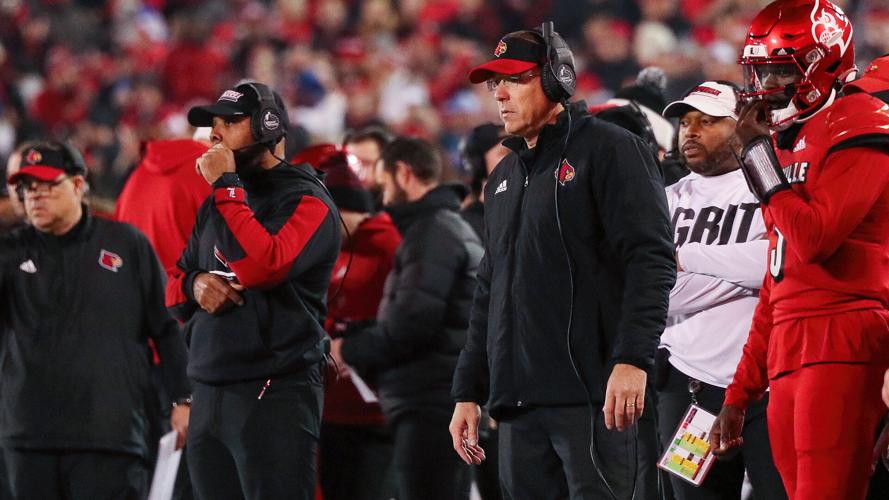
3). WHAT ABOUT LOUISVILLE? While Kentucky and Indiana are parked comfortably in leagues emerging as the dominant college sports powers, Louisville could again find itself in the position of being on the outside looking in. The tireless work of Tom Jurich got the school into the ACC. Now it may once again be courting new leagues if either the ACC or Big Ten decides to raid the ACC.
Louisville would seem a better fit with the Big Ten, but may not be in a position to choose – and given that all Big Ten members are also members of the Association of American Universities, it might be an unlikely landing spot, because Louisville is not. If TV (and advertising markets) dominate the discussion, Louisville doesn’t bring a great deal to the table. And with depressed football and men’s basketball attendance in recent years and an NCAA hearing just concluded, is in a difficult place to put its best foot forward.
Regardless, for Louisville it’s back to the future, or the past, however you want to phrase it. And it could be game on for new athletics director Josh Heird and the rest of the ACC to carve out a place at the new college football table.
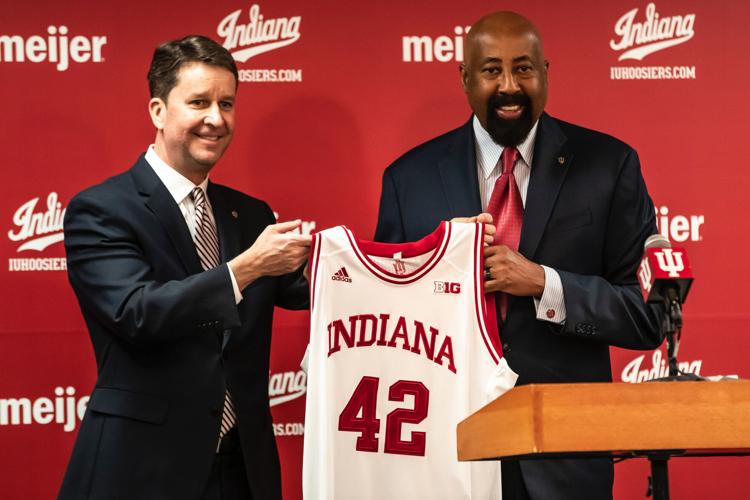
4). WHAT IS INDIANA’S REACTION? What's not to be happy about? There are Rose Bowl trips in IU's future. Seriously, though, IU president Pamela Whitten and athletics director Scott Dolson put out a joint statement. It reads:
“This is a great day for Indiana University with the news of the acceptance of requests from UCLA and USC to join the Big Ten Conference. Both are highly respected academic institutions that share our commitment to premier education and research. They also both have rich and storied intercollegiate athletic programs that will enhance the world-class opportunities that our Indiana University student-athletes already enjoy. Their arrival will strengthen the Big Ten’s long-standing reputation as the preeminent conference in all intercollegiate athletics.”
5). WHAT HAPPENS NEXT? Future expansion on both the part of the Big Ten and the SEC is all but a given. Nicole Auerbach of The Athletic Tweeted what many are thinking now – that the two leagues are on their way to becoming a 2-way division encompassing all of the power programs in college football, or most of them.
Just got off the phone with someone who believes this eventually leads to two megaconferences — the Big Ten and SEC — with 20 or more members apiece.
— Nicole Auerbach (@NicoleAuerbach) June 30, 2022
What then would happen to the Big 12 and ACC, and programs like Stanford, Oregon, Louisville, Duke and others is one of the questions that remains to be seen.
One thing I haven’t seen discussed is the possibility of schools switching allegiances between the SEC and Big Ten via voluntary negotiations and agreements. I would think the Big Ten would want Missouri, and even perhaps Kentucky (it makes a lot of sense for UK, think about it), though UK is not a member of the AAU. That might make room for further (and more natural) SEC expansion.
At some point, the SEC and Big Ten are going to have to communicate. Because for better or worse, they are now driving the bus in college sports.
Copyright 2022 WDRB Media. All Rights Reserved.


