


CHARLOTTE, N.C. (WDRB) -- The ACC has had football flashes, but it was built on basketball. Everybody knows that. It has been one of the bluebloods, academically high-minded, its heart in North Carolina and the rest of its vital organs not far away.
In the world of college sports, it has been proudly old-school, and remains that way. Unfortunately, the rest of college sports is not. The SEC is moving forward boldly. The Big Ten has taken a couple of major swings to keep up.
While ACC Football Media Day promotional materials proudly (and often) point out that no conference has more overall NCAA championships in the past two years than the ACC, the emerging college athletics landscape means only one of those sports truly matters, from a financial standpoint.
And in football, the ACC is at a crossroads. In the past few years, it has been Clemson and everyone else. In the past decade, Clemson, Florida State and everyone else. The league has achieved what it has with relative financial parity in the Power 5 leagues. Those days are about to be over.
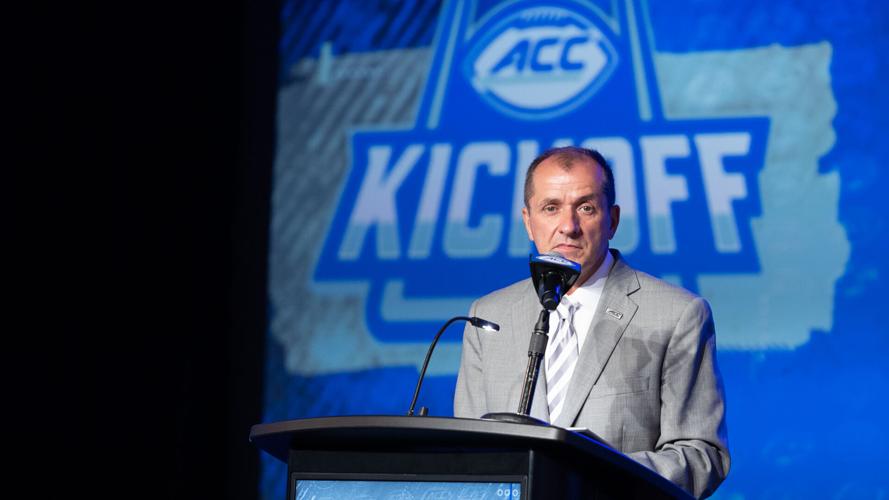
The ACC still ranks No. 3 in per-school revenue among the top conferences, but is about to be a significantly distant third. And doing more with significantly less has not marked the ACC existence. It is with that stark reality fixed in the vision of his league and his audience that ACC commissioner Jim Phillips climbed to the podium on Tuesday.
Phillips gave it, forgive the term, the old college try.

For Jeff Brohm, there was always the pull to come home.
Unfortunately for the ACC, the times demand a new college approach.
"The bottom line is our conference is strong," Phillips said. "I’m extremely bullish about our future."
But in the spring, it was precisely the bottom line that sent a group of seven traditional ACC powers in search of options to get out of the conference’s long-term grant of media rights. If Phillips’ outlook is bullish, he is surrounded by skeptics. Phillips insisted that the dust-up was all for the best. He said it made the league stronger. It got concerns onto the table, and led to a new revenue sharing strategy that will reward on-field performance. But that’s not going to be enough to close the financial gap that is coming, and he offered no further details on the "success initiative" plan on Tuesday.
The ACC put its "ACC Unite" logos on elevator doors at the Westin in uptown Charlotte for this week’s ACC Media Days. The question is whether the conference is headed up, or down. The conference has done away with its football divisions, but that doesn’t mean division is no longer a concern.
Phillips needed to come out swinging on Tuesday. Instead, in the same old hotel in the same old city he started things in the same old way – he hyped the league’s relocation to Charlotte and touted a few enhancements to the ACC’s ESPN deal, even noted an increased presence for women’s sports on the network.
He also dusted off this little nugget: "We must act to develop guardrails to ensure that student-athletes have access to NIL opportunities untainted by inducements."
Tell me you don’t know the world is passing you by without telling me you don’t know it is passing you by.
That ship has sailed. And the ACC, without something more dramatic than we’ve been hearing, could soon be listing.
To bring the talk to a rousing crescendo, Phillips tacked on a couple of sentences saying he couldn’t comment on the Northwestern hazing lawsuits in which he has been named (as a former athletics director there), but reiterating his innocence and his commitment to "student-athletes."
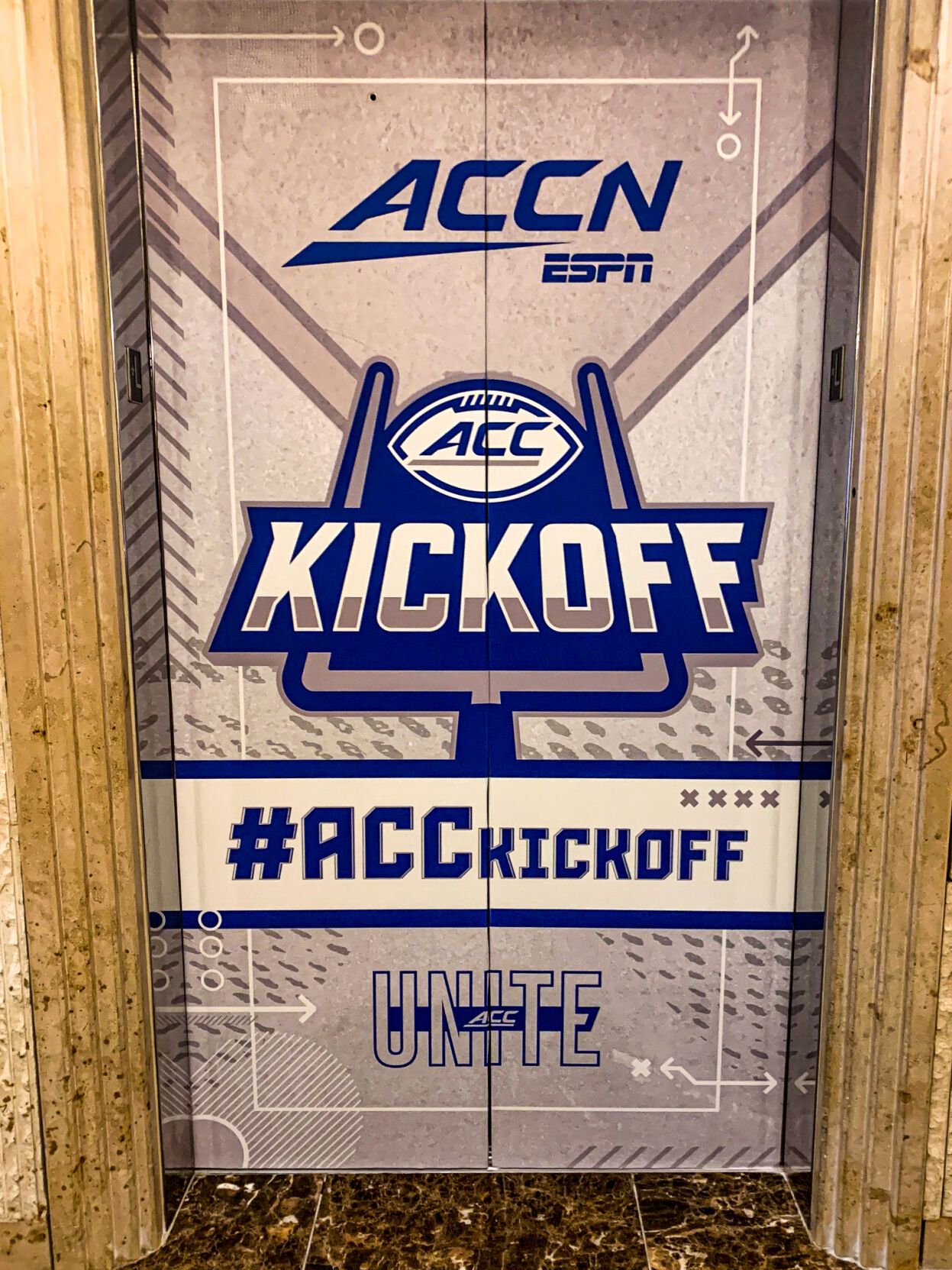
Elevator doors at the Westin in Charlotte for ACC Football Media Days featured the "ACC Unite" logo.
Always leave them wanting more, I guess? Actually, I should note, it was the only thing Phillips said on Tuesday that rated a mention from ESPN’s SportsCenter. That, too, is a problem for the conference.
Here's what Phillips said that was hopeful: He talked about some innovations in game broadcasts and other potential TV tidbits (though he didn’t talk about weeknight games or any other details) that could boost the school’s value as a college football television property.
He mentioned its new agreement with The CW, replacing an old deal with Bally Sports. Rejoice, everyone who struggled with the old RSNs, those games will now be available to all on broadcast television (and in Louisville, on WBKI, an entity owned by WDRB Media).
That won’t alter the bottom line much, but will eliminate a major headache for fans.
Phillips noted the number of clashes that ACC teams will have with Power 5 nonconference opponents in coming season and he’s right in this – the ACC needs to win its share of those. But that has always been the case.
It isn’t enough. Instead of dysfunction, the ACC needs to find a way to bring its own disruption to the college football landscape before its own implosion itself becomes a disruption.
Maybe there's little Phillips or the ACC can do. It's possible they have been checkmated by other leagues and may just be doomed to playing out the string. Maybe the league's best hope is that the SEC and Big Ten have overreached, and based too much on a media landscape that is as fickle as the landscape in college sports. (It ought to cause at least some concern that the enterprise on which much of this is based — ESPN — itself is undergoing financial pains and at last check its owner, Disney, was floating the notion of finding a "strategic partner" for it.)
Whatever the case, if you were looking for a new vision, new ideas, or any break with the status quo – dreary as it may be – you didn’t find it in this message. What you did get was an old blueblood doing its best to argue that it is still a bluebood even as weeds keep creeping through the once-pristine lawn.
It was more of the same from the ACC, a league accustomed to being part of the "in" crowd that can’t seem to mobilize itself to fight in a world where it isn’t anymore.
Related Stories:
Copyright 2023 WDRB Media. All Rights Reserved.


