
LOUISVILLE, Ky. (WDRB) -- The Louisville community has been rocked by a rise in homicides in recent years, a staggering run of gun violence that's sure to see the city cross the 100-victim threshold for the fourth-straight year.
Louisville Metro Police investigators are on the ground every day trying to close those cases, but they also often use federal partners to help.
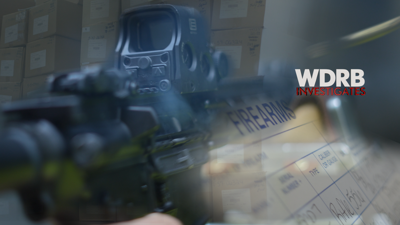
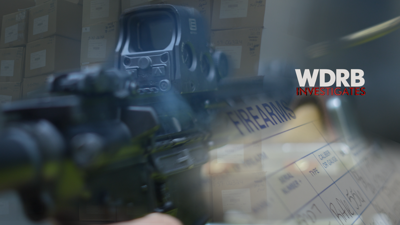
Much of that help comes from more than 500 miles away in Martingsburg, West Virginia. There, the Bureau of Alcohol, Tobacco, Firearms and Explosives traces guns used in crimes, the only such facility in the country.
"Crime gun tracing provides investigative leads where sometimes there might not have been any," said Special Agent Cassandra Mullins with the ATF Louisville Field Division. "And those victims of violence — or gun crimes — they deserve that."
Agents' goal at the ATF National Tracing Center is to help provide investigative leads for federal, state and local law enforcement agencies. From ballistic evidence inside the gun to make and model tracing on the outside, Mullins said the aim is to solve crimes but also prevents future crimes as well.
ATF said it receives about 1,800 firearms trace requests each day from law enforcement. Routine requests can take about seven days, but some are deemed urgent.
"Our objective is to get those done within 24 hours," said Neil Troppman, program manager at the tracing center. "Oftentimes, it's a matter of hours or minutes that we're completing those urgent traces."
But despite that turnaround, the tracing center doesn't use a high-tech process. Guns are sometimes traced with phone calls and documents from gun shops that have gone out of business or no longer sell guns.
"When we trace firearms, we're relying on the record-keeping of firearms licenses," Troppman said.
The tracing center is nearly filled with boxes. More than 6 million records arrive there each month, and 30,000 boxes of records are being processed right now.
"From the outside looking in, it may seem like a lot of paper. And it certainly is," Troppman said. "The firearms industry, just historically, has kind of been this sort of old-school operation where everything is captured in hard copy format."
Once processed and scanned, that information is used to create an index file to help trace the gun. When a gun used in a crime is recovered, it's identified, and police request a trace on it.
"We get calls from law enforcement all the time: 'Here's a serial number, can you look this up?'" Troppman said. "There's no such a database. There's no national registry."
Tracers then track where the gun was manufactured, where it was sold and who purchased it. The trace results are then used as possible leads in gun investigations.
"That's going to give you the name — and contact information. It's going to give you a starting point, at least ..." Mullins said.
ATF's latest data shows Louisville police asked the ATF to trace 15,331 guns used in crimes from 2017-21. Of those, 11,785 were traced back to who purchased it. More than 9,400 of them came from Kentucky, and nearly 1,100 from Indiana.
"Police officers are really starting to see the benefits of tracing, what it does for their investigations (and) how it can help them solve cases," Mullins said. "2021 and 2022 were around 7,000 firearm traces, crime gun traces. And this year, we're on pace to be a little over 9,000."

Copyright 2023 WDRB Media. All Rights Reserved.


