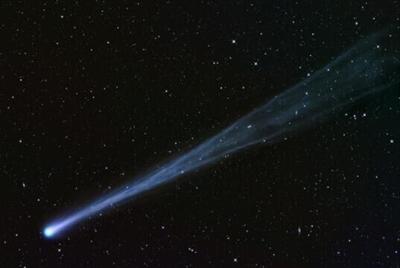
The Draconid meteor shower is predicted to peak early Monday morning, but we likely won't see anything in our area. The Draconid shower rarely produces an exciting show, but when it does, it's a big deal. Normally this shower results in only one or two meteors per hour, but in there have been times before where it has produced hundreds of meteors an hour. That's hard to predict in advance, but it doesn't look like there are any signals that this year would do that. Additionally, clouds are blocking our view of the sky in Kentuckiana right now, so you're unlikely to spot a shooting star tonight.
If you really want to give it a try, Draconid meteors are easiest to spot in the late evening sky (as opposed to pre-dawn), so go look now. Look up and toward the northwest. Locate the Big and/or Little Dippers, and the radiant point (where these meteors appear to come from) will be nearby.
While tonight won't be a great night to look for shooting stars, there are two other meteor showers which are also active right now that might give you better luck later this week. The sky will clear out Monday night, and we should have a couple nights with a partly cloudy sky later this week.
The Orionid and South Taurid meteor showers are active right now, according to the American Meteor Society. The Orionids are expected to peak later this month, and the South Taurids are expected to peak in early November. We will post more about each when we get closer to those peaks, but you can see shooting stars outside those "peak" times. Orionids usually produce more meteors in this part of the world than the South Taurids do, so NASA advises you to bring a blanket and get as far away from lights as you can. Then lie down with your feet facing southeast to give yourself the best chance to see a shooting star from the Orionid shower this month.


