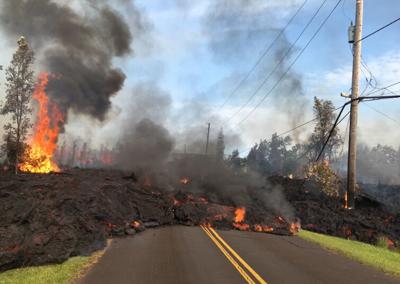
Sunday night (December 20) in Hawaii, Kilauea volcano erupted. If you remember, Kilauea erupted in 2018 and damaged hundreds of homes. We watched molten rock creep down roads and overtake structures, like what you see in the USGS image below. Since then Kilauea has maintained a low level of "non-eruptive unrest."

The U. S. Geological Survey website tells us Kilauea is "the youngest and most active volcano" in the Hawaiian island chain, adding "about 90% of the volcano is covered with lava flows less than 1100 years in age." USGS says an earthquake swarm started around the volcano about an hour before the eruption began.
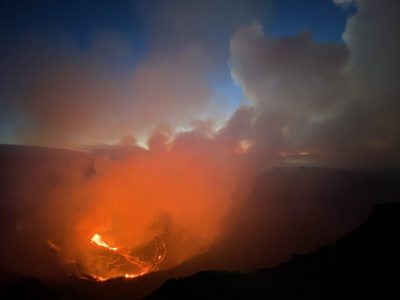
View from the western rim of Kīlauea Caldera. Lava is erupting from a fissure in the NW wall of Halemaʻumaʻu crater and cascading into the deepest part of the crater, which had been occupied by a water lake (now replaced with a growing lava lake). pic.twitter.com/VKIFA1Npr0
— USGS Volcanoes🌋 (@USGSVolcanoes) December 21, 2020
The lava is flowing into the caldera creating a lake of lava that has replaced a lake of water which use to exist in the crater. Right now there are no evacuations in place and no immediate threat to the surrounding area because the lava is spilling into the "bowl" of the crater instead of erupting outside the volcano. Volcanic ash and gas created during the eruption is rising in a plume then falling toward the southwest of the crater.
Annotated map shows locations of fissure vents that opened late on Dec 20. Red spots are approximate locations of fissure vents feeding lava flowing into the bottom of Halema‘uma‘u crater. Water lake at the base of Halema‘uma‘u crater has been replaced with a growing lava lake. pic.twitter.com/1RbBLWKLhZ
— USGS Volcanoes🌋 (@USGSVolcanoes) December 21, 2020
Now that the water from the lake has been boiled away and the lava can collect in the caldera, we can see there are 3 vents where the lava is coming from. Past eruptions from Kilauea have lasted hours or even days.
#Kilauea2020 Two fissures (on the north and western wall of #Halema‘uma‘u crater) are actively feeding a new lava lake at the summit. Typical trade winds are blowing the plume to the southwest. View from an #HVO overflight on Dec 21, taken by M. Patrick. pic.twitter.com/tiVYo9jrWr
— USGS Volcanoes🌋 (@USGSVolcanoes) December 21, 2020


