
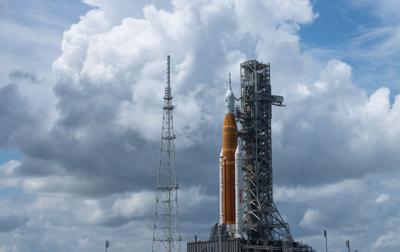
NASA will target Saturday, Sept. 3 at 2:17 p.m. EDT, the beginning of a two-hour window, for the launch of Artemis I, the first integrated test of NASA’s Orion spacecraft, Space Launch System (SLS) rocket, and the ground systems at the agency’s Kennedy Space Center in Florida.
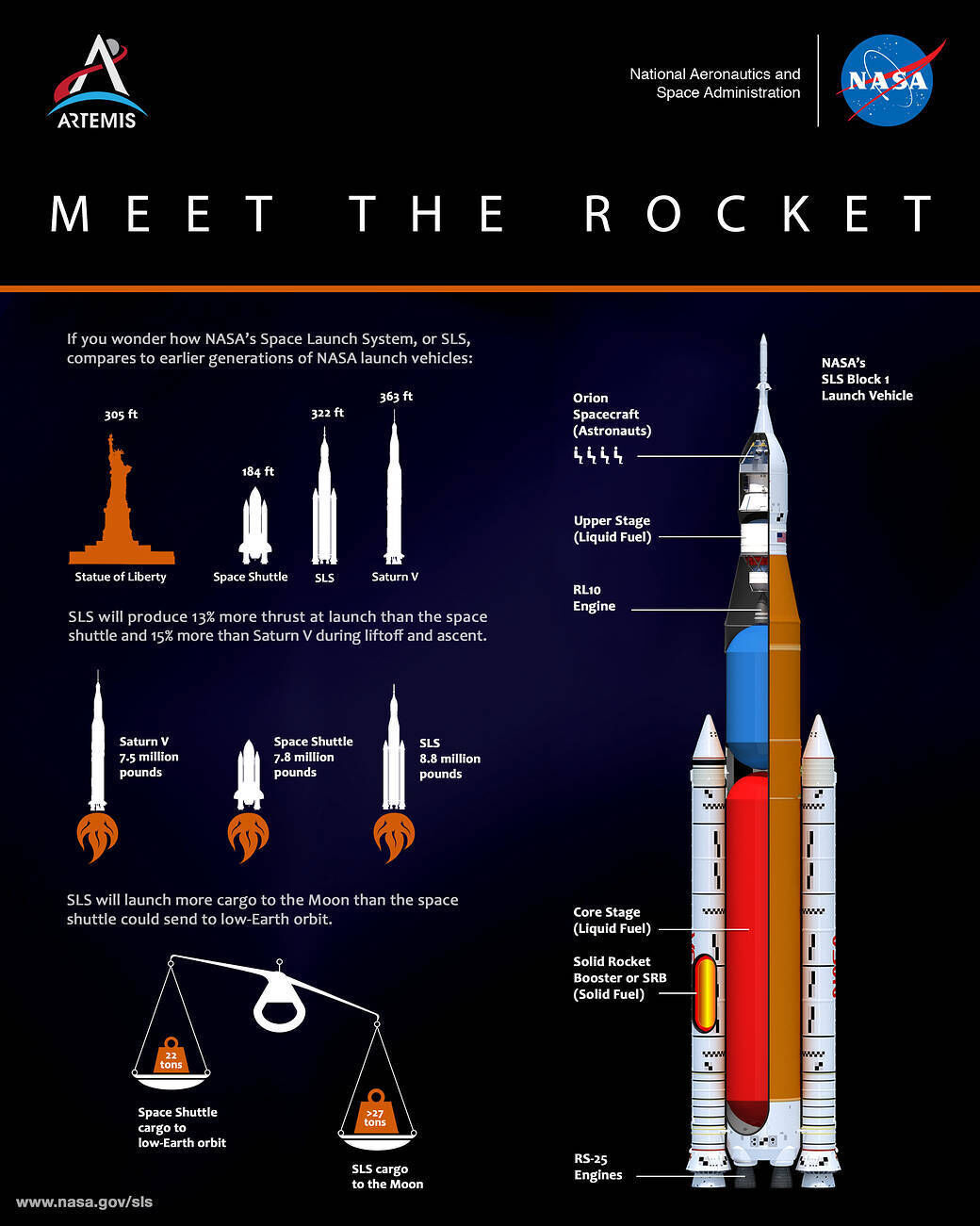
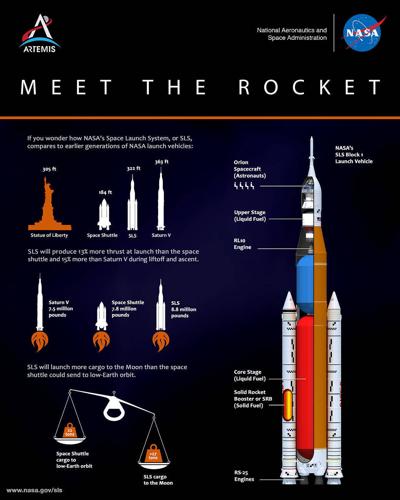
NASA’s Space Launch System (SLS), the most powerful and capable rocket NASA has ever built, will send missions farther and faster through space. SLS, along with NASA’s Orion spacecraft, the Gateway in lunar orbit and, the human landing system are the agency’s backbone for deep space exploration and the Artemis lunar program. SLS is the only launch vehicle that can send Orion, astronauts and supplies to the Moon in a single mission. For the first mission of SLS and Orion, Artemis I, the rocket is capable of sending more than 27 metric tons (59,000 pounds) to the Moon. As the SLS evolves, it will have even more power and will be capable of lofting even heavier payloads to orbit. (Credit: NASA/MSFC)
Mission managers met Tuesday to discuss data and develop a forward plan to address issues that arose during an Aug. 29 launch attempt for the flight test. During that launch attempt, teams were not able to chill down the four RS-25 engines to approximately minus 420 degrees F, with engine 3 showing higher temperatures than the other engines. Teams also saw a hydrogen leak on a component of the tail service mast umbilical quick disconnect, called the purge can, and managed the leak by manually adjusting propellant flow rates.
In the coming days, teams will modify and practice propellant loading procedures to follow a procedure similar to what was successfully performed during the Green Run at NASA’s Stennis Space Center in Mississippi. The updated procedures would perform the chilldown test of the engines, also called the kick start bleed test, about 30 to 45 minutes earlier in the countdown during the liquid hydrogen fast fill liquid phase for the core stage.
Teams also are configuring platforms at Launch Pad 39B to enable engineers access to the purge can on the tail service mast umbilical. Once access is established, technicians will perform assessments and torque connection points where necessary.
Meteorologists with the U.S. Space Force Space Launch Delta 45 predict favorable weather conditions for Saturday. While rain showers are expected, they are predicted to be sporadic during the launch window.
The mission management team will reconvene Thursday to review data and overall readiness.
In addition to tons of equipment going up, there will be three manikins (Helga, Zohar, and Captain Moonikin Campos) outfitted to the gills with testing equipment riding in Orion. They will be collecting information on how the flight will affect a human body. This program will be the first time the United States sends people back to the moon since the Apollo program ended in the 70s. During the Artemis program, NASA will land the first woman and the first person of color on the Moon.

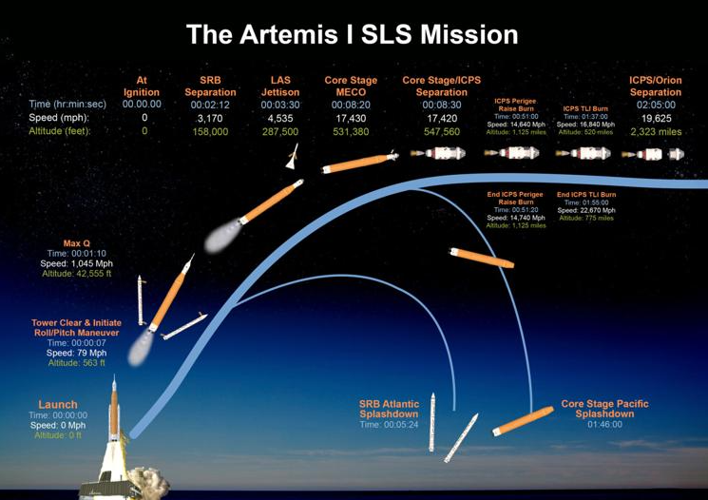
Artemis I Mission Launch sequence (Image Credit: NASA)


