
Have you ever noticed snowflakes can look very different? Whether the snow is wet and fluffy or hard and icy can impact the shape of each individual snowflake!
How is Snow Formed?
A snowflake begins to form when an extremely cold water droplet freezes onto a pollen or dust particle in the sky. This creates an ice crystal. As the ice crystal falls to the ground, water vapor freezes onto the primary crystal, building new crystals – the six arms of the snowflake.
Shapes of Snow
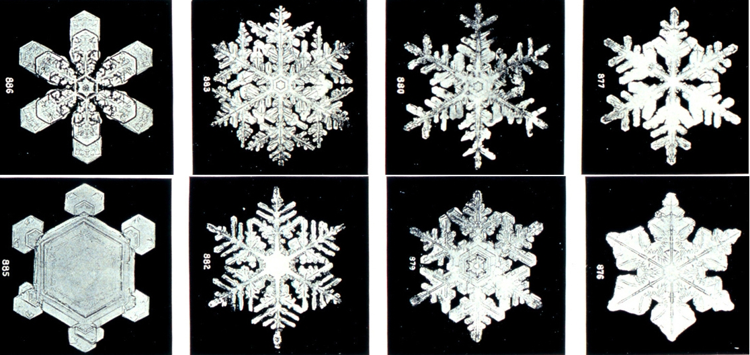
Atmospheric conditions affect how snow crystals form and what happens to them as they fall to the ground. Snow may fall as symmetrical, six-sided snowflakes, or it may fall as larger clumps of flakes. Ultimately, it is the temperature and humidity at which a crystal forms that determines the shape of the ice crystal. More complex snowflakes are usually formed during warmer and wet conditions. Snowflakes formed in drier and colder conditions have a simple shape.
We typically see long needle-like crystals at 23ºF and very flat plate-like crystals at 3ºF and snowflakes with intricate patterns and extensive branching occurs happen in warmer temperatures. The most common snowflake is a fern-like branching star called a dendrite. Other shapes are the column, needle and plate.
Why are no two snowflakes exactly alike?
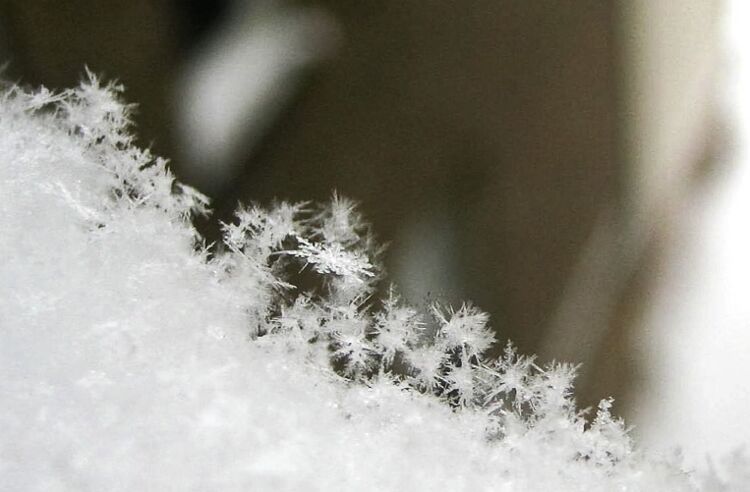
Well, that’s because individual snowflakes all follow slightly different paths from the sky to the ground —and thus encounter slightly different atmospheric conditions along the way. Therefore, they all tend to look unique, resembling everything from prisms and needles to the familiar lacy pattern.


