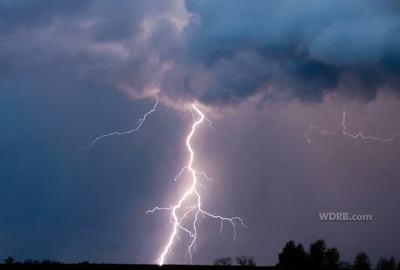
Have you ever noticed sound travels differently during a stormy or cloudy winter day? Or maybe noises sound a little different than normal? We saw lightning across many of our communities with today's rain, but the sound of thunder traveled to more of you than just the spots that saw lightning. What's going on?
I’m pretty sure I just heard thunder from a lightning stroke more than 11 miles away 😱 pic.twitter.com/UhIqiLxQdq
— Hannah Strong (@WxStrong) January 25, 2021
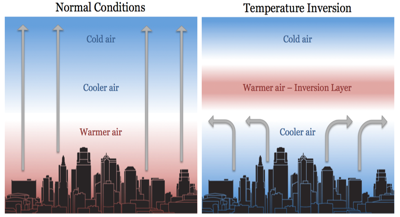
It all comes down to a thing called an inversion. Down here in the lowest level of the atmosphere, the temperature drops as you go higher up in the atmosphere. However, under an inversion, that pattern flips. An inversion is a layer in the atmosphere when the temperature increases with height - a warmer layer. You also may have heard us describe this as a "cap" in the atmosphere. The layer of warmer air acts like a cap on top of the cooler layer. The image below from NC State University Extension helps illustrate what's happening.

When that inversion is really strong, it can curve sound waves back down toward the ground. Normally the sound waves would travel up into the air so you don't hear those noises as far away from the source. In a strong inversion, though, those sound waves can be refracted back toward the ground, reflect off the ground back into the air, and the cycle continues over longer horizontal distances. This explains why you may have heard thunder today but been far away from any lightning.
Here at WDRB our newsroom gets lots of phone calls about booms or "explosions" from residents around Louisville which are likely attributable to work being done at Fort Knox. This is the same phenomenon! Under an inversion the sound from the Fort can travel farther, so people not used to hearing those noises may be caught off guard.


