

LOUISVILLE, Ky. (WDRB) – Kentucky Attorney General Russell Coleman said Tuesday that he will work to change the longstanding system managing three abandoned cemeteries in Louisville.
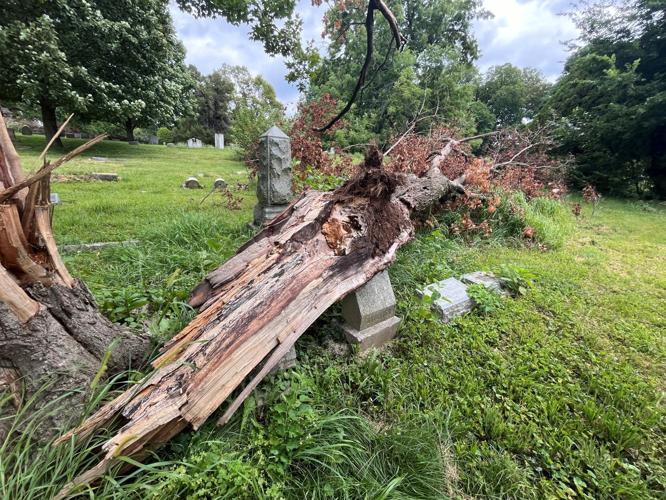
A WDRB News investigation last month revealed lax oversight of Greenwood, Eastern and Schardein cemeteries under a decades-old management arrangement through Jefferson Circuit Court created after their owners went out of business.
The reporting found that $43,000 for the cemeteries’ maintenance had been idling in the bank account of former supervisor Charles Rickert, who was managing expenditures under a contract with the attorney general’s office with the approval of the court.
Rickert stopped working for the attorney general in 2018 and died in 2023. He was not replaced by then-attorney general and current Democratic Gov. Andy Beshear or his successor, Republican Daniel Cameron.
In an interview with WDRB in Frankfort, Coleman said he now has responsibility over the cemetery issue and that his office will work with Metro government to “find a long-term solution.”
“The duct tape and baling wire solution to address these three cemeteries does simply not work, as we know,” he said. “So it's time to address it.”

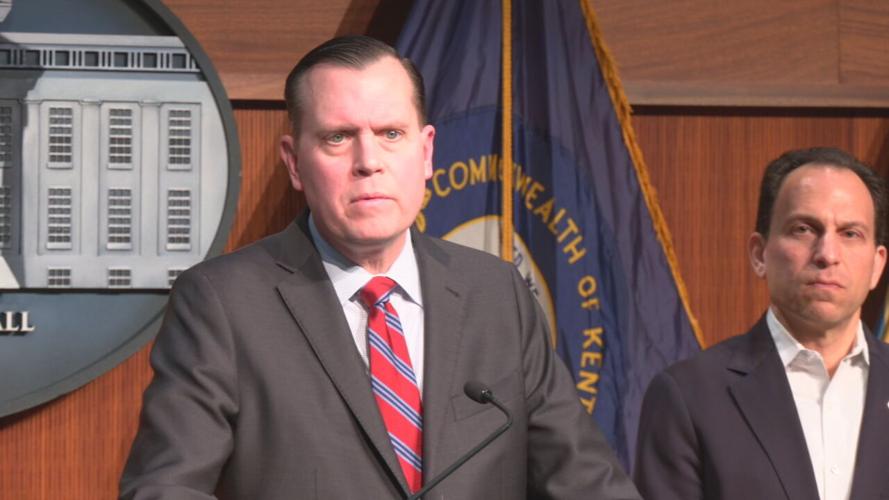
Pictured: this undated image shows Kentucky Attorney General-elect standing near Louisville Mayor Craig Greenberg at a news conference in Louisville, Ky. Coleman is partnering with the city in an attempt to strengthen its Group Violence Intervention program. (WDRB image)
“We're going to work with Metro government,” said Coleman, a Republican serving in his first term. “We're going to work with members of the legislature, if need be, structurally to make changes.”
The three cemeteries were owned by the Louisville Crematory and Cemeteries Co., which has been defunct since the 1990s. Since then, Jefferson County judges have overseen requests that include approving volunteer grass cutting schedules and reviewing how money from a trust fund is spent.
Meanwhile, the city’s cemetery board clarified its role in taking care of the three properties at a meeting in Louisville Tuesday.
Louisville Cemetery Board chairman Philip DiBlasi reiterated that those cemeteries don’t fall under its purview, disputing the board’s own April minutes that said the board had jurisdiction. (He also raised questions about the minutes’ accuracy.)
DiBlasi said there is no effort by the board to find volunteers to do maintenance at the cemeteries, rebuffing a statement from Mayor Craig Greenberg's administration.
A Greenberg spokesman told WDRB last month that the three cemeteries are among more than 100 that the mayor-appointed board is discussing ways to “support,” including by “focusing on identifying volunteers for regular maintenance among other items.”
DiBlasi said some cemetery board members have connections with volunteer groups affiliated with Greenwood and Eastern cemeteries, but he stressed that finding people to help with those cemeteries isn’t a board responsibility.
“As a board, we're not coordinating those efforts,” he said. “Individual board members are in their capacity” in those nonprofit groups.
DiBlasi, a retired University of Louisville archeologist who excavated remains at Eastern Cemetery, leveled criticisms during the meeting at the current judge in the case, Patricia “Tish” Morris, saying the court is no longer approving routine requests such as exhuming bodies.
He said Morris’ predecessor, Judge Angela Bisig, and two of her clerks spent more than four hours going through 17 “legal-sized boxes of material explaining the situation” when she took over the case. By contrast, he said, he’s had no contact with Morris or her staff.
Morris did not immediately respond to a request for comment submitted through McKay Chauvin, a retired judge who now is chief court administrator in Jefferson County. Chauvin previously told WDRB that judges must operate on the assumption that their orders are being followed.
Chauvin said those judges “are only prompted to act or react when an interested party files a written motion letting them know that something is 'wrong' and asking them to make it 'right.'"
DiBlasi also took aim at the attorney general’s office.
“Clearly, the attorney general's office has dropped the ball,” he said. “They were supposed to be monitoring and receiving a report from Rickert on an annual basis, or probably more frequently than that.
“The guy's been dead for two years, and nobody said, ‘Oh, excuse me, he's dead. We need to do something about it.’ So there's two major issues for two individuals or two groups or organizations that are actually fiscally responsible for those three cemeteries.”
Judge Morris has scheduled a status conference on the case for September 23.
Copyright 2024 WDRB Media. All rights reserved.


