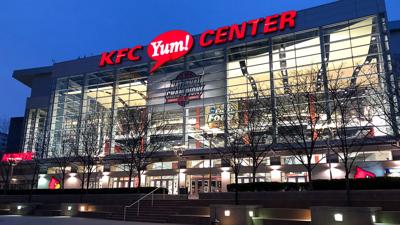


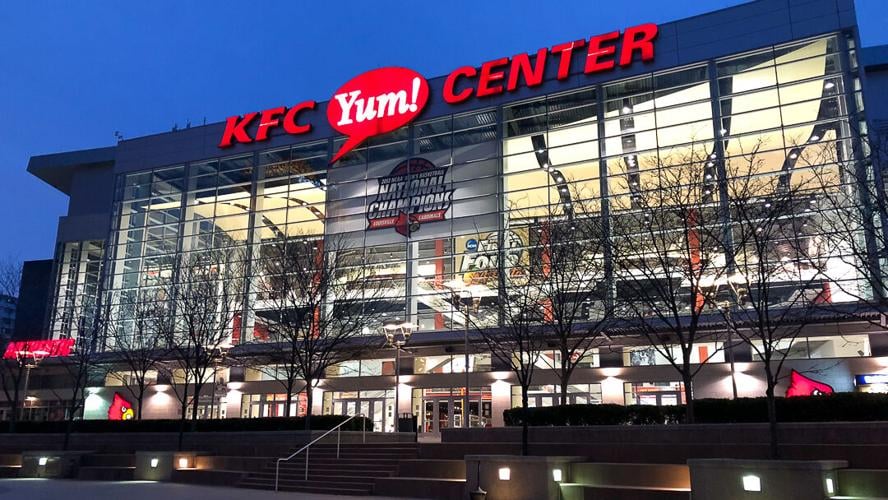
LOUISVILLE, Ky. (WDRB) -- A new analysis sheds light on how the KFC Yum! Center has influenced the city's economy over the last decade, an era marked by rapid changes in the University of Louisville men's basketball program.
The study, commissioned by Louisville Tourism, was completed by Chicago-based Hunden Partners. It reviewed a nine-year period ending this year and found arena visitors spent nearly $612 million, or an average of about $79 million annually, on purchases directly related to events at the downtown venue.
Hunden excluded the 2020 and 2021 fiscal years — the first two years of the COVID-19 pandemic – when calculating average spending impacts.
The firm's data indicates that from 2014-23 the arena generated $58.5 million in sales, hotel room and income tax revenues; and supported the annual equivalent of 584 full-time jobs in the Louisville area.
But it also gives a closer look at how changes to UofL men's basketball, the arena's main tenant, have affected the building and related spending.
"The fortunes of the (arena's) impact ride heavily upon the performance of the Cardinals," Rob Hunden, the company's president and CEO, told the Louisville Arena Authority on Monday. "Their attendance has been, you know, extremely up and down over that time period. And that impacts performance quite a bit."
Since 2015, the program has faced NCAA sanctions, including the loss of the 2013 national title and vacated wins as the result of the Katina Powell sex parties scandal involving recruits and players.
Meanwhile, the 2017 FBI "pay-for-play" investigation into Louisville and other college basketball programs led to the ouster of former head coach Rick Pitino.
UofL has had two permanent head coaches since then, but the program has fallen far from its traditional place among the NCAA's elite. Its record under current head coach Kenny Payne is six wins to 29 losses.
Attendance at Louisville men's games was 129,205 during the 2022-23 season, down 7% from the prior year and a drop of 71% from the highest annual attendance listed in the report: 443,320 in 2015-16.
And as a result, the amount of money spent inside the arena during those games has plummeted from a high of $5.4 million in 2016-17 to a low of $2.2 million in 2022-23, excluding the first years of the pandemic.
Overall, total spending on arena tickets and purchases inside the building have yet to return to pre-pandemic levels, the study shows. But there are some signs of a recovery.
For example, there was more money spent in the arena during concerts during the year ended June 30, 2023 — $5.1 million — than during any period measured in the study. And the total amount spent inside the building for all events last year, $40.2 million, was lower than the year before but higher than in 2017.
The report says the arena “continues to rebound from the pandemic," hosting just 16 percent fewer events than the facility did in 2019. While there are a similar number of sporting events and concerts, there were fewer in the “other events” category like community events and blood drives.
The report estimated other types of spending related to arena events, including "indirect" benefits, such as money spent by businesses affected by a visitor's spending. An example cited in the findings is a hotel that buys linens and other supplies as a result of the direct spending related to an arena event.
In all, Hunden estimates, the total spending in Louisville from visitors to arena events totaled more than $942 million over the nine-year period measured.
A frequent criticism of economic impact studies is that money spent in connection with events at arenas and other entertainment venues doesn't necessarily represent new spending, but rather money that would have been spent locally elsewhere.
The Hunden analysis says roughly 54% of visits to the facility came from outside of Jefferson County, while 25% of spending came from outside of the commonwealth of Kentucky. The report doesn't indicate how much of that spending was from residents of Metro counties, or Indiana.
One weakness, according to the report, is the 4th Street Live! district, which has “failed to stay relevant with locals, limiting gameday experiences.” Other weaknesses listed were local music festivals reducing Yum! Center concert opportunities and decreasing attendance at “tenant” events at the arena, such as U of L games.
This story will be updated.
Copyright 2023 WDRB Media. All Rights Reserved.


