



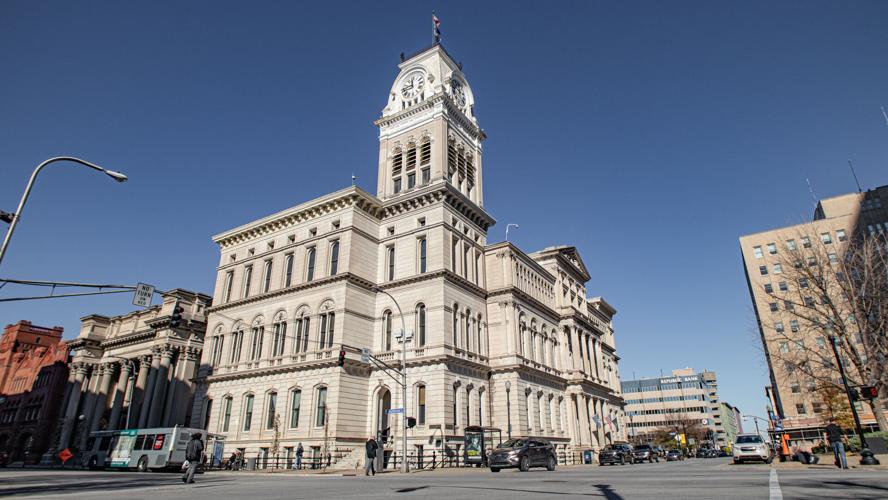
LOUISVILLE, Ky. (WDRB) -- Louisville Metro government will soon take the next steps toward meaningful police reform as part of a federally mandated consent decree, aiming to address systemic issues and rebuild trust with the community through accountability and transparency.
A judge's approval of the agreement, which is expected soon, will begin a process that city officials believe can be completed within five years.
The 248-page agreement between the city and federal government outlines 81 key objectives that focus on three main areas: policies, training and achieving goals set forth for issues like use of force, search warrants, traffic stops and searches, and community engagement, among other things.
Once approved by the courts, Louisville Metro and the DOJ will review applications for an independent monitor who reports to the court will oversee the police department's progress. The monitor is typically a team of experts in policing, law and other specialties who will oversee and ensure LMPD is meeting the requirements laid out in the agreement.
Community feedback will be considered in the monitor application process, after which a candidate will be approved by the courts. The city will pay the monitor up to $1.475 million per year, which accounts for 0.06% of LMPD's annual budget and 0.01% of Metro's total budget.
After five years, a U.S. District Court judge will hold a hearing on Louisville's progress.
"The ball is in Louisville Metro and LMPD's court," DOJ attorney Mehveen Riaz said in a public meeting Monday. "The decree is achievable with the staffing and resources that LMPD has, but it might require some reshuffling or reallocation of resources."
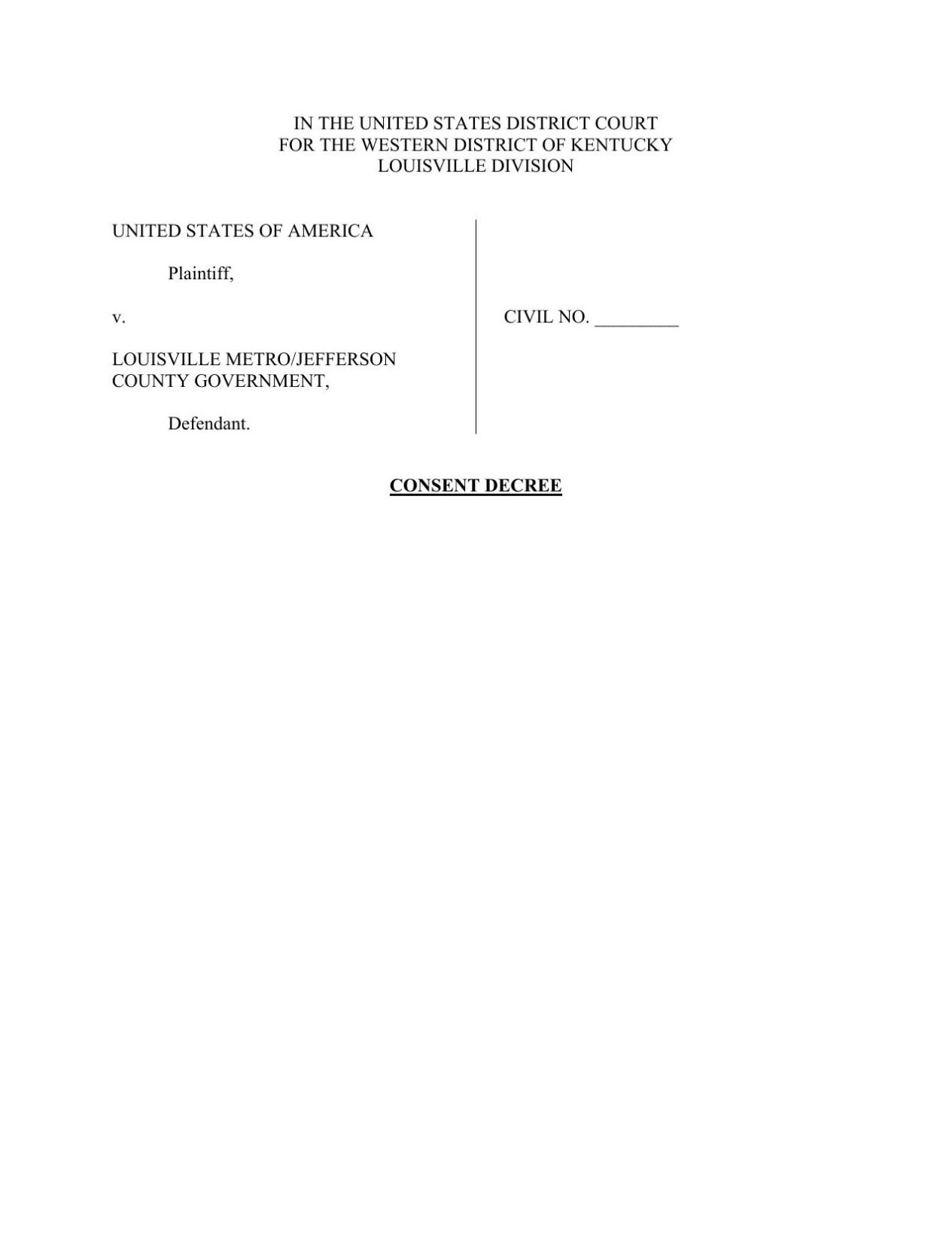
In that meeting, representatives from the DOJ outlined the next steps of Louisville's consent decree and provided details of how the agreement will help address specific issues found in its investigation of LMPD last year.
The investigation, which was released last March, revealed that the department violated the U.S. Constitution and federal law, including excessive use of force and searches based on invalid search warrants.
Of the 81 key objectives outlined in the consent decree agreement, LMPD will be required to will revise its use-of-force and training policies, improve search warrant practices, ensure traffic stops are conducted legally, ensure the fair investigations of police misconduct and address sexual harassment allegations in the department, among other reforms.
Here are some specific changes outlined in the agreement:
Use of Force
One of the largest sections of the decree outlines how and when officers can use force, and includes additional data collection, training and reviews.
The DOJ said the level of use of force will be measured on a scale of 1-4 and will determine the level of investigation that follows an incident.
"It requires every use of force that falls into one of these four categories to be documented, to be reported by the officer and reviewed by multiple levels of supervisors to determine whether the force was appropriate," Riaz said. "So the more serious the use of force, the more in depth the investigation and review process."
Searches, Seizures, Traffic Stops
There are a number of requirements of changes to LMPD's practices to applying for and executing search warrants.
When LMPD applies for a search warrant, they must state specific and accurate facts that establish probable cause for everything officers search or seize. When searches are executed, they must enter homes and conduct the searches using safe and lawful tactics.
A requirement of the agreement stipulates that search warrants are served between 6 a.m. and 10 p.m. unless there is an emergency that is outlined in the request.
The decree also includes changes to the department's practices in street enforcement. That includes when and how officers stop and frisk people, stop vehicles, search people in cars and make arrests.
"Officers will not be permitted to conduct stops, frisks or searches unless they have a justification that they can explain using specific facts that relate to the individual who is stopped or searched," said Dave Cooper, another DOJ attorney from the civil rights division.
The consent decree also outlines requirements for LMPD's response to behavioral health issues which includes directing those calls to specialists and training specific officers to better respond.
The consent decree also emphasizes community based public safety which requires the department to create a task force for community input, among other things.
While both the city and DOJ believe that the consent decree can be achieved in the five year period, it won't "go away" simply by meeting all of the requirements set forth in the agreement. LMPD must show that the requirements continue to be met for at least two consecutive years afterward.
How We Got Here
The Biden administration's Justice Department announced the findings of its review March 8, 2023. That came nearly two years after the 2020 police killing of Breonna Taylor, which prompted both local and national criticism of the police department as well as months of protests.
U.S. Attorney General Merrick Garland listed myriad examples of Louisville police misconduct and crimes, such as throwing drinks at pedestrians, racial disparities in arrests and traffic stops, assaulting citizens with disabilities and calling Black people "monkeys, animal and boy."
In February, officials with the city and LMPD began negotiations with the DOJ. There were more than 60 meetings to hammer out the agreement, Greenberg said.
The federal investigation into LMPD cites 63 different incidents of alleged misconduct, according to an appendix of the 90-page report the DOJ released following their roughly two-year investigation.
The Justice Department investigation began about a year after Taylor was killed during a botched police raid.
Police were looking for money or drugs connected with Jamarcus Glover, who was at the center of a narcotics probe by Louisville police. The warrant for Taylor's home was executed around the same time that police served other warrants on suspected drug houses in the city's west end, some 10 miles away.
Kenneth Walker was dating Taylor and was with her after midnight on March 13, 2020, when police raided her apartment on Springfield Drive near Pleasure Ridge Park. Walker, a licensed gun owner, told police he fired one shot when he believed intruders had burst into the home. Former Sgt. Jonathan Mattingly was shot once in the leg.
Police responded with 32 shots, hitting Taylor six times. The 26-year-old died at the scene.
No drugs were found in her home.
The Justice Department charged four former Louisville police officers with federal crimes in connection with the fatal raid.
A federal jury last month found former Louisville officer Brett Hankison guilty of using excessive force and violating Taylor's civil rights. He is facing a maximum sentence of life in prison.
Metro government paid $12 million to Taylor's family and implemented numerous reforms in the police department to settle a wrongful death lawsuit.
Examples of excessive force provided in the DOJ report include the use of neck restraints and police dogs against "people who pose no threat," an "unreasonable and unsafe" use of tasers, using takedowns, strikes and bodily force "disproportionate to threat or resistance," and escalating encounters, leading to excessive force.
Several police officers have been convicted of crimes in recent years.
LMPD has been sued several times for traffic stops claiming racial bias by officers, including the 2018 viral stop of then 18-year-old Tae-Ahn Lea. Lea, who is Black, was removed from his car and handcuffed for about 20 minutes after police pulled him over for making a wide turn. A lawsuit filed on Lea's behalf is pending.
And in just the last seven years or so, the city has paid more than $70 million to settle dozens of lawsuits accusing the city's police department of complaints ranging from wrongful arrests to drivers who were stopped and searched illegally.
The total since 2017 dwarfs what neighboring states and other larger cities have paid for police mistakes in recent years, a WDRB News investigation found.
Related Stories:
- Louisville, US Justice Department agree to deal requiring sweeping reforms of LMPD
- One-on-one | LMPD chief talks about former detective's conviction, police reform, public safety
- 'Very important we get this right' | Paul Humphrey sworn in as chief of Louisville police
Copyright 2024 WDRB Media. All Rights Reserved.


