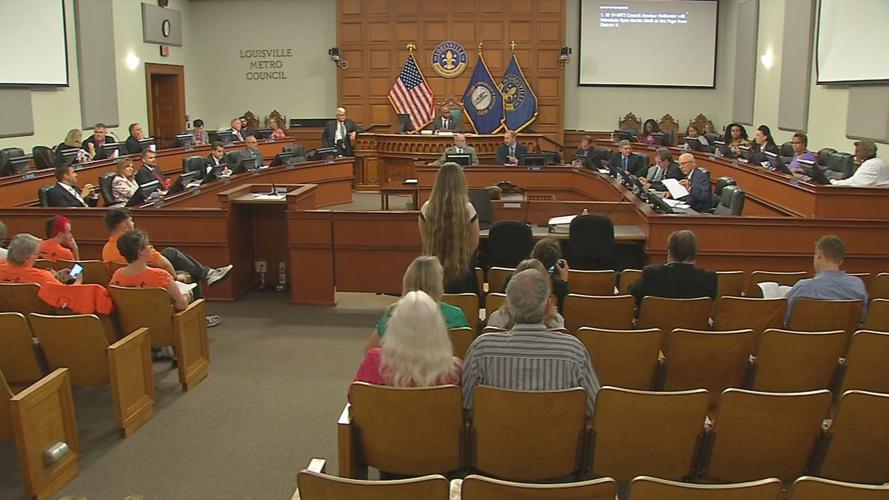
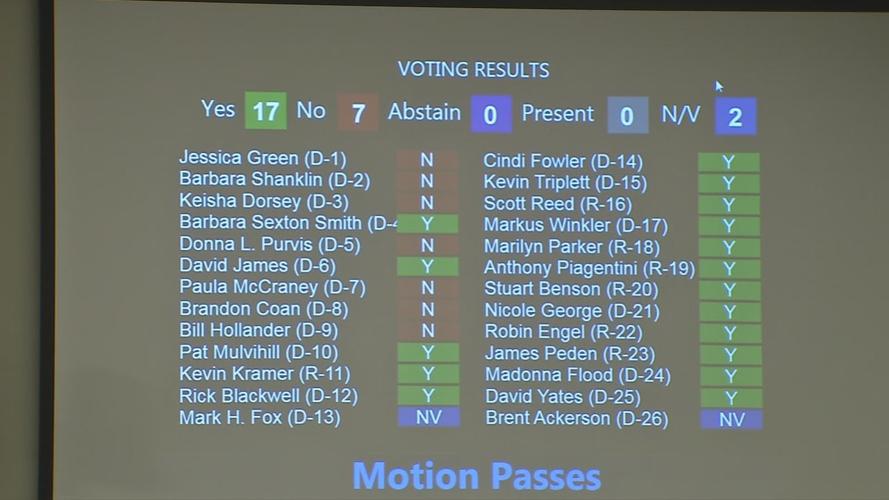
LOUISVILLE, Ky. (WDRB) -- Louisville’s pedestrian safety ordinance passed into law with a 17-7 vote during Thursday’s Metro Council meeting.
It specifies where people can cross the road, prevents people from loitering in medians and clarifies how people or organizations can solicit.
“This is not to pick on pedestrians," said Pat Mulvihill (D-10), one of the sponsors of the ordinance. "This is to make it safer."
He cited data ranking Louisville as the 35th deadliest city for pedestrian fatalities. And he believes, along with the other sponsors, that this law will help protect pedestrians by designating where someone can and cannot cross.
The ACLU, AFL-CIO and the Greater Louisville Central Labor Council previously voiced concerns how this could limit pandhandlers’ right to free speech, hinder people from handing out flyers or prevent union members from peacefully protesting. The groups threatened legal action if changes were not made.
Through discussion in the Public Safety Committee and at Thursday’s Metro Council meeting, amendments were made to the ordinance.
State law does not specify about protesters entering the roadway, but it does allow for people and groups to solicit donations in the road if they follow certain rules. Mulvihill said there was never any intention to contradict state laws, so the new law clarifies people can solicit donations in the road. They must meet the same state requirements of having warning signals, safety vests or emergency vehicles with them.
Another amendment includes modifying the definition of “median.” In earlier versions of the ordinance, people would be prohibited from doing anything in medians other than using them as part of crossing the road. However, a council member pointed out there are some medians in different parts of town that are more like grassy sidewalks or park-like areas. The new law defines “median” as the area that separates a divided highway, but it excludes turn lanes and the area around the marked sidewalk or legal crossing. So a person can still stand on the median or island and wait until it is safe to cross the road, but a person cannot loiter there.
Sponsors also amended part of the law to state that no one other than a vehicle can be in a road, “unless otherwise provided by law.” Under state law, if a road has a sidewalk, people have to use the sidewalk. If there is no sidewalk and no shoulder, people can walk on the edge of the road.
The ordinance says a person cannot approach a vehicle from the sidewalk other than for specific reasons. An amendment was made in order to clarify anyone advertising with signs, supporting a political candidate, protesting a cause or using their right to free speech has the right to do so from a public sidewalk but cannot enter the roadway to do so.
Based on the amendments made in the committee and full council, leaders of GLCLC, AFL-CIO and the ACLU said there is no plan right now to pursue legal action. Leaders with those groups said they are neutral on the ordinance now, but they are pleased that Metro Council listened to their concerns and made changes.
Councilman Brandon Coan said no one should have any doubt about the intentions of those creating this ordinance, that they wrote it in order to help prevent pedestrian fatalities not to limit free speech. However, he said he could not support the ordinance if more changes were not made in regards to the definition of “median” in order to make sure it does not prevent people from being in public spaces.
Coan and Bill Hollander also raised issues with the specification that you cannot cross beyond 200 feet of a designated crosswalk or corner. The intention was to prevent jaywalking, but the councilmen pointed out for many residential areas people cross in the middle of the road to get to their homes instead of walking to the corner. Or there are some places that might feel safer to walk across the middle of the block to get to a business. Both councilmen voted against the ordinance.

The ordinance passed with a 17-7 vote.
There are also concerns that by potentially handing out more fines to people panhandling, it will unfairly burden those unable to pay and then send them to jail. Mulvihill said that is not the intention, but he hopes people will follow the law.
He added that he believes there will be an educational period where police will not be immediately fining people and instead teaching them where someone can and cannot walk or stand. Fines can range from $25 to $250.
Related Stories:
- Civil rights group not happy with Louisville plan that would limit panhandling
- LMPD chief supports effort to limit jaywalking, some panhandling
Copyright 2019 WDRB Media. All Rights Reserved.


