

LOUISVILLE, Ky. (WDRB) -- Taylor U'Sellis and Nancy Cavalcante say Louisville leaders, including Mayor Greg Fischer, aren't practicing the transparency they voraciously promote.
The two are both members of a new movement called the 490 Project.
As Fischer's administration negotiates with the River City FOP Lodge 614 to produce a new collective bargaining agreement for many LMPD officers, the group says members of the general public should be in the room, but currently, that is not allowed under the ground rules set by the mayor's administration and the FOP.
"This union contract is shrouded in secrecy," U'Sellis said.
Last November, frustrations boiled over as Metro Council voted to ratify the current contract for LMPD officers and sergeants.
While most council members agreed those officers deserved better pay to bolster retention and recruitment, some said the contract dangerously avoided reforms that would lead to more police accountability.
"Vote 'no' to the FOP!" protesters shouted outside City Hall on Nov. 5, the night the contract was ultimately ratified by council in a 16 to 10 vote.
Five months later, Cavalcante, U'Sellis and other group members are still pushing for the reforms and better transparency while the next contract is currently being negotiated.

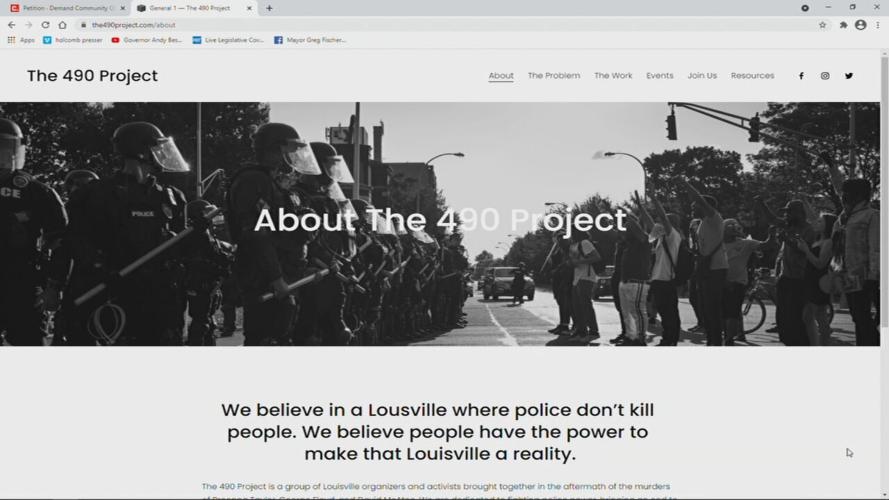
The 490 Project website. (Source: The 490 Project)
According to its website, the 490 Project is "dedicated to fighting police power, bringing an end to the current norms of police violence, and building a future where everyone is safe."
Right now, much of the group's effort is focused on the LMPD contract negotiations. Particularly, members like Cavalcante and U'Sellis want the mayor to inject members of the public into the negotiations.
"We would want members of the community on the mayor's negotiating team with the power to negotiate with the mayor's team," said U'Sellis. "Silent observers would be, you know, the second best thing."

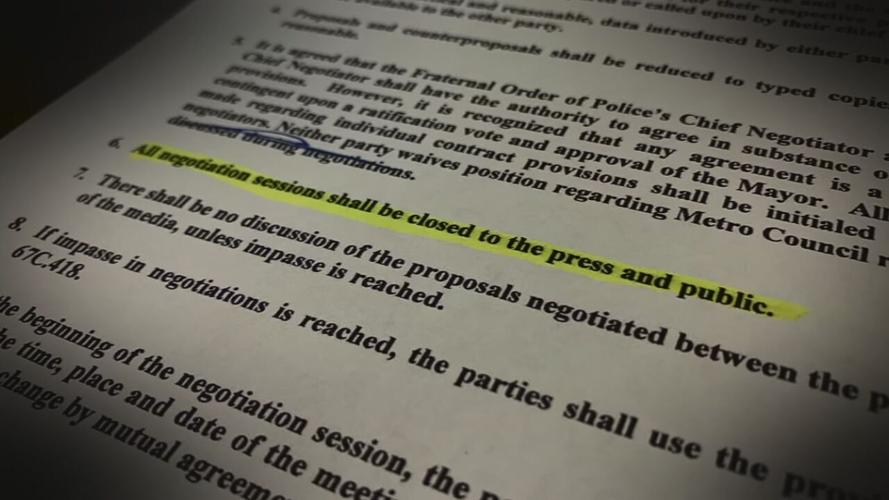
The "ground rules" for the current negotiations. (Source: The 490 Project)
However, the ground rules say the negotiations are "closed to the press and public," and Jean Porter, a spokesperson for Mayor Fischer says opening the negotiations to members of the public up might be complicated.
"Some of their ideas would impact the length of time the process will take, which is not ideal. We also have concerns about treating this collective bargaining agreement process differently from others, and there are issues involved in determining which outside entities might be allowed to observe," Porter wrote.
As a result, the 490 Project will refocus its efforts on persuading the Metro Council.
"And appealing to our council members to either vote no on the contract in June or urge the mayor to provide more transparency," U'Sellis said.
Councilman Jecorey Arthur, D-4, is on the same page.
"There is no trust without transparency, and right now, the process lacks transparency," Arthur said.
But Councilman Anthony Piagentini says opening up the negotiations would be a "horrible idea."

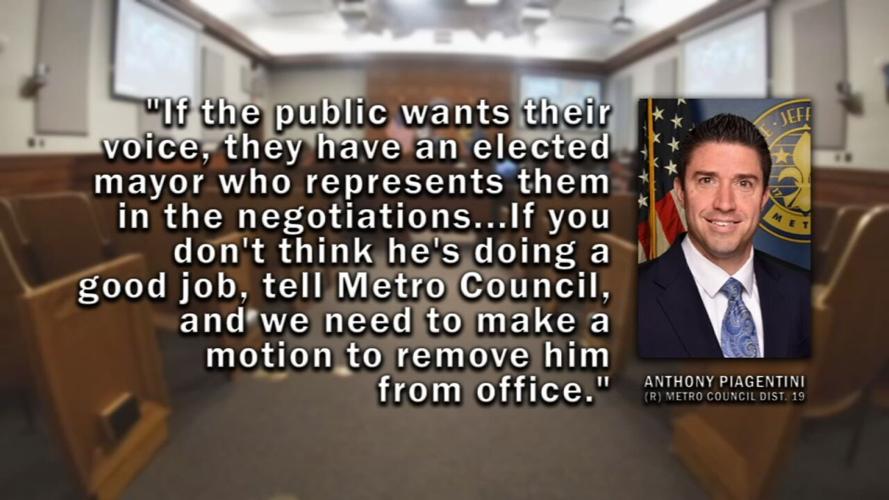
A statement from Anthony Piagentini, R-19.
"If the public wants their voice, they have an elected mayor who represents them in the negotiations," he said. "If you don't think he's doing a good job, tell Metro Council, and we need to make a motion to remove him from office."
Piagentini says opening the negotiations to members of the public would create a level of complexity that would have to be duplicated for other contract negotiations too.
"The labor unions should join the FOP in pushing back significantly on this," he said.
Despite the roadblocks, the 490 Project says it will keep fighting to change the process. It says transparency is the first step to more accountability and more public trust in LMPD.
"There's no transparency to the conversations about what's in the contract, why it's in there, who it protects, who it doesn't, who it penalizes and who it doesn't," said Cavalcante.
In particular, the 490 Project is concerned about key clauses in the contract identified as problematic by some council members and another group called Campaign Zero:
Disqualifying misconduct complaints that are submitted too many days after an incident occurs or if an investigation takes too long to complete.
Preventing police officers from being interrogated immediately after being involved in an incident or otherwise restricting how, when or where they can be interrogated.
Giving officers access to information that civilians do not get before being interrogated.
Requiring cities to pay costs related to police misconduct including giving officers paid leave while under investigation, paying legal fees and/or the cost of settlements.
Preventing information on past misconduct investigations from being recorded or retained in an officer's personnel file.
Limiting disciplinary consequences for officers or limiting the capacity of civilian oversight structures and/or the media to hold police accountable.
Last year, Campaign Zero said those six provisions make it tougher to hold officers accountable for misconduct. The campaign's website also shows Louisville is one of just six cities (of those studied) with all six problem areas in its police contract.
Despite the current impasse, the mayor's office hopes a compromise can be reached.
"It’s our hope that we can have informed conversations about how we can achieve more transparency, within the confines of existing laws, while adhering to our No. 1 goal, which is to reach an agreement between (Louisville Metro Government) and the FOP that meets the needs of both the police and the community they serve," wrote Porter, the mayor's spokesperson.
Copyright 2021 WDRB Media. All Rights Reserved.


