


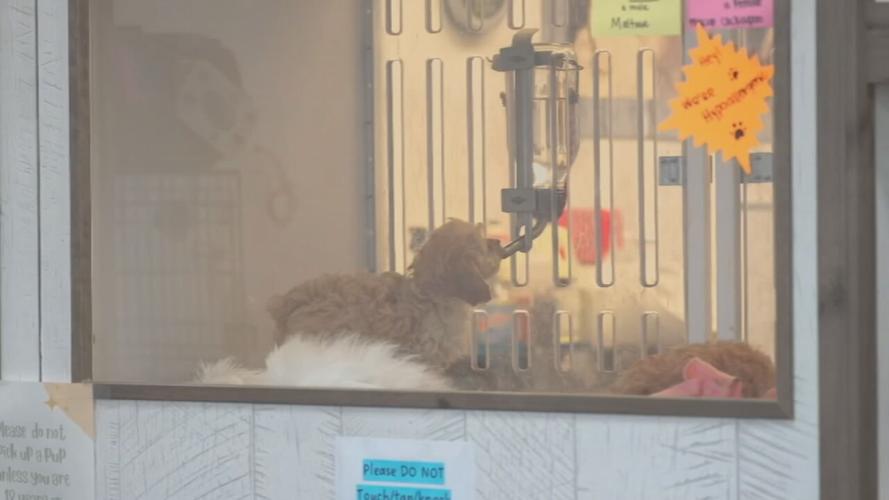
CLARKSVILLE, Ind. (WDRB) — Months after Puppygram moved from Louisville to Clarksville, the town is tightening the rules for pet shops that sell puppies.
The Clarksville Town Council approved a revised animal ordinance Tuesday night that adds stricter health, sanitation and transparency requirements for pet stores. The changes come after months of concerns surrounding Puppygram, which relocated to Green Tree Mall after Louisville banned retail pet stores from selling dogs linked to puppy mills.
The new rules require every puppy to be examined in person by a licensed local veterinarian every week. Before a puppy can be sold, a veterinarian must also confirm that it's healthy.
Newly transported dogs must also be kept away from the public for a short period before they're offered for sale.
The ordinance also adds stricter requirements for kennel sizes, flooring, daily cleaning and disinfecting, deep cleaning between animals, recordkeeping for medical treatment and how medications are labeled and stored. Pet shops will also have to post information about breeders, brokers and puppy pricing.
Clarksville leaders said the changes are meant to strengthen oversight of pet stores like Puppygram.
On July 8, Ana Fernandez bought a corgi from Puppygram and named her Tater.
"She looks like a tater tot," Fernandez said. "She loves to play, so she's good with kids."
Fernandez bought Tater for her 4-year-old son. He has autism, and she hopes Tater could become a service dog.
However, hours after their tiny pup came home, Fernandez noticed Tater wasn't feeling well. She rushed the puppy to the vet and discovered Tater has Parvo.
Fernandez spent $3,745 buying Tater and said she will likely spend thousands more treating the highly contagious, life-threatening disease.
"I'm just mad, furious," Fernandez said. "I don't think it's my responsibility, you know, to cover for something they weren't clear about."
Fernandez believes Puppgram wasn't being transparent about Tater's medical history. Several other customers raised concerns about puppies becoming seriously ill shortly after being purchased from the store's former Louisville location.
In the past, Puppygram has denied knowingly selling sick dogs and said it works with USDA-licensed breeders and has veterinarians examine puppies while they're in its care.
WDRB reached out to Puppygram's CEO Miles Handy via email, call and text on Friday for comment. Handy texted the following statement:
"We are currently reviewing the the new Clarksville ordinance. Many things in the ordinance we are currently doing daily. Our puppies do get veterinarian checked with a health certificate from Indiana license veterinarian before coming to our location .We have given this to our attorneys for further review."
WDRB followed up and asked about potential Parvo at the GreenTree Mall location, where Tater was purchased. Handy sent the following text in response:
"We have currently no Puppies in our possession showing any signs of illness. Our puppies are up-to-date and vaccinating by Indiana veterinarian. Our facility is clean well maintained."
Puppygram moved to Clarksville after Louisville banned pet stores from selling dogs and cats from commercial breeders. But in Indiana, cities and towns can't ban pet stores from selling commercially bred puppies. Clarksville's Interim Town Manager Glen Adams sent the following statement to WDRB:
Supporters said the new rules are a good start, but they don't go far enough because state law limits what the city can do.
Copyright 2026 WDRB Media. All Rights Reserved.


