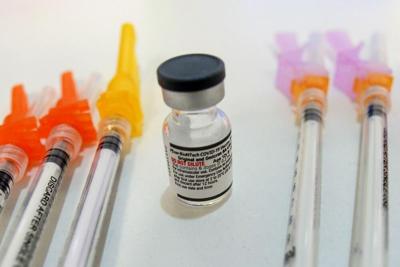
LOUISVILLE, Ky. (WDRB) -- University of Kentucky researchers found that maternal vaccination against COVID-19 protects both the mother and baby.
The study, funded by a National Institutes of Health grant, was published in the American Journal of Obstetrics and Gynecology Maternal-Fetal Medicine.
The findings come on the heals of a recent spike in COVID-19 cases across the U.S. and Kentucky.
"COVID-19 is here to stay. It's not going anywhere," Ilhem Messaoudi, Ph.D., chair of the Department of Microbiology, Immunology and Molecular Genetics in the UK College of Medicine, said in a news release. "We don't think that you can fully protect the baby by just breastfeeding."
For the study, done in collaboration with the Oregon Health and Science University, researchers monitored 120 women from March 2021 until June 2022 through pregnancy, delivery and postpartum, and two rounds of COVID-19 vaccinations and booster shot. About 90% of the women received the Pfizer's vaccine.
"What we've learned is the first series of the vaccine induces a pretty good immune response in the moms that we can track by looking at antibodies in their plasma," Messaoudi said.
Scientists kept tract of antibody response in blood samples from the mother, umbilical cord and newborn as well as donated breast milk from the vaccinated women. Researchers found the antibodies passively transfer from mother to fetus in utero, which gives the most protection.
"Getting vaccinated during pregnancy not only protected the mom, but also now provided passive protection for their newborns who are not eligible for the vaccine," Messaoudi said.
The women in the study received their COVID-19 boosters after giving birth. Within a few weeks, researches found a dramatic increase in antibodies in the mother's plasma, which weren't directly passed to the newborns at the time. They also found the antibodies in breast milk increase two-to-three fold and with a half-life of more than 200 days.
The Centers of Disease Control and Prevention (CDC) advises that everyone six months and older receive the COVID-19 vaccine, including people who are pregnant, breastfeeding or trying to get pregnant now or in the future.
People who are pregnant or were recently pregnant are more likely to become severely ill from COVID-19 compared to people who aren't pregnant, the CDC said in the news release. People who are pregnant also have a higher risk for preterm birth.
Researchers will continue to monitor study participants and expect to release additional findings on the boosters' efficacy against the omicron variant.
"We now have a really large number of studies on vaccinations in pregnant women," Messaoudi said. "They've all shown great safety, tolerability and immunogenicity, so we've hit the trifecta. The vaccines are safe and work. That's what's really important."
Copyright 2023 WDRB Media. All Rights Reserved.


