

FRANKFORT, Ky. (WDRB) -- Kentucky's House of Representatives passed House Bill 3 through its chambers on Thursday.
The 60-page bill sweeps across several different topics. This week, it went through a committee hearing and house floor debate. The bill can be broken down into four key parts:
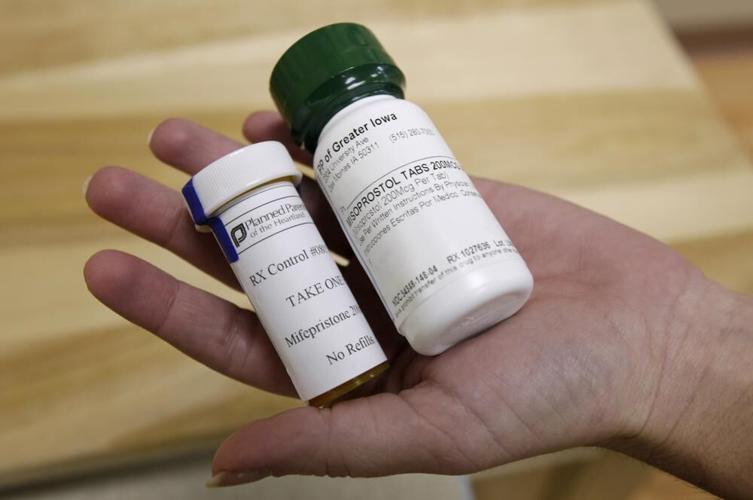
Abortion pills
Websites where someone can order an abortion pill sparked a large part of House Bill 3.
In 2000, The Federal Drug Administration (FDA) approved the pill to end a pregnancy within 70 days, which is in the first trimester. In 2016, the two-part regimen was routinely updated.
Then in December 2021, the FDA made it okay for a patient to receive an abortion pill prescribed by their healthcare provider in the mail.
Now in March of 2022, A Kentucky representative wants to reverse the latest FDA order to ban abortion pills through the mail and require an in-person medical exam before someone could get access to the drug.
Opponents of the bill said the FDA already requires a healthcare provider to be involved, even if the patient can get the drug by mail, and the FDA also advises against online ordering of abortion pills.
"That's where all state laws, not just Kentucky but a lot of our state laws, are kind of old and have not kept pace with this (abortion pills) and come up in today's big business, Pharma, type of approach on abortion," an advocate for HB3 said in committee.
"The bill undoes the progress that was made even with the FDA's recent changes and takes our state backwards, forcing Kentucky patients to use an outdated standard of care and pushes abortion out of reach for many," Tamarra Wieder, Kentucky director for Planned Parenthood Alliance Advocates, said in committee.
The bill would also require physicians to inform a pregnant woman about a new drug that could potentially reverse the first dose of the abortion pill regimen. But opponents argue it's not a proven reversal drug.
Abortions for minors: parental consent
The bill would also tighten restrictions around minors getting an abortion. It would require any pregnant female under age 18 to have written consent from a parent or legal guardian to be able to get an abortion pill.
It would require a reasonable attempt to notify the qualifying parent or legal guardian at least 48 hours prior to providing the consent form.
There are three alternatives for a minor to go forward without permission.
- If the minor is emancipated.
- The parent has faced a domestic violence order or has been convicted of a violent or sexual crime.
- The minor can petition to the court why she should be allowed to go without.
Opponents of the bill said it doesn’t do enough to protect girls from rape or incest. Rep. Rachel Roberts, D-Newport, filed an amendment on the House floor that would provide that protection.
"It is perhaps most especially cruel to those who are victims of rape and incest and could result in their suffering through forced child birth and a lifetime of trauma around it all," Roberts said.
The amendment was voted down by the Republican Supermajority.
Abortion public portal: threatens doctors?
The bill also requires creation of data revolving around abortions in Kentucky by creating an online public portal listing the names of doctors who assist with ending pregnancies, wanted or not. It would also create a complaint portal.
Opponents view it as a way to threaten physicians by tying them to possible Pro-Life extremists or threats.
"Publicly listing the names of all the abortion providers will only open them up to further harassment and intimidation designed at disrupting medical services," Rep. Attica Scott, D-Louisville, said.
The bill’s sponsor and supporters said a portal would provide accountability, help further study abortion complications and overall keep women safe.
"We want to make sure the doctors that are conducting this type of medical practice don't have any complaints, just like we do with any other process that’s in place," the bill's sponsor Rep. Nancy Tate, R-Brandenburg, said.
In committee this week, lawmakers heard concern from the state’s Board of Pharmacy about how it's supposed to create and support such a portal and if there would be financial support.
Tate said she's now working with the Board to learn how much it would cost to make and maintain.
Abortion and miscarriage: addressing fetal remains
Sometimes ending a pregnancy isn’t by choice, such as a miscarriage. But in House Bill 3, the definition of fetal remains combines abortion and miscarried fetal remains. That means women who miscarry or have an abortion would have the same regulations for what happens next, and the bill lays out the ways remains could be disposed.
It would also require women to complete a document within 24 hours of either a miscarriage or abortion, listing the choice of disposal and who will be disposing of the remains — a healthcare provider or the family.
Those opposed to the bill said it’s traumatizing for women to do this kind of follow-up after either type of loss happens.
"I see some of this as very traumatic and very hurtful to the folks who are making the very, very difficult decision to terminate a pregnancy," Minority Floor Leader Rep. Joni Jenkins, D-Shively, said.
Those in favor of the bill said it allows aborted babies a chance to be buried.
"Our son-in-law dug the grave himself, it was the proper disposal of the fetal remains of a wanted baby, don’t unwanted babies deserve the same," Rep. Melinda Prunty, R-Hopkins/Muhlenberg, said on the House floor.
Tate said on the House floor that the forms outlined in the bill after miscarriage or death is not a death certificate.
The bill still could change after Kentucky Senators review it, which could happen as early as next week.
Related Stories:
- Jewish community pushes for training after string of antisemitic comments in Kentucky General Assembly
- US Supreme Court justices allow new defense of blocked Kentucky abortion law
- Kentucky House passes bill to regulate medication abortions
- Proposed bill addresses 'modern' abortion pill access in Kentucky
Copyright 2022 WDRB Media. All Rights Reserved.