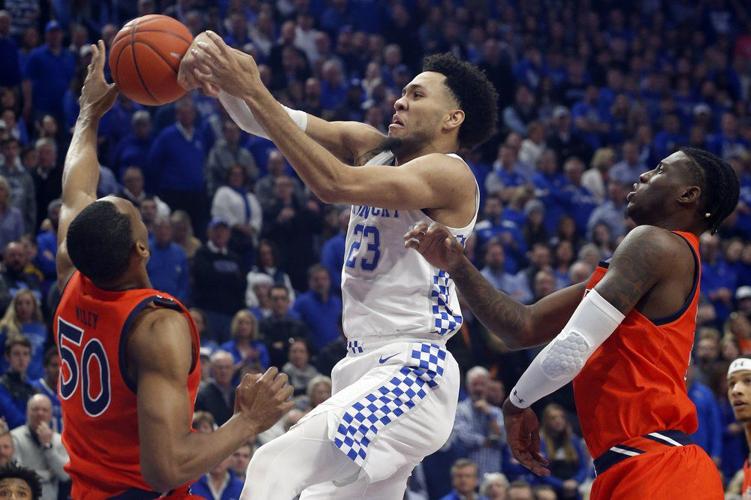


LOUISVILLE, Ky. (WDRB) -- Jerry Eaves has preached it to me for at least five years. But when Eaves saw the news that EJ Montgomery was taking his modest 6.1 scoring average and 51.8% shooting percentage from the University of Kentucky to the pros, Eaves said it again Thursday louder than ever:
Unless the NCAA changes its position on paying players, the top basketball prospects will make other plans, including the G League, the NBA’s surging minor league.
“Wednesday was a troubling day,” Eaves said. “This thing is playing out like a bad motion picture, and college basketball is going to suffer.
“EJ still needs to work on some things. He’s probably not going to get drafted. But you can’t criticize his decision.”
That reminded me of a conversation I had with an assistant coach from a perennial Top-10 program during the season that just ended prematurely because of the novel coronavirus. He said his head coach, a Hall of Famer, was convinced that NBA Commissioner Adam Silver was fine with hurting college basketball by improving the pay in the G League to the point where it becomes a serious threat for the top high school talent and marginal underclassmen.
“People say that the NBA wants guys to stay in college to develop their name recognition,” Eaves said. “How many guys does that really affect? Two a year? One.”
In the 2019 season, one: Zion Williamson.
In the 2020 season: none. Will you rush out to buy Obi Toppin or Anthony Edwards’ NBA gear?
Guess who was also thinking the same thing? Pat Forde, my former newspaper sidekick, who writes for Sports Illustrated.
He filed his column, titled, “College Basketball’s Magical Allure is Vanishing for NBA Draft Prospects.”
Forde researched all the names, including Isaiah Todd, the big man who was supposed to become the next Juwan Howard for the University of Michigan until Todd decided that instead of honoring his national letter of intent to play for Howard at Michigan, he preferred to become a professional.
Todd will not be in the NBA. But he might be in the G League or he could play overseas. That was the path that LaMelo Ball and R.J. Hampton, two prominent members of the Class of 2019, chose a year ago while making money and improving their credentials for the 2020 NBA Draft.
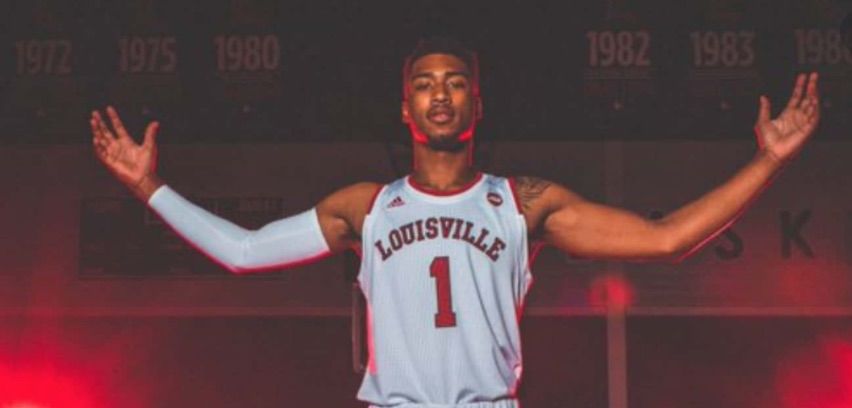
You saw (hopefully) what I wrote about Louisville commit Jay Scrubb on Wednesday, with his father, Jason, outlining all the reasons that he and his son were not concerned about his NBA Draft scouting report
“The NCAA could have fixed this a long time ago,” Eaves told me Thursday morning. “All they had to do was give the players the rights to market themselves (name, image, likeness) and pay them some money.
“But they didn’t want to do that, because all of the money has to go to the coaches even though we all know nobody goes to watch the coaches. They go to watch the players.
“Terrible leadership is killing the game.”
Killing the game is the phrase Eaves likes. It’s not my phrase.
I prefer to say that the culture around sports is changing, and the game is changing with it. The marketplace rules.
It’s too soon to say if that is a bad thing or a good thing. It’s just different.
I’ve argued for years that forcing players to continue their formal educations when they have no interest in pursuing a degree was dishonest and wasteful.
It’s not for everybody. It should not be forced on everybody.
If that is the course that a player chooses, wonderful. Those players should make a commitment to college basketball that lasts three seasons.
Back off on time demands that many programs make on players and allow them to be serious about their books. If players want to return home for the summer, allow it.
Make the travel more sensible. Eliminate the late tipoffs. It shouldn’t be an 11-month grind.
For the players who are convinced they are ready to be professionals or honestly have little interest in academics beyond high school, that’s fine.
Make the G League their flight path.
If Montgomery made the calculation that he’d prefer a G League salary (perhaps as much as $85,000) over another season in the Southeastern Conference, who can criticize that?
“Not me,” Eaves said.
And not me either.
Copyright 2020 WDRB Media. All Rights Reserved.


