
LOUISVILLE, Ky. (WDRB) -- This column is going to ramble. You ask, "What do you write when you're covering a bad basketball team?" Sometimes, you don't know what to write. So you wind up with pieces like this.
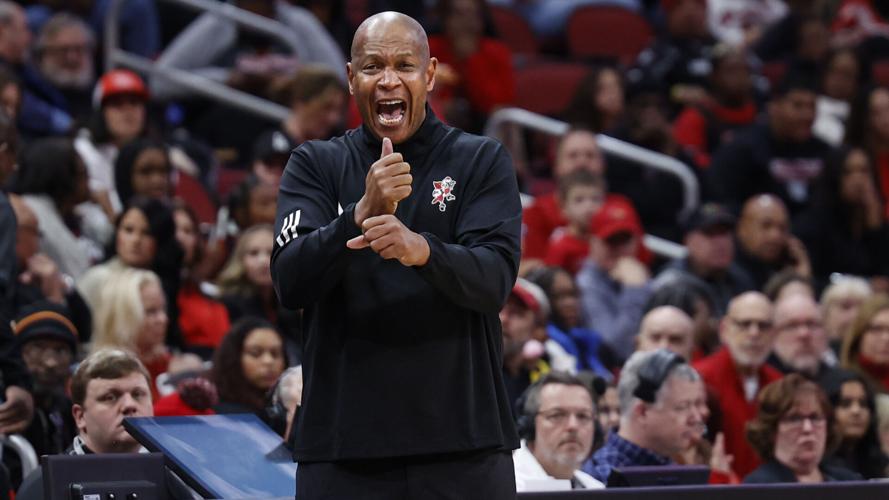
I want to do an exercise. Let's say you're Louisville basketball coach Kenny Payne. Wait! Get back here. Don't run off. This is an exercise in problem-solving. Stay with me. Say you lost a bet. Or you got caught jaywalking and were sentenced to a week as Louisville basketball coach.
Anyway, if you're a Louisville basketball fan, you have some time to kill these days as you dream about the program's resurrection and who, potentially, might be the person to effect it.
But, for now, Payne is the coach, tasked with trying to stop the flat spin that his second season at Louisville has become.
A NEW "NORMAL?"
I know, some of you reject the premise. I heard a radio caller talking to Mark Ennis and Luke Hancock on 93.9 FM on Tuesday, lamenting that so many discussions seem to have "normalized" losing with Louisville basketball. I would point out to that caller and others who might agree with him that it isn't anyone in the media who has "normalized" losing.
But if that is being done, it is Louisville basketball itself that has done it. It has won 12 of the last 64 games it has played. It hasn't been to the NCAA Tournament since 2019. It hasn't won an NCAA Tournament game since 2017. Louisville basketball, since Rick Pitino-recruited players have left the scene, has been a bleak landscape.
Everybody likes to point to Chris Mack getting the program to a No. 1 ranking in the 2019-20 season. But that team, after reaching No. 1, lost back-to-back games at Kentucky (in overtime) and by double-digits to Florida State at home. After reeling off some wins — including some pretty impressive ones — it lost four of its last seven games, including an 0-4 stretch on the road. So I'm not buying that it was gearing up for some kind of big tournament run.
A year prior, a Louisville team featuring Jordan Nwora, Christen Cunningham, Dwayne Sutton, Stephen Enoch, Ryan McMahon and others was bounced in the first round by a Minnesota team that then lost by 20 to a Michigan State team that Louisville had beaten earlier in the year.
The point of this digression: losing has been more normal than not in recent years, and discussing the actual reality of this isn't accepting it.
Now, let's do this exercise. Because I do have a point to it, too.
ALL LOSING ISN'T EQUAL
If you're running the Louisville basketball team, what do you do? What can be done? (And no, quitting isn't an option. Firing everybody isn't practical.)
Why am I even asking? Here's why. I covered a couple of games recently where I got to sit close to the losing team's bench. And I've gotten to sit, for brief occasions, around Louisville's bench during a loss.

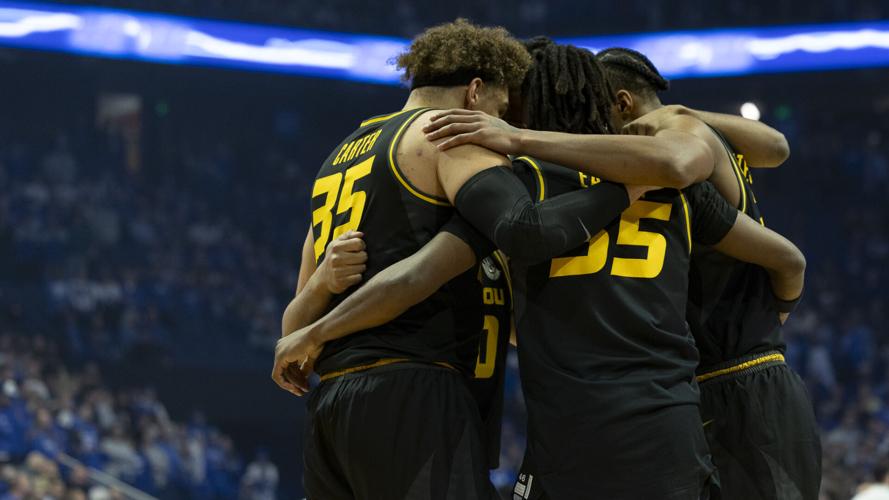
Missouri's players huddle during a loss to Kentucky in Rupp Arena.
They were not the same experiences. On Tuesday night, Missouri got down to Kentucky in Rupp Arena, and wound up losing by 13. But Missouri would not go away. It would not let Kentucky do what it wanted to do offensively. It scored 80 points on the Wildcats by setting hard screens and moving the ball. (It did this, I might add, with a player from Louisville, Sean East, who has a higher offensive efficiency rating than any player on Louisville's team.
What struck me about Missouri is this: They did everything they could to junk up that game. They were unorthodox in their zone. They jammed Kentucky up. Their execution wasn't always first-team, but their comportment and demeanor were. They were together. This is a team that has lost five of six, but they were engaged. The bench chanted "kill zone" when the team had back-to-back stops. It chanted "double kill zone" when it had more than three. Their second year coach, Dennis Gates, was in full command of that group.
Yeah, they still lost the game. But you knew they'd been there.
A few nights before, I watched a Bellarmine team that has been beset by injuries lose to Austin Peay by 16. Bellarmine is just outgunned. Coach Scott Davenport played basically six players. Even those guys aren't completely healthy. Yet when Peter Suder drove for a late and-one to cut Peay's lead to 11, he's up, yelling at teammates, trying to rally them for a final push. They keep executing, regardless of score.
As Garrett Tipton said before the season, whatever the outcome, they are playing for future players who will come through the program, trying to lay a foundation of pride in how you play.
There's losing, folks, and then there's losing. And you might say, "What's the difference? It's all losing."
I don't think so. The examples of Missouri and Bellarmine are those of teams that insist on purposeful effort in pursuit of something better. Discouragement is not evident in their demeanor or body language. That doesn't mean they don't know what they're up against. It does mean they are determined to do their jobs and continue to grow regardless of result.
At Louisville, I don't get the same feeling. Louisville is in some kind of funk. And maybe, maybe, it's because you need to embrace losing and begin to learn from it before you emerge from it.
"EMBRACE THE SUCK"
There's a book I like to turn to once in a while by a Navy Seal named Brent Gleeson, titled, "Embrace the Suck." Its primary tenet is that to overcome difficulty, you must embrace it. The quotes it cites are evidence.
"We must embrace pain and burn it as fuel for our journey," Kenji Miyazawa.
"Pain is inevitable. Suffering is optional," Buddhist proverb.
"Do not pray for an easy life, pray for the strength to endure a difficult one," Bruce Lee.
"Embrace pain," Gleeson writes. "Beg for more. Change the narrative in your mind. ... Suck it the (expletive) up. You earned your right to be here. You have a long way to go. So embrace the suck and get it done."
I don't know, it seems like as good a motto as any for people around Louisville basketball these days.
STEPS FOR LOUISVILLE
What can Payne and his team do? Embrace the suck. What can they do from a basketball standpoint? A few thoughts of mine.
1). Put teeth into the defense. Louisville needs easy baskets. It needs to force turnovers. At the moment, Louisville is letting opposing offenses run their plays in whatever manner they want. The Cardinals are going to have to take something away from somebody, at some point. Their full-court pressure looks like a pregame slide drill. "Press" is short for "pressure." Press with a purpose, or drop back and don't press at all. Focus on the half court, and focus on slowing the game down. Or commit to getting into passing lanes and getting deflections. Figure out a defensive identity and stick to it. Switch defenses to confuse opposing teams, or at least slow them down.

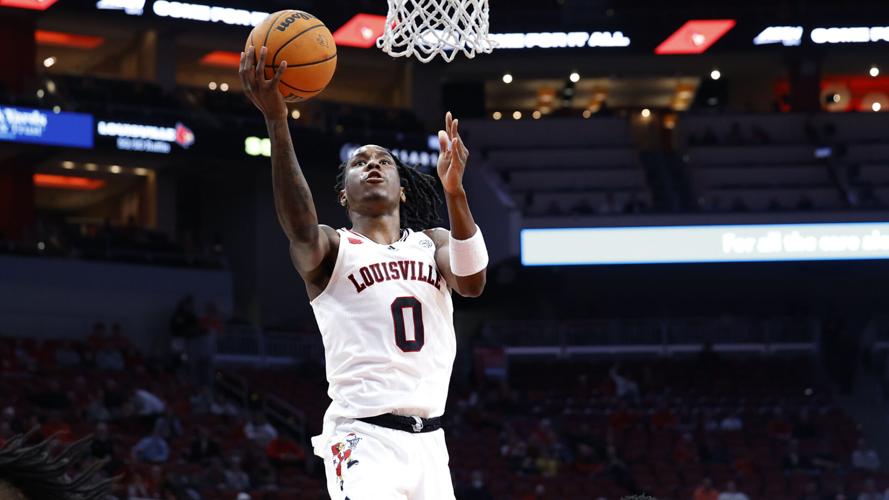
Louisville's Mike James drives for a basket in a loss to Pitt.
2). Impose discipline on offense. Whatever the score, it can't be acceptable to come down and have shots taken off of a single pass, or no passes at all. Players and the ball have to move. Louisville, as a team, is shooting 29.9% from three-point range. In its last two games, 49% of its field goal attempts have been from beyond the arc. (The Cards did make 10 of 21 against Pitt – but gave up 12 threes.) That just can't happen.
3). Use the bench. If a player freelances and pulls the trigger quick and misses, he comes out. If a guy lets an opponent beat him down the court for an uncontested layup, he comes out. If lack of effort or team play doesn't result in consequences, you get more of it. I'd say this makes up a lot of fan frustration. At halftime of his first game as Louisville coach, trailing Georgia Tech, Jeff Brohm lit up the locker room, telling players that effort was a requirement and that if he didn't see it in the second half some guys were going to spend a long season standing on the sidelines. Louisville has guys who are giving great effort. Mike James gives what he has. Brandon Huntley-Hatfield has made great progress. Others have had moments of effort, but been less consistent. You can't dishonor great effort by letting people get by with less. Like many, I've been impressed with what Hercy Miller has done in his brief minutes on the court. He might get beat on defense, but not because of effort. He has earned more time.
4). Clean up the body language. From now on, win or lose, I'd insist on expressed positivity from everybody in the locker room, on the team, on the coaching staff, regardless of score, circumstance, or public ridicule. That doesn't mean there is no negative reinforcement. It does mean that within the confines of a game, the next move is always positive. Failure is fertilizer, a previous Louisville coach was fond of saying. You can't fear it. You can embrace it, and its lessons, but you can't be satisfied with it. You have to be realistic about it. You have to explore its causes and get at its roots. But to let it discourage you is to invite more of it.
I'm no coach. If you're reading this (well, 95% of you, anyway), you aren't either.
But I know all losing isn't created equal. Louisville has 17 regular-season games left, starting with tonight's 7 p.m. tipoff at Miami. Its next five games are against the five teams atop the ACC standings, with a league record of 13-2.
At this point, there is nothing left for Louisville to lose. Maybe it's time to embrace it, stare it in the eyes, and start to emerge from it. At the very worst, you keep losing. At best, you earn a bit more respect.
At least, those are my thoughts. Now, the exercise turns to you. Given this personnel and this situation, what do you do? What are Payne's options? (The answer, "quit," earns you an F. Work the problem.) What steps are available?
Related Stories:
- OVERTIME | Bozich and Crawford talk Kenny Payne's predicament, Kentucky's win at Florida and more
- BOZICH | Pitt extends Louisville's malaise with 83-70 victory
- CRAWFORD | More bad news for Louisville: Traynor out for season with shoulder injury
- Louisville loses big man Dennis Evans to undisclosed medical issue
Copyright 2024 WDRB Media. All Rights Reserved.


