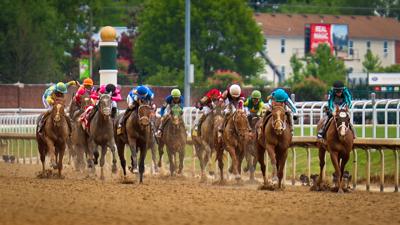




LOUISVILLE, Ky. (WDRB) -- In many ways, the Horseracing and Safety Integrity Authority's full report on Churchill Downs' equine fatalities from earlier this summer is more of the same.
After all of the investigations are completed, it appears that the authority is no closer to a solution, or even a firm grasp of why the deaths occurred, than it was before. Its conclusion after the investigations is much like the speculation before, that the causes of death are multiple and not attributable to any single issue.
The report, released Tuesday morning, did reiterate, definitively, that it could find, "no causal relationship between the racetrack at Churchill Downs and the equine fatalities."
The cause, opponents of the sport would be quick to point out, is horse racing itself. And in a bit of irony, if you listen to horse trainers, the message is similar. As long as horses are involved in racing or training, they are going to sustain injuries, just like all athletes do. The problem for horses, of course, is that those injuries quite often are fatal, because of their skeletal structure, and inability to heal.
Still, the industry recognizes that for it to continue, it must make – and demonstrate – every effort to minimize injuries, and to root out abuse, whether it comes about via medication, training methods or other means.
"HISA's most important mission is to protect the health and wellbeing of the horses participating in thoroughbred racing," HISA CEO Lisa Lazarus said in a statement on Tuesday. "The events at Churchill Downs, Laurel Park and Saratoga Race Course this spring and summer were a sobering reminder of the complexity of that mission. We must create a culture of safety and an ecosystem of care that takes into account all factors contributing to equine fatalities. And it is the responsibility of all racing participants to do their part. That is why HISA is making ambitious recommendations and further mandates to ensure everyone involved in the sport acts, first and foremost, in the best interest of the horse. Racing can and must do better."
That last sentence has been repeated around the sport for decades. The main difference now is that there is a national authority with a federal mandate to govern the sport across jurisdictions. That's a start.
But given the thorny problems of horse racing deaths this year, the authority has had little impact in stemming the danger to horses, beyond its request that Churchill Downs suspend its spring meet while more studies were conducted.
Out of this report come a series of mandates and recommendations.
HISA has committed to a "robust data analysis effort," and will partner with several companies to gain further insights. As the data is standardized across states, this should only help efforts to identify factors in horse injuries. Among the 12 who died at Churchill Downs, several shared a heightened risk profile based on the frequency of their exercise and racing schedules, according to the report. Others, however, who raced and trained in a similar fashion and amount were fine. More study will be needed.
HISA also says it will create a "blue-ribbon committee" to study and ultimately introduce more synthetic surfaces at racetracks. These surfaces have proven to be safer. They are also not poplar with bettors, and are expensive to maintain.
And HISA says it will work to improve medical screening procedures for horses, including making PET scan machines more available to racetracks around the nation. As well, it will continue research studies and advocate the use of wearable technology to gather data and perhaps predict areas of concern for individual horses (something already done at Churchill Downs and tracks in New York).
In the end, though, all of this adds up to a simple equation: New boss, same old problems.
One item in the midst of all the data caught my eye. I don't know that it will fix anything, but it will give us a more accurate picture of the problem in Kentucky.
HISA is asking Kentucky to begin keeping equine death records not only for horses killed in races, but for those who die in training. Up to now, those records have been unavailable in Kentucky, and the numbers they represent are not insignificant.
HISA noted that it has not been receiving reliable and consistent fatality reviews and necropsy reports for Kentucky, and that the necropsy reports are sometimes missing what it would consider relevant information.
"The KHRC's mortality review process predates HISA's requirements, but it has been limited historically to racing fatalities," the report reads. "Going forward, mortality reviews should be conducted for training fatalities as required by HISA Racetrack Safety Rule 2121. Reporting information required by the Safety Rules is necessary to fully harness its predictive value for mitigating injury risks and informing rulemaking."
This will be a step forward for Kentucky.
Beyond that, HISA recommends several measures for Churchill Downs specifically regarding its track. However, having determined that its track was not at fault, it's debatable how much those suggestions will bring significant change. Churchill either has agreed to or already implemented most of them, though several have yet to be made.
Maybe these proposed changes will help. Certainly, they should help public perception. One thing they will not change – anyone who loves the sport struggle with the heartbreak of these fatalities, and the hope that something can be done to mitigate them.
Related Stories:
- CRAWFORD | Churchill Downs is testing a sensor that could identify at-risk horses -- does it work?
- First 'mortality reviews' shed little light on recent Churchill Downs horse deaths
- Churchill Downs moving spring meet to Ellis Park after 12 deaths in 30 days rock horse industry
- HISA 'emergency summit' finds no pattern in Churchill horse deaths, adds safety measures
Copyright 2023 WDRB Media. All Rights Reserved.


