


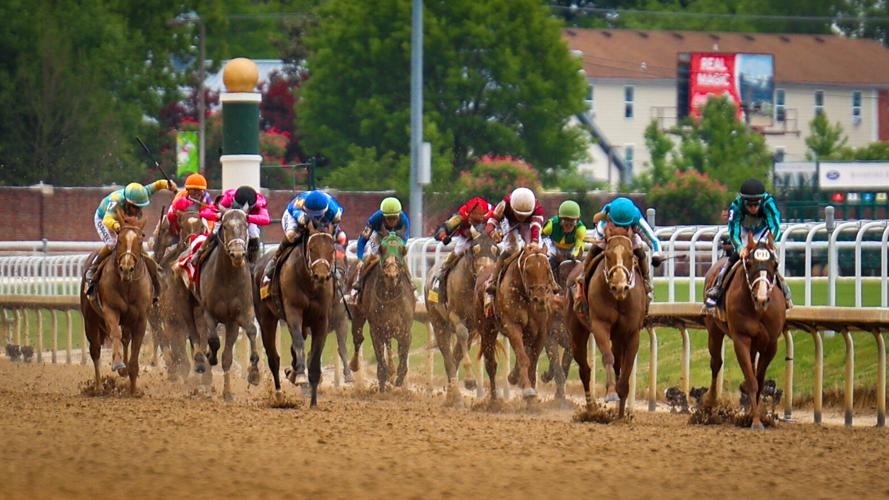
LOUISVILLE, Ky. (WDRB) -- An "emergency summit" called by the Horseracing Integrity and Safety Authority has concluded by finding "no obvious or specific pattern" for the 12 horse fatalities in a month at Churchill Downs, while imposing several additional layers of review for entries and handling breakdowns.
In a first-of-its-kind meeting called by the fledgling national authority to examine information surrounding the spate of horse fatalities at the nation's most visible track, HISA combined its own veterinarians with those from the Kentucky Horse Racing Commission and Churchill Downs to review the fatalities and to examine the track's policies.
Dale Romans, trainer of Rio Moon, who fractured his leg and was euthanized last month, is no stranger to Churchill Downs or it's safety measures. He said he is puzzled by the high number of horse deaths.
"We also have a Kentucky State Racing Commission veterinarian that's scrutinizing the horses like never before," Romans said. "It's never been like this. That's what makes it so odd that we're having this problem right now because we're doing more than we've ever done to make sure that they're safe when they come over," Romans said.
HISA also commissioned an independent study of the Churchill Downs racetrack itself. Dennis Moore, a longtime track superintendent from California, began that review on Wednesday, and it is ongoing.
As for the summit, no common thread could be found among the fatalities, but HISA did announce several safety recommendations, which came on the heels of Churchill Downs announcing several changes aimed at weeding out unsound entries earlier in the day.
"HISA welcomes Churchill Downs' efforts announced earlier today to minimize the risk of equine fatalities," a statement from the organization read.
Romans also welcomes the changes Churchill Downs will implement effective immediately, such as limiting a horse to race only four times and only top five finishers can collect purse money.
"I'm comfortable with Churchill doing whatever they can do to make it right," Romans said.
HISA added the following protections, after what it termed a "robust discussion of three different points of intervention . . . injury management, preventing at-risk horses from racing via veterinary scrutiny and preventing at-risk horses from entering."
Toward those ends, HISA instituted the following actions:
- POST-ENTRY SCREENING: HISA's Director of Equine Safety will conduct an additional layer of screening after entries are taken to identify horses that may be at increased risk for injury. The review will include past performances, layoffs of more than 60 days without a timed work or race, medical history from the past 30 days, previous injury, injections, previous surgeries or other factors.
- INVESTIGATING FATALITIES: HISA will collect blood and hair samples from all horses who die at the track, and will use the data to track relevant statistics and trends.
- SPECIALIST: HISA has appointed an equine forensics specialist, Dr. Alina Vale, to conduct an additional review of all necropsies of deceased horses from Churchill once they have been completed.
"HISA continues to urgently seek additional answers to more clearly identify the causes of these recent fatalities as well as tangible interventions to prevent them in the future," the statement read. "All options remains on the table, and HISA will continue to vigorously monitor events at Churchill Downs moving forward."
Romans believes the problem will smooth out, and the rate of horse deaths will decrease, but worries too many knee-jerk reactions may prevent them from determining a long-lasting solution.
"We can't just rest on these changes and think this is good enough," Romans said. "We got to keep looking and try to figure out if there's anything more we can do."
Related Stories:
Copyright 2023 WDRB Media. All Rights Reserved.


