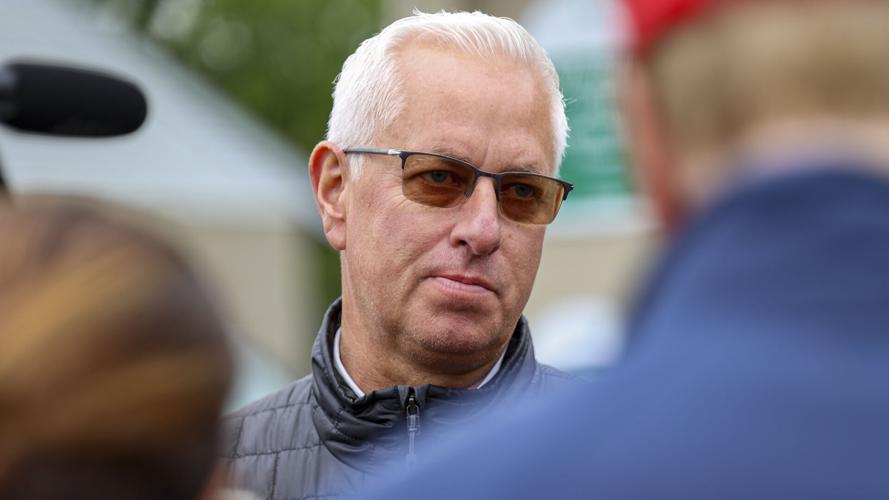

LOUISVILLE, Ky. (WDRB) — There are 20 ways to lose the Kentucky Derby, and one of them comes with a number stitched neatly onto the saddle cloth like a warning label.
One.
It is the smallest number in the race and the largest problem.
Todd Pletcher, who has spent a lifetime not overreacting to anything, reacted to it exactly once: briefly, honestly, and with the kind of gallows humor that usually gets filtered out before it reaches daylight.
He was on the plane to Louisville when his wife, Tracy, delivered the news.
"She said the post positions just came out. Zany (his Oaks filly) got two, and then she paused, and said, Renegade got the one," Pletcher recounted Sunday morning. "So I reached for the airsickness bag."
Todd Pletcher, trainer of Kentucky Derby favorite Renegade, was on his way to Kentucky when he found out his colt had drawn the No. 1 hole. His reaction: pic.twitter.com/YCp6IeQdLg
— Eric Crawford (@ericcrawford) April 26, 2026
That's perfect, really. Because the Kentucky Derby, when you draw the rail, is less a horse race than a turbulence test.
Now, here's the thing about Pletcher. He is not built for panic. He has won this race twice and saddled 65 starters in it, more than anyone in its history. Which means he knows two things: how to win it, and how often it refuses to be won. He has stood in the Winner's Circle and he has stood in the silence after, and somewhere in that distance he learned to keep his face the same for both.
If the news Saturday was a gut punch, by Sunday morning the bag was gone and the film was rolling.
He went back through the tapes of his colts who had drawn the rail like a man reviewing security footage after a break-in. Mo Donegal, who broke from Post No. 1 in 2022. Known Agenda, who did it the year prior. He even took a look at Dornoch, who drew the rail spot for trainer Danny Gargan in 2024.
Pletcher could come to only one conclusion after watching those finishes.
"I thought it compromised them," Pletcher said, in the tone of a man describing a mildly disappointing meal rather than a tactical disaster.
That's his gift. Everything is understated. Even doom.

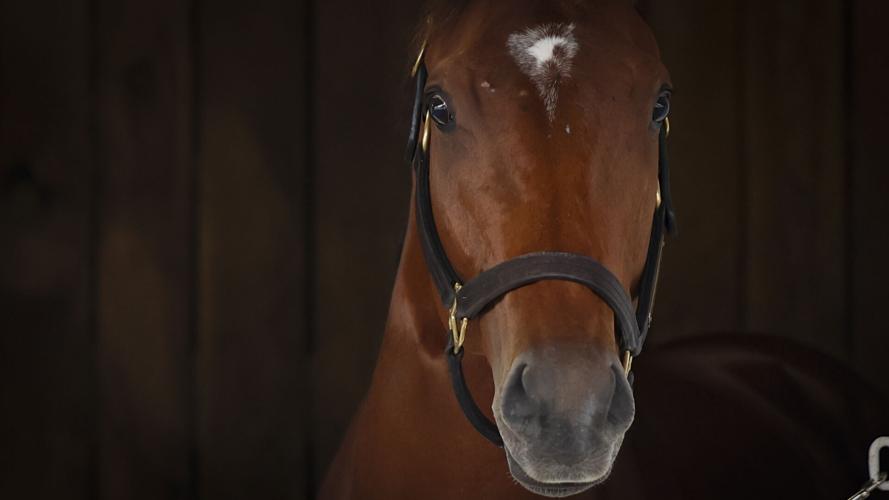
Kentucky Derby favorite Renegade, in his stall at Churchill Downs on April 25 2026.
In horse racing, drawing the rail is usually code for "you might want to sit down."
Because the rail doesn't beat you all at once. It beats you by taking things away. Options, mostly.
"If you draw the outside, you can kind of survey everything, how the pace is unfolding, those kind of things," Pletcher said. "The rail kind of puts you in a position where you can't make any mistakes."
Out there, you're a driver. In here, you're luggage.
And Renegade — the Derby favorite, mind you — is not the sort who kicks down doors and demands space. He is a closer. A patient sort. The kind who likes to loiter in the back of the room, listen to the conversation, and then make one devastating comment at the end.
"I think his natural running style is to settle and make one run," Pletcher said. "We're not looking to change that."
Which is lovely. Poetic, even. Unless you're pinned to the rail in a 20-horse cavalry charge where "settled" can quickly become "buried."
Louisville | Kentucky | Indiana | Eric Crawford
So the Derby, in its infinite sense of humor, has handed the favorite a personality test. Not of talent — he has that — but of circumstance. Can a horse who prefers to wait find room in a place where room is the one thing in short supply?
"You can't make a mistake," Pletcher said. "If you break a little slow, especially in this race, the field is all looking to come over. It takes away some of your options. But there's not a whole lot of speed in the couple spots next to him. So we've just got to focus on getting out of the gate, breaking well, establishing the position we want and holding it."
That might be the Derby boiled down to its essence. Twenty horses. A mile and a quarter. And one unforgiving rule: don't be wrong.
There is comfort, if you're inclined to look for it, in the rider. Irad Ortiz Jr., who rides with the confidence of a man who has already decided how the story ends.
In the Arkansas Derby, he let Renegade fall back far enough to make a nervous man check his pulse. Pletcher admitted as much.
"There was a moment I thought maybe we left him a little too much to do," he said.
Then came the move.
"He kind of exploded mid-stretch," Pletcher said. "He really, really finished. You don't see too many horses on the dirt show that turn of foot late."
That's the promise. That's why he's the favorite.
But explosions require space. And space, on the rail, is rationed like water in a desert.
So now the calmest man in the sport finds himself in the least calm place in it. A position where everything must go right, where nothing can go wrong, and where the difference between a champion and a cautionary tale can be measured in a single step leaving the gate.
"It's not ideal," Pletcher said. "Not the one we would have chosen."
No, it isn't.
But the Kentucky Derby has never been in the business of ideal. It asks unreasonable questions of reasonable men and waits to see who answers anyway.
On Saturday, the question will be simple. Can the best horse win from the worst place?
Copyright 2026 WDRB Media. All Rights Reserved.


