
1: DRACONIDS
The Draconid meteors are caused when Earth collides with bits of debris shed by periodic comet 21P/Giacobini-Zinner (and that’s why this shower used to be called the Giacobinids). The comet has a 6½-year-long orbit that periodically carries it near Jupiter. Ordinarily, celestial dynamicists would expect the planet’s powerful gravity to scatter anything in its vicinity into varying and unpredictable orbits. But they believe that a stream of particles, ejected in 1900, is still largely intact. The meteors appear to travel from a point near the head of Draco the Dragon, a constellation visible all year for most people with a view of the northern sky.
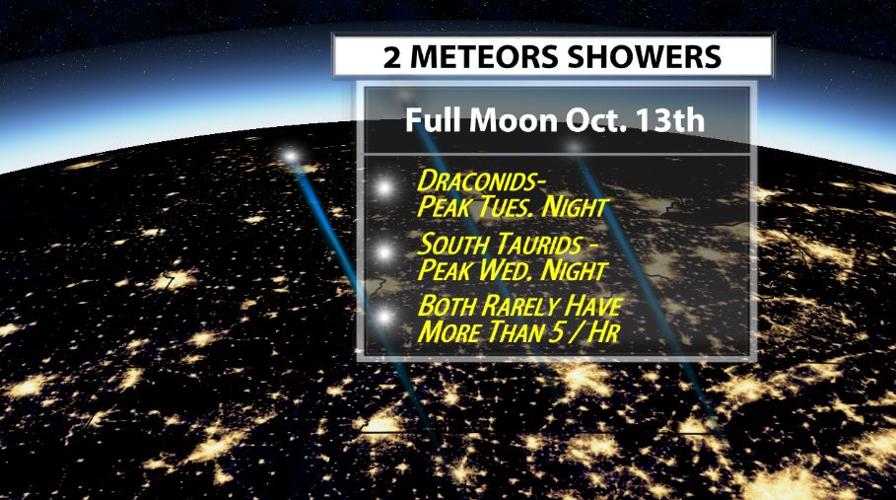
It's really an all or nothing show when it comes to the Draconids. Once in a while a rare outburst can occur, but this is not expected to be the case this year. The peaks occurs Tuesday night, but the moon's glare will likely drown out many meteors.
2: SOUTH TAURIDS
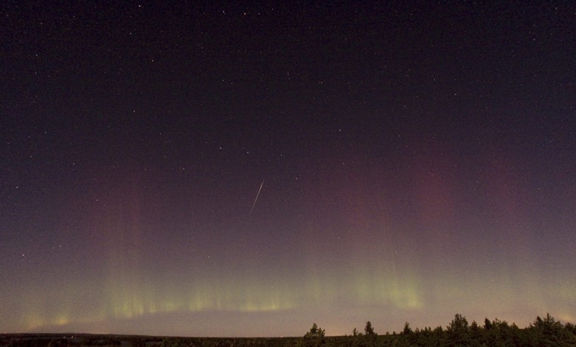
Every year from September-November, the Earth passes through a broad stream of debris left by Comet Encke. The dust associated with the comet hits the Earth’s atmosphere at 65,000 mph and burns up, creating the Taurid meteor shower. Most years the shower is weak, and only a few Taurid meteors can be seen each night. Other years, the Taurids can put on a show. This year it looks rather weak with activity from September 10th to November 20th. The Southern Taurids will next peak Wednesday night and on this night the moon will be 87% full. However, the Taurids are rich in fireballs so don't be surprised to see a couple bright shooting stars. We are thinking less than 5 meteors per hour for both events.


