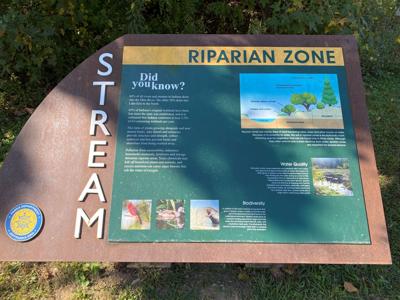
I was on a walk recently when I came across this sign with some information I hadn't heard before. If you can't read it, you can scroll to the bottom of this page where I've typed out all the information.

As a meteorologist, I've taken a lot of earth science classes, so I'm willing to bet, if I didn't know this, many of you didn't either. So let's talk about the Riparian Zone.
Did you know? 80% of all rivers and streams in Indiana drain into the Ohio River. The other 20% drain into Lake Erie in the North. 85% of Indiana's original wetlands have been lost since the state was established, and it is estimated that Indiana continues to lose 1-3% of it's remaining wetlands per year. The roots of plants growing alongside and near stream banks, lake shores and estuaries provide structure and strength, collect sediment and thus prevent banks and shorelines from being washed away. Pollution from automobiles, industries, household chemicals, fertilizers and sewage threatens riparian areas. Toxic chemicals may kill of beneficial plants and animals, and excess nutrients can cause algae blooms that rob the water of oxygen.
Riparian zones are narrow strips of land bordering lakes, rivers and other bodies of water. Because of its proximity to water, the soil in riparian zones is exceptionally moist, attracting special vegetation that can be found only in these zones. Although they often extend only a short distance from water, riparian zones are important for several reasons.
Biodiversity | In addition to the many moisture-loving plants that grow in riparian zones, a variety of animals make use of the special environment found in this waterside environment. Riparian zones serve as valuable foraging grounds for large mammals while also attracting insects that fish, birds, and amphibians feed upon. The biodiversity that riparian zones encourage makes them a valuable part of the ecosystem.
Water Quality | Rainwater carries various sediments and pollutants with it as it rushes over ground and approaches bodies of water. Thick grass that often grows in riparian zones helps to prevent these particles from flowing into the water acting as a kind of filter. According to the U.S. Department of Agriculture's Natural Resources Conservation Service, riparian zones are effective at trapping such harmful pollutants such as fertilizers, pesticides, pathogens and heavy metals. By removing these substances from surface water flow, riparian zones play a major role in maintaining water quality.


