
With winter starting to act up bringing more cold and snow in the near future, I though it would be appropriate to talk about snow squall warnings. If you've never heard of snow squall warnings, a big reason behind that could be that the warning type is fairly new to the NWS. The snow squall warning first became operational just a few years ago on November 1st, 2018.
According to the NWS, a snow squall warning is defined as follows...
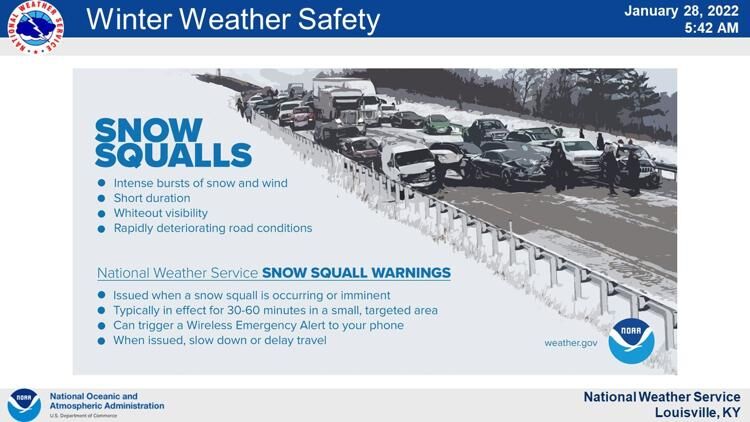
Credit: NWS
So what should you do if one if issued? Well, the last thing you should do is hop behind the wheel and go out for a joy ride. These typically only last 15-45 minutes which means waiting it out inside is your best case scenario. If you happen to be out driving and you encounter a snow squall, don't slam on the brakes. Don't stop either. Just ease your foot off the gas pedal and slow down. Sudden whiteout conditions and slick roads can easily cause accidents. Please use caution traveling tonight and Wednesday morning. Flip on WDRB News for updates!