


LOUISVILLE, Ky. (WDRB) -- One of Louisville's most prestigious private schools plans to tear down three aging apartment buildings and replace them with a surface parking lot for its Cherokee Triangle campus, which the school said is necessary to alleviate neighborhood traffic, though "unfortunate" for apartment residents.
Louisville Collegiate School, a fixture of the Cherokee Triangle for more than a century, has seen its enrollment jump in recent years and needs more parking for its employees to alleviate congestion on Glenmary Avenue and other neighborhood streets, according to a spokeswoman for the school.
But some said the plan is shortsighted given Louisville's lack of affordable housing, which is especially acute in the Highlands-area Metro Council district containing the apartments, according to research by the Metropolitan Housing Coalition.
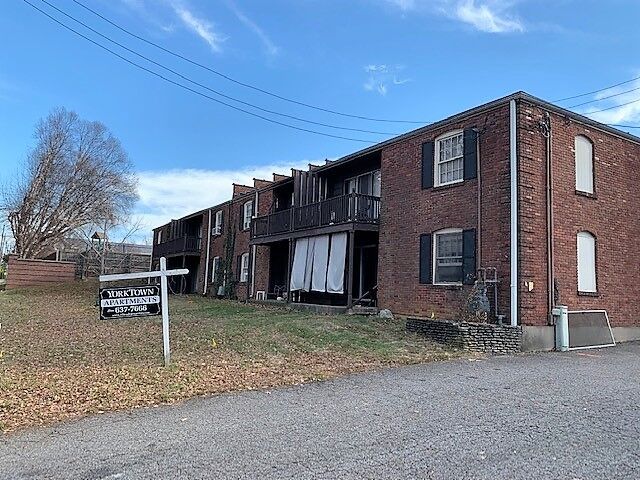
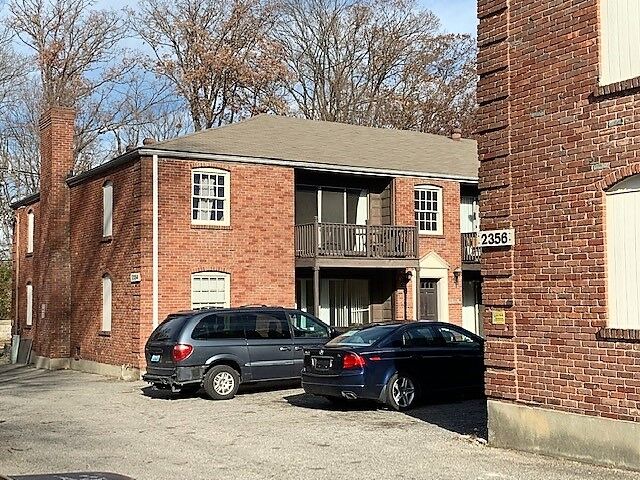
Collegiate plans to demolish Yorktown Apartments, a complex built off Grinstead Drive in the 1960s containing 48 one-bedroom units, according to Metro planning documents.
The three, two-story buildings adjacent to the school's campus are not historically significant, according to city planners. Rents at the complex average $650 a month, according to the property manager.
'An unfortunate piece' of plan
Diedre Seim, a longtime Cherokee Triangle resident, told city officials that demolishing apartments is "grossly irresponsible" amid a "housing crisis."
"We desperately need affordable housing and apartments like the ones Collegiate wants to foolishly tear down (which) are the only entry(-)level housing available in our neighborhood," Seim wrote in a public comment for the Cherokee Triangle Architectural Review Committee, a board that is scheduled to consider the plan on Wednesday.
Collegiate, which has owned the apartment buildings since 2015, carefully considered the plan in consultation with neighbors and the school's trustees, said Elizabeth Post, a public relations professional representing Collegiate.
"There is an unfortunate piece here, and that is having to demolish housing for people. ... This is not a decision the school did flippantly," Post told WDRB News on Tuesday.
The school's enrollment of 777 has grown 20% since 2018-19, while it now employs 154 full- and part-time workers, up from 132 four years earlier, according to figures provided by Post.
"You'll notice if you're driving there in the morning that the school's existing parking lots are full. And all of those vehicles are then on the street," she said. "So you're really placing a heavy burden on the neighbors that also need that on-street parking."
Traffic congestion around the school is also a safety concern for students, employees and neighbors, she said.
Post said the school is working with a property management company to find alternative housing for the residents of the apartments.
Residents were informed of the plan in early October, and the complex will be completely unoccupied by Jan. 31, she said.
As of Oct. 7, when the plan was revealed, 39 of the 48 units were occupied, according to Alltrade Property Management. As of today, 32 units are occupied.

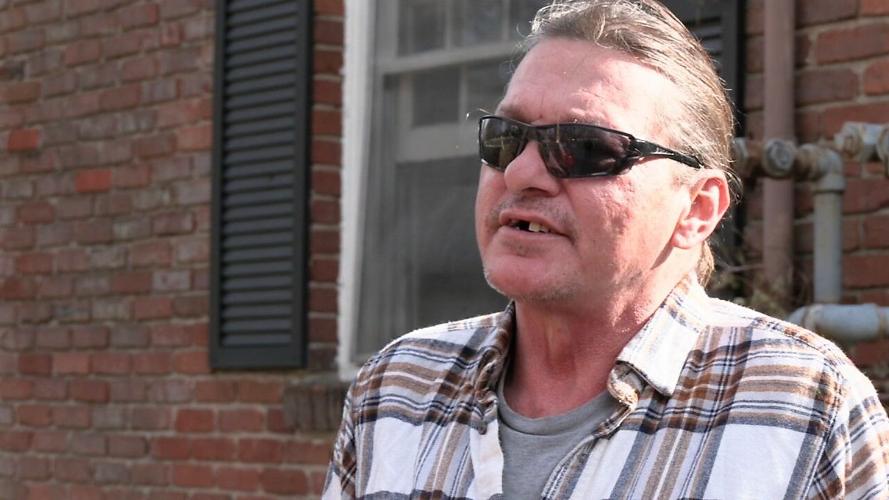
George Baker said he has lived at the Yorktown Apartments complex for two years. Louisville Collegiate School plans to demolish the apartments. "They’re basically throwing us out ... We have no place to go, other than the streets,” he told WDRB News in a brief interview at the apartment complex on Nov. 29, 2022.
George Baker, who said he has lived at the Yorktown complex for two years, said the problem is that the other places being offered to residents are significantly more expensive. Baker said he lives on a fixed income from disability insurance.
"They're basically throwing us out ... We have no place to go, other than the streets," he told WDRB News in a brief interview at the apartment complex Tuesday. "... All the places they have are too expensive for anybody to rent. It's like double the rent here."
Several neighbors of the school, however, wrote the city to express support for reducing cars on the street.
"As a mom with three young children, who walks her kiddos to and from school and preschool every day, this proposal will make myself and my children safer," said Kris Rawley, a resident of Ransdell Avenue. "It makes us safer because it decreases traffic through the neighborhood streets during Collegiate's drop off and pick up times, the same times my children and I are walking, biking, scootering, and sometimes skipping to school."
She added that the apartments are "unsightly."
"While the proposal is a parking lot, it will have more trees and greenery than the existing apartment. For me, this will be more aesthetically pleasing and better for the environment," she said.
Jessica Murr, also a resident of Ransdell Avenue, said the current situation is "dangerous."
"Nearly every day, especially in the afternoon, there are too many cars going through the intersection of Ransdell and Ray. Parents park illegally, all the way to the corners, so it is impossible for a car to turn safely. Students routinely leave their car doors open while talking, making it impossible for a car to pass safely," she wrote to the city. "I have 3 student drivers, and I have instructed them to avoid that area in the afternoons."
But Collegiate should explore “all other parking solutions” -- such as leasing church parking lots, busing students or a carpool program – before tearing down the apartments, Murr told WDRB News.
Limited discretion
While increasing affordable housing is a priority for Louisville Metro government, property owners have the right to modify their real estate within the confines of the city's Land Development Code, said Caitlin Bowling, a spokeswoman for Louisville Forward, Metro government's economic development agency, which includes the planning and zoning department.
"Discretion in nearly all of these cases is strictly tied to the city's land use regulations," Bowling said. "While Louisville Forward and the general administration do not comment on ongoing land use cases, there is ongoing policy work to increase the supply of quality, affordable housing in our community."
That work includes $116 million in city money committed "to the creation and preservation of affordable housing" as well as an "extensive review" of the Metro Land Development Code that "we believe will lead to greater housing availability and affordability overall," Bowling said.
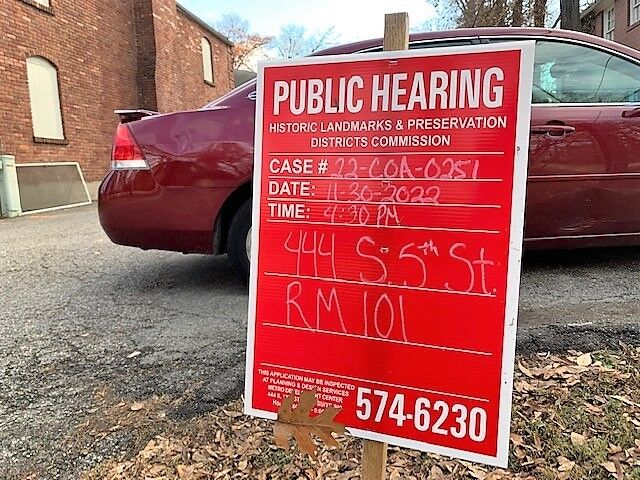
Louisville Metro's professional planning staff recommends that the Cherokee Triangle Architectural Review Committee approve the Collegiate plan with conditions, according to a report prepared for the board's Wednesday meeting.
The school's proposal will also require a development plan and landscaping plan to be approved later, Bowling said.
Cassie Chambers Armstrong, the Metro Council member representing the district, said Metro Council can't stop property owners from demolishing buildings that are not deemed historic so long as their plans comply with land-use regulations.
Armstrong, a Democrat, said Collegiate's plan could be viewed as "a step backward" for affordable housing in the Highlands, but pedestrian safety around the school is a valid concern.
"I've also heard from parents of students, many of whom have had close encounters because of the congestion and cars trying to cut around," she said. "And so I recognize there are a lot of competing policy priorities."


