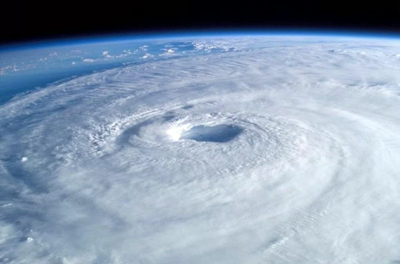
The 2020 hurricane season made history in more than one way; actually it may be more correct to say it made history and it exposed history. When Eta was a tropical storm, it helped uncover a shipwreck on the east coast of Florida. You may remember some of the strange twists and turns Eta took, but you can click here for a refresher on this devastating storm.
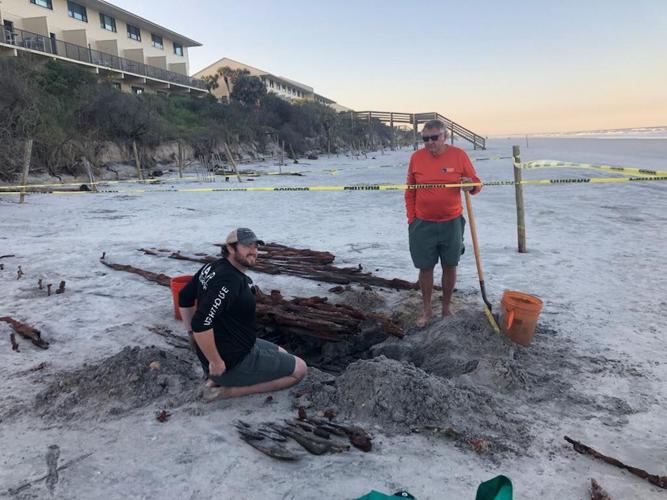
The St. Augustine Lighthouse and Maritime Museum reports the shipwreck was buried under a sand dune at Crescent Beach in the northeastern part of Florida. Beach erosion has been happening here for years, but the shifting tides and ocean currents around Tropical Storm Eta appear to have been the last straw. A resident of the area was out on his normal beach walk one Saturday night when he noticed some exposed timbers in the sand. He went back the next day and could see even more of it, so he called the St. Augustine Lighthouse Archaeological Maritime Program to come check it out.

Image Credit: St. Augustine Lighthouse Archaeological Maritime Program
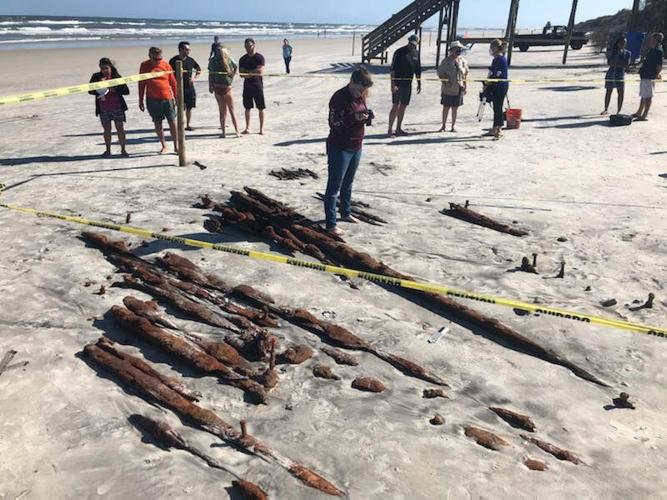
In a Facebook post from November 17, the St. August LAMP says, "What appears to be a ship lost in the 1800s was uncovered on the beach this week close to Matanzas Inlet. In our initial assessment, we believe this ship was buried in a sand dune for perhaps 150 years or more until storms exposed it again." The team believes this to be a merchant ship that carried "hardware or flour" based on the wood and iron fasteners they uncovered. The St. Augustine Lighthouse and Maritime Museum says, "Over 70% of all known historic shipwrecks lost in Florida are merchant vessels that participated in the coastal trade moving goods from one coastal port to another along the Atlantic coast." You can click here to watch a live video the LAMP team did from the wreck site a few weeks ago showing you the timbers, watching the crew continue to dig, and hear from the archaeologists. It's pretty cool!

Image Credit: St. Augustine Lighthouse Archaeological Maritime Program
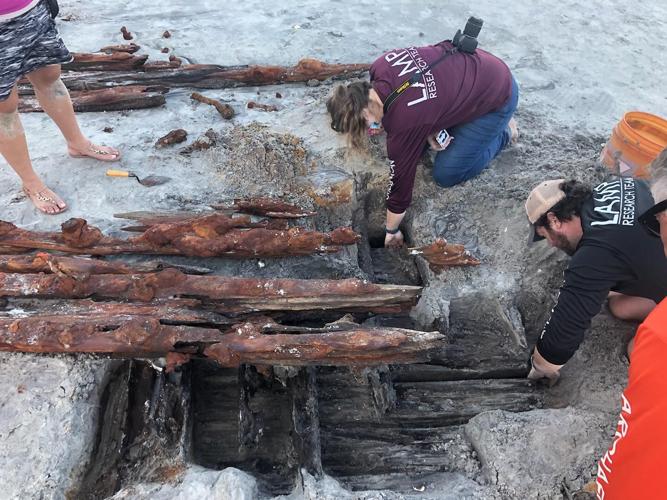
Some of the timbers have burn marks on them. One theory is that the ship was burned after it wrecked to make it easier to find the scrap metal which would have been more valuable than the wood. Then it's probable storms drove the wreckage farther up onto the beach, and over time sand formed around it and over it. Until just a few years ago, this shipwreck was buried under about 10 feet of sand. Now as the beach erodes, part of the wreckage has been exposed. What we see here is only part of the ship, though. There's still likely a good bit of it under the sand where it will stay for now. The team believes it's best to leave this wreck where it is rather than unearthing the whole thing to move it somewhere else. It would cost millions of dollars to relocate. When the team measured the pieces, they decided these had been cut in feet and inches, not in meters. That means the people who made the boat likely spoke English, so the crew was likely American, British, or Canadian. They will continue to study these pieces to hopefully narrow down where this ship came from.

Image Credit: St. Augustine Lighthouse Archaeological Maritime Program
Now here's the really neat part. The LAMP team has a possible candidate for what ship this might be. Chuck Meide is the Director of the St. Augustine Lighthouse Archaeological Maritime Program. In a post written by the Museum:


