Did you know NOAA has a Space Weather Prediction Center? NOAA, the National Oceanic and Atmospheric Administration, is the same umbrella office that houses the National Weather Service. The Space Weather Prediction Center website explains, "Space Weather impacts numerous facets of everyday life, from where airplanes can safely fly, to how accurately a farmer plows his field. In addition, there are a large variety of phenomena that are driven by the variability of the sun over periods ranging from hours to years. SWPC provides information for novices and experts alike about the impacts and phenomena of Space Weather."

So yes, the Space Weather Prediction Center is a real office and really is responsible for issuing a Geomagnetic Storm Watch. While the Watch/Warning system for SWPC is a little different than a regular Tornado Watch/Warning, you can think about this Watch in a similar way. When a Tornado Watch is issued, that means conditions are favorable for tornadoes to develop but it's not necessarily happening right now. It's something we need to *watch* for and does pose a threat, but may not be affecting us yet. This Geomagnetic Storm Watch means something similar. SWPC sees the potential for a geomagnetic storm yesterday and today.

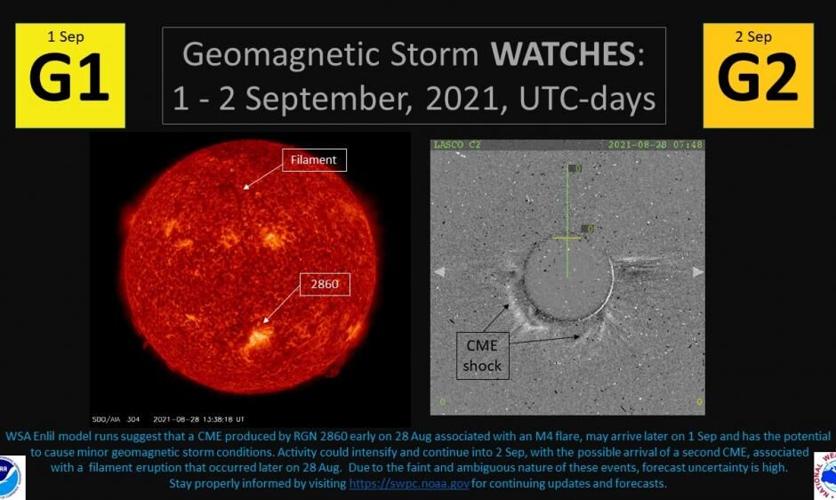
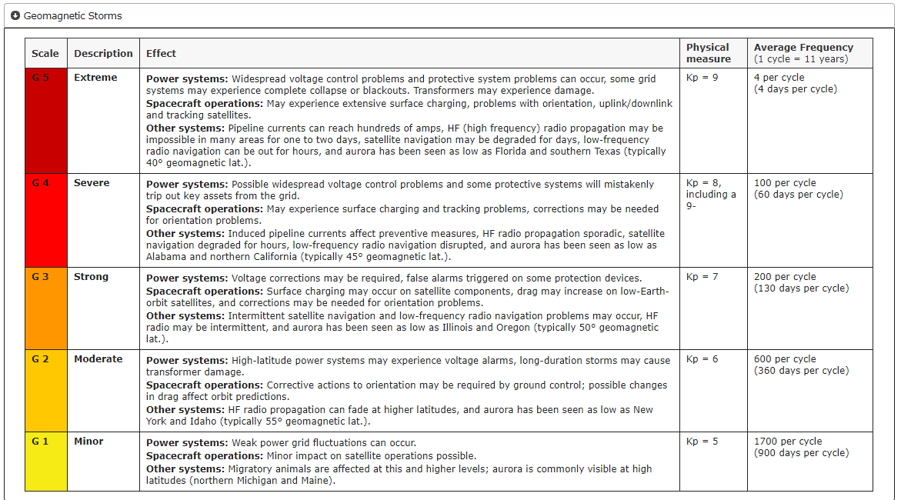
Saturday, August 28 a coronal mass ejection happened in region 2860 of the sun. This first CME was associated with an M4 Xray flare, then a second CME occurred later that same day. Like with earth weather, scientists use forecast models to help predict space weather. While those models suggested a geomagnetic storm would be possible here as a result of those CMEs over the weekend, the models were not consistent. G1 and G2 Watches were issued to alert people that we may experience some impacts from those CMEs. The chart above from the Space Weather Prediction Center shows what those impacts could be and how G1 and G2 compare to possible outcomes.


