Unless something drastic happens, this will be the hottest September on record. That has prompted a lot of questions about climate change, but urban heat island might be playing a bigger role than you think.
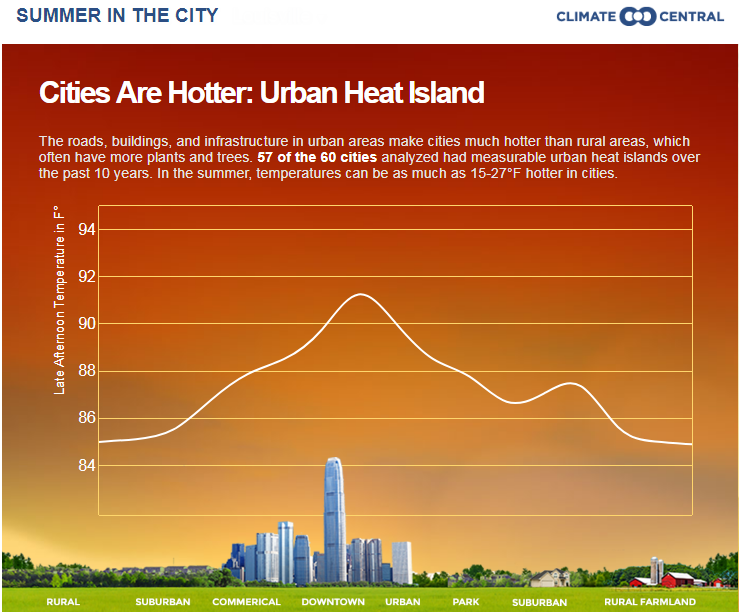
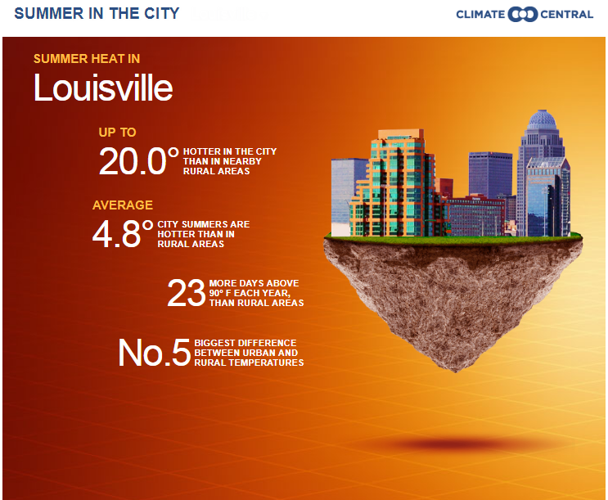
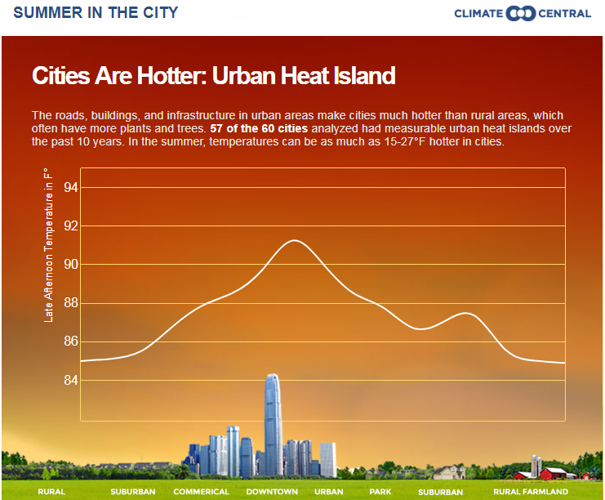
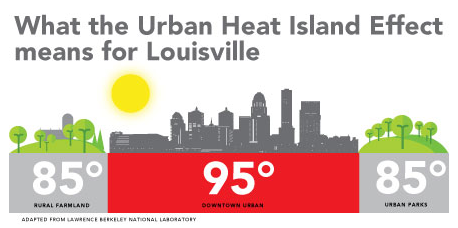
Urban heat island effect describes why temperatures are higher in a city than in outlying spots. This can be due to dark asphalt and roofs, lack of trees and grass, and more buildings. Click here to see the 2016 Urban Heat Management Study commissioned by the city of Louisville. The report is long, but the study describes urban heat island, what it's doing to Louisville, and some solutions for the future. The graphic above from Climate Central gives you an idea of how much higher temperatures can be in a city than outside it. During the time of the study above, some days there was as much as a 10 degree temperature difference between the city and more rural locations.
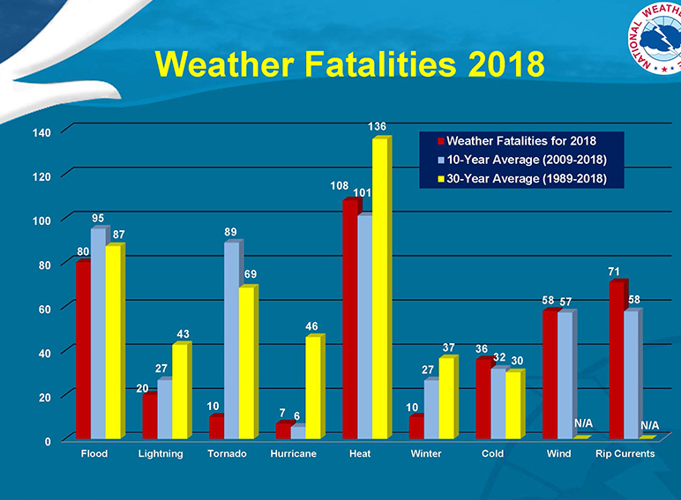
Heat is #1 weather-related killer in the United States. Read that again. Heat kills more people in a year than tornadoes or hurricanes or anything else you can think of. The graphic below from NOAA shows last years data in addition to the 10-year and 30-year averages. If heat is already the #1 killer and studies have proven the air is even hotter in cities than outside, than that level of heat in a city is becoming more dangerous each year.

As Louisville grows more urban, the urban heat island effect is getting worse. What can stop it? As the study above suggests, trees play a large part in this equation. Between 2004 and 2014 Louisville lost 54,000 trees each year on average both from natural factors (wind, storms, ice) and from cutting them down, but planting trees by itself won't fix the problem. The man-made contributions are some of the biggest culprits to urban warming; things like dark asphalt roads, black top parking lots and dark, heat-absorbing roofs. A conservative estimate from 2014 suggested one-third of downtown Louisville is parking. In 2015 a study found metro Louisville had about 37% of land covered by trees. The goal is to get to 45%.
Georgia Tech’s Urban Climate Lab previously found that Louisville’s heat islands have grown at a faster rate than those in any other U.S. city during the last 50 years. As we continue to urbanize, the problem is clearly getting worse.

Also remember with this recent hot stretch that one weather event does not equal climate change. We need to compare this year to 10, 50, 100 years ago. We also need to include other recent times of year and recent summers. You can't just take one hot month or one hot summer and say that proves global warming. It simply proves a hot summer in 2019 in Kentuckiana. More research must be done to draw further conclusions and is being done.


