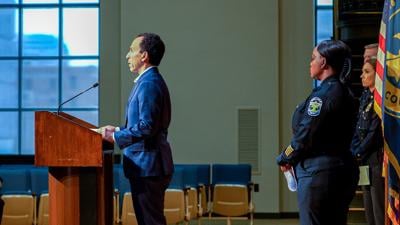


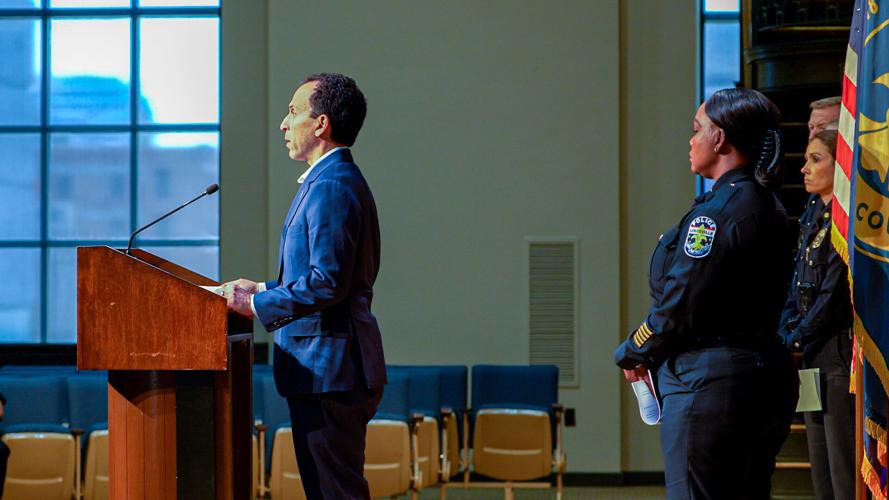
LOUISVILLE, Ky. (WDRB) -- Prompted by the investigation into the death of Breonna Taylor in 2020, the city of Louisville officially started the process of reforming its policing practices.
City officials met Tuesday morning in Louisville with the Department of Justice, which concluded in March that its investigation shows the Louisville Metro Police Department and Metro government "engaged in a pattern or practice of conduct that deprives people of their rights under the Constitution and federal law" that includes excessive force, searches based on invalid warrants and conducting unlawful traffic and pedestrian stops.
Mayor Craig Greenberg and Louisville Metro Police Chief Jacquelyn Gwinn-Villaroel said they're committed to being transparent throughout this process and will keep Louisville informed as updates are available. But only the DOJ can release details.
"I did think it would be quicker than it is," Greenberg said Tuesday. "I think it was about 11 months ago the report was presented here in our city. We are ready to begin. We are well prepared for negotiations to begin. I will review the draft in detail."
The federal investigation into LMPD cited 63 different incidents in which officers or the department shunned the oath they swore to uphold.
The federal investigation into LMPD cites 63 different incidents of alleged misconduct, according to an appendix of a 90-page report the U.S. Department of Justice released earlier this month following their roughly two-year investigation into LMPD. By 2022, at least nine officers had been convicted in federal court and several more cases are pending.
Examples of excessive force provided in the first section of the appendix include the use of neck restraints and police dogs against "people who pose no threat," an "unreasonable and unsafe" use of tasers, using takedowns, strikes and bodily force "disproportionate to threat or resistance," and escalating encounters, leading to excessive force.
The investigation was launched in the wake of the killing of Breonna Taylor, which sparked months of protests in downtown Louisville that summer. But the protests weren't just about one case. Years of misconduct, coverups, and a lack of accountability in LMPD were like kindling and lighter fluid to the flame.
From a series of traffic stops where officers racially profiled drivers in the city's poorest communities, to the sexual misconduct in the Youth Explorer Program and an officer who went to prison accused of being a serial rapist and complaints of excessive force. There's also video LMPD kept from the public for years, now known as "slushy gate," in which officers threw drinks on innocent people on the street. Each case slowly destroying the public's trust in Louisville's police force.
Greg Simms, a Louisville attorney who is attempting to use what the DOJ found in its report in several lawsuits against LMPD, said the department needs major changes.
"For any meaningful change to occur at LMPD, the first step must be to completely overhaul the internal accountability systems," Simms said in a written statement Tuesday. "The DOJ found that the PIU and PSU investigative units within LMPD fail to objectively investigate misconduct, and fail to impose appropriate discipline for misconduct. The root of this dysfunction is the concept that police are a 'brotherhood' or 'fraternity' wherein they are expected to back one another. For any meaningful change to begin at LMPD, a separate accountability system, outside the walls of LMPD, must be established to investigate misconduct and discipline the officers who perpetuate that misconduct. If the consent decree fails to address this issue, it fails to address the root of the problem."
Dr. Zachary Powell is an associate professor at the School of Criminology and Criminal Justice at California State University, San Bernandino. He said consent decrees usually last more than five years, and can be costly. In 2021, Louisville's projected cost was $8 million to $10 million annually. Powell added that there will be monitors in place to track the department's progress in compliance and reform.
"What's their new strategy for accountability to correct misconduct? How they have changed their external accountability system so are people allowed to complain," Powell said. "Is it less burdensome?"
City officials met Tuesday morning in Louisville with the Department of Justice, which concluded in March that its investigation shows the Louisville Metro Police Department and Metro government "engaged in a pattern or practice of conduct that deprives people of their rights under the Constitution and federal law" that includes excessive force, searches based on invalid warrants and conducting unlawful traffic and pedestrian stops.
In news conferences about the report, the city and police have generally accepted and agreed with the report’s findings, saying they plan to use it to make necessary changes to the department. But Gwinn-Villaroel testified in a trial in November that the city does not agree with all of the findings in the U.S. Department of Justice’s investigation into LMPD, repeatedly calling them "allegations."
When reminded that the data and opinions in the DOJ report includes interviews with officers, police officials and people involved in cases, as well as incident reports and internal and criminal investigations, Gwinn-Villaroel testified she does not have all the information the DOJ used.
"Therefore, however, they arrived at their report, it's their report," she said.
Greenberg said the consent decree is about implementing improvements to public safety and making sure the police department is trusted.
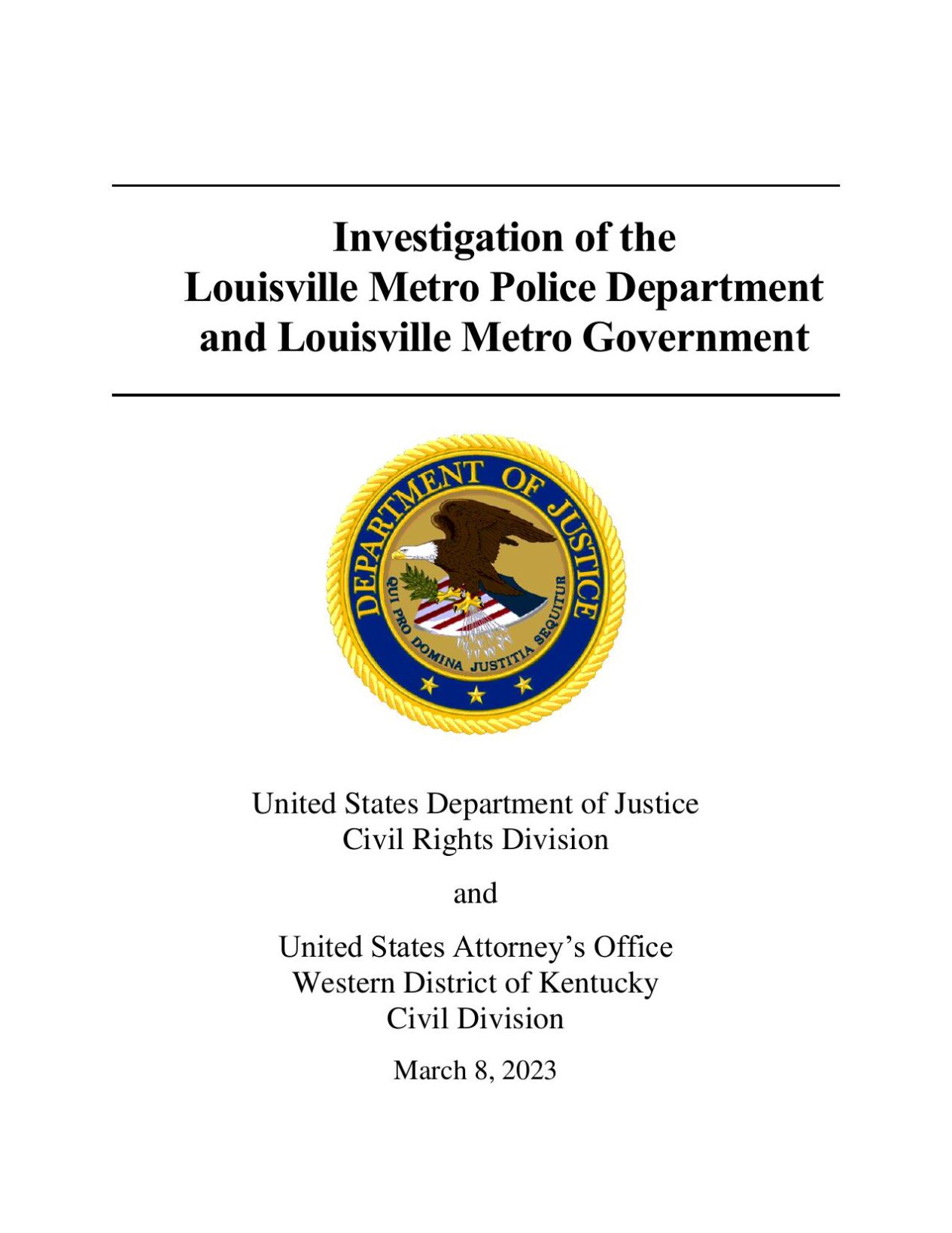
Here is a copy of the DOJ report released in March 2023.
Related Stories:
- Louisville police chief testifies DOJ consent decree is in a 'holding pattern,' negotiations haven't begun
- City fights to keep Department of Justice findings out of lawsuits against Louisville police
- LMPD chief says 'many' officers cited in DOJ probe were previously disciplined, but no further investigations
- Greenberg releases details of Louisville police incidents reviewed by DOJ
- 'All we want is justice' | DOJ meets with community members about policing in Louisville
- DOJ investigation cites more than 60 different examples of alleged misconduct by Louisville police
- Calls for more information before LMPD, DOJ negotiate agreement to improve policing in Louisville
- Former Louisville police chief agrees with many items in DOJ report
- 10 years into their consent decree, New Orleans police say Louisville has long road ahead
- Former LMPD officers say changes to department after DOJ probe could take some time
- Louisville police union says DOJ report is 'unfair assessment' of most Louisville police
- Victims of LMPD policing react to federal investigation findings as they continue rebuilding their lives
- What's next: Federal probe prompts mandated reforms in LMPD
- Department of Justice issues scathing report into Louisville police practices
Copyright 2024 WDRB Media. All Rights Reserved.


