

LOUISVILLE, Ky. (WDRB) — When Shanika Buford finally reached the top union autoworker wage of about $32 an hour after "eight long years," the 42-year-old Louisville Assembly Plant worker said it was a bit anticlimactic.
"It didn't feel as good as it should feel," said Buford, a grandmother who joined the Ford plant nine years ago. "We are way behind. Even that 'max out' is not enough."
Buford is one of about 12,000 hourly workers at Louisville’s two Ford plants.
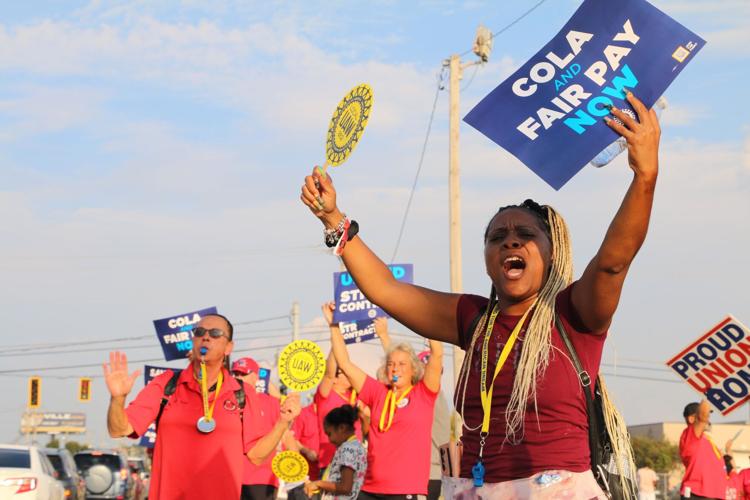
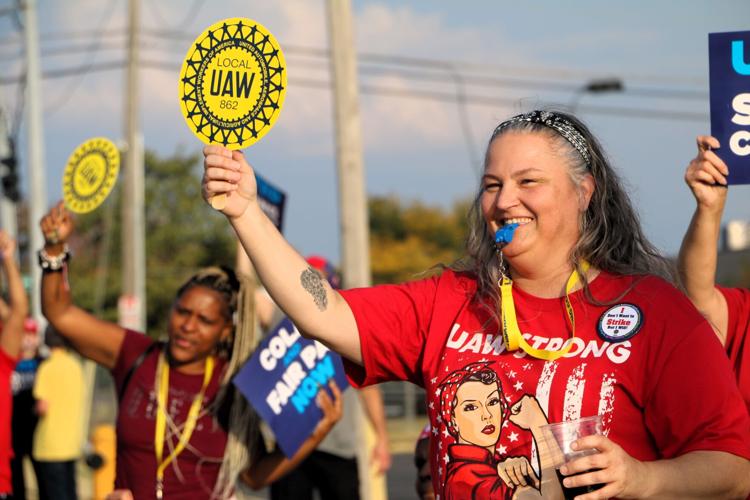
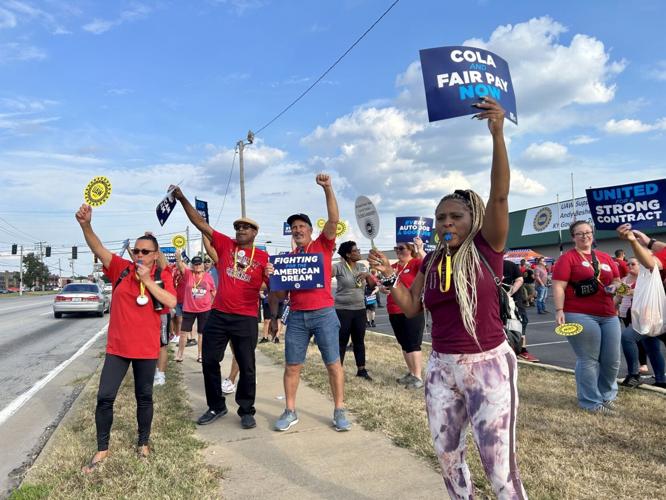
She and hundreds of others who showed up to a rally Thursday at UAW Local 862’s union hall on Fern Valley Road are ready to join the United Autoworkers Union’s strike against the Big Three car companies — if they are called to do so.
The union held a similar rally in Chicago on Thursday as it gears up to add a new set of plants to the strike that began Sept. 15.
UAW workers walked off the job at three assembly plants in Missouri, Ohio and Michigan. The incremental strategy means only about 13,000 of the union’s 146,000 hourly workers are on strike so far.
UAW President Shawn Fain is expected to announce additional strike targets around 10 a.m. on Friday, with the walkout starting at noon. That’s unless the car companies make “serious progress” in the talks to avoid additional plants going offline, Fain has demanded.
Union officials said the location of the Louisville and Chicago rallies is not necessarily a signal as to which plants may be targeted next. T
The UAW’s unconventional approach to the strike is designed to keep the automakers in the dark.
The tactic makes it hard for the companies and industry observers to predict the ramifications of the strike on the car market, said Joe Langley, an automotive analyst at S&P Global Mobility.
“What Fain is doing, by cherry-picking plants, is the hardest part because only they know what they’re going to do next,” Langley said on a webinar earlier this week.
A Ford spokesman said Wednesday evening that the automaker is making “contingency plans” to handle additional strike challenges and keep certain operations, such as a parts depots, running.
“We continue to negotiate with the UAW,” Ford’s Dan Barbossa said. “Our focus has not wavered on reaching a deal that rewards our employees, allows us to create great value for customers from Ford’s unique position as the most American automaker and enables Ford to invest and grow.”
The union’s initial three strike targets are assembly plants, where vehicles are put together from thousands of components and parts made elsewhere.
Langley said the union could cripple the companies by targeting plants that make engines or transmissions, because those products are used by multiple assembly plants. But it isn’t clear if the UAW wants to go that far.
He also noted that the UAW has not yet targeted Ford’s most lucrative vehicles, the F-Series pickup trucks. The larger F-Series Super Duty trucks are made at Kentucky Truck Plant in eastern Jefferson County, generating significant profits for the automaker.
Another question looming over the contract talks is the future of Louisville Assembly Plant, which employs about 3,200 UAW workers.
The Escape, LAP’s main product, has seen declining sales for the last few years. It used to make up about 12% of Ford’s portfolio by vehicles sold, but now makes up less than 7%, according to Ford data.
Langley said the plant’s role is uncertain after 2025. Analysts have speculated that Ford may convert LAP to make an electric vehicle.
“I’m not saying it’s going to close because I think Ford needs this capacity. It’s a matter of shifting over and retooling,” Langley said.
UAW Local 862 President Todd Dunn said last month that the union will insist on a secure future for Louisville Assembly Plant as part of the contract talks.
“It’s not possible to get an agreement if we don’t have product (for the plant),” Dunn told workers at an Aug. 25 event.