

LOUISVILLE, Ky. (WDRB) — New documents from the National Transportation Safety Board show UPS never required detailed inspections needed to catch the issue that caused an engine to separate from the plane that crashed in Louisville last year.
The documents, which were posted Wednesday, provide new details in the federal investigation into the Nov. 4, 2025, crash of UPS Flight 2976.
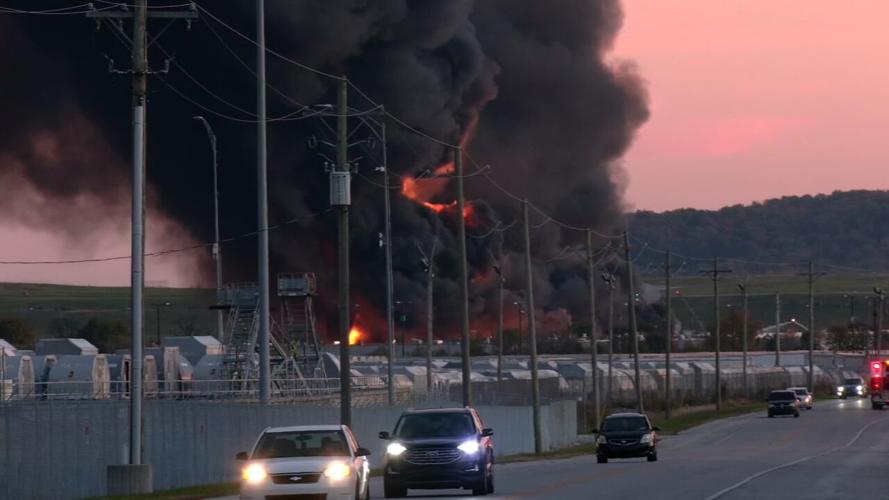
The McDonnell Douglas MD-11 cargo plane, built in 1991, went down around 5:15 p.m. after its left wing caught fire. The NTSB says the left engine and pylon separated after the takeoff rotation.
The plane was fully loaded with fuel for the nine-hour flight to Honolulu from UPS Worldport at Louisville Muhammad Ali International Airport. Fifteen people, including three pilots, died in the crash. Twenty-three other people were injured.
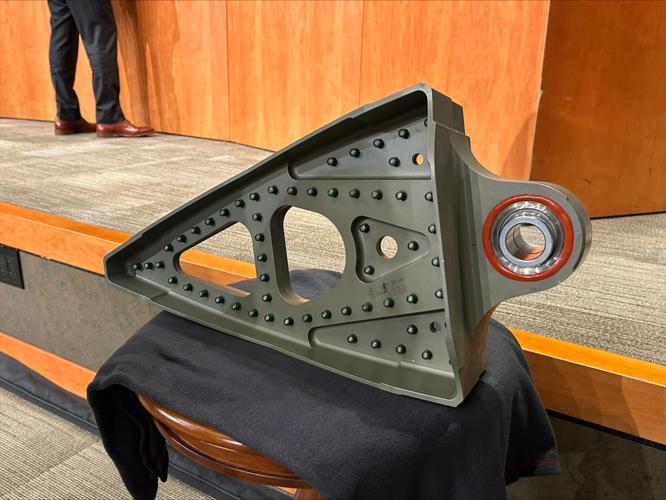
During two days of NTSB hearings in May, investigators focused heavily on the pylon and a spherical bearing inside the engine mount that failed. Investigators examining the wreckage found cracks in some of the parts that held the engine to the wing.
Those cracks hadn't been caught in regular maintenance, which raised questions about the adequacy of the maintenance schedule.
The new documents show UPS never required enhanced inspections of the engine mount part that failed, even after Boeing recommended those additional checks years earlier.

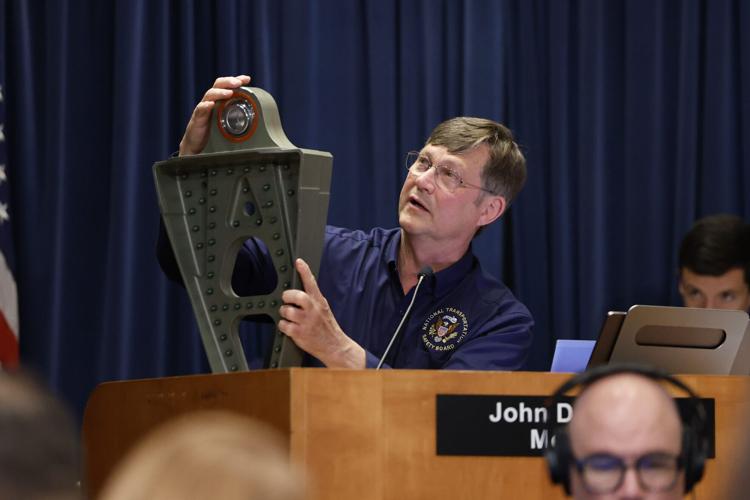
The National Transportation Safety Board convened for the second day of investigative hearings on Wednesday, May 20, 2026, in Washington, D.C., as part of the agency's investigation into Louisville's deadly UPS plane crash in November 2025. (WDRB photo)
According to the filings, UPS only required mechanics to inspect for corrosion, not signs of bearing failure.
UPS said it did not require the enhanced inspections because Boeing told the company the issue would not jeopardize flight safety and that existing inspection requirements were sufficient.
Even though Boeing developed a more detailed inspection procedure and added it to the MD-11 maintenance manual, the company never added that procedure to its federally approved maintenance schedule, meaning airlines were not required to perform it.
"Relying on Boeing’s representations that the issue was not safety-of-flight and that existing MPD inspections were sufficient, UPS determined that no additional changes to its maintenance program were necessary beyond what was already being performed," UPS said.
A major focus of the hearing in May was why the specific part inside the pylon that broke wasn't considered what's being called a principal structural element, or PSE — meaning a part considered essential to a safe flight — by Boeing. The designation would require stricter inspections and oversight.
The FAA testified it believes the failed part should have been classified as a PSE, but Boeing has not reclassified the part.
Copyright 2026 WDRB Media. All Rights Reserved. The Associated Press contributed to this report.


