
NASA released an image showing lightning...on Jupiter! This image was actually captured at the end of 2020 when the Juno spacecraft completed a close flyby of the gas giant.
NASA released an image showing lightning...on Jupiter! This image was actually captured at the end of 2020 when the Juno spacecraft completed a close flyby of the gas giant.
Did you know the Hubble telescope, the same one that has been sending back stunning images from space for years, is reporting on planetary weather? In the last few weeks, NASA has released updates on what Hubble has observed around Jupiter, Saturn, and Uranus which we will break down here.
If you look up in the night sky over the next few days, you will be able to catch a cool sight. Venus, Jupiter, and the moon are all lined up near each other right now, making them easy to spot!
The comet C/2022 E3 (ZTF) was last visible in the night sky around 50,000 years ago.
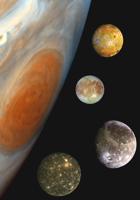
Monday night Jupiter will be closer to Earth than it has been in the last 59 years! Jupiter will be at opposition Monday at 4 PM which happens when Earth is positioned between the sun and Jupiter.
Saturn is easiest to spot right now after it's recent opposition, and you can find four other planets fairly easily in a dark sky around the Ohio Valley. Remember to get away from all lights, including city lights, and give your eyes time to adjust to the dark. If you have binoculars, bring those along, then take a look at how to find each planet

NASA's Juno spacecraft has been studying Jupiter and the space around it for the last five and a half years. In June of 2021, nearly five years into its mission, Juno made an important pass by Ganymede, one of Jupiter's 79 known moons. On Juno's 34th trip around the Gas Giant, it made its closest approach to Ganymede.
Meteorologists study storms on Earth to help you know when dangerous weather will affect you. Now scientists are studying storms on Jupiter to learn more about the atmosphere of the Gas Giant.

Jupiter is the king of the solar system, more massive than all of the other solar-system planets combined. Although astronomers have been obse…

Monday, Tuesday, and Wednesday mornings this week you can look for Saturn and Jupiter in the sky!


