
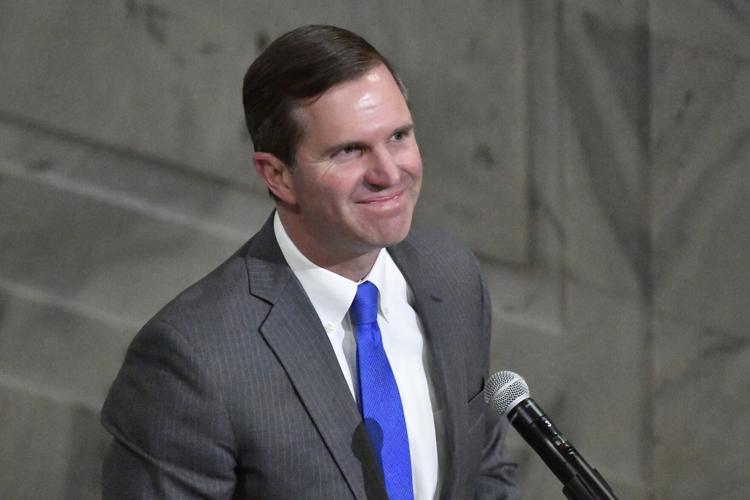



LOUISVILLE, Ky. (WDRB) -- Kentucky Gov. Andy Beshear is planning for 2024 as his first term wraps up.
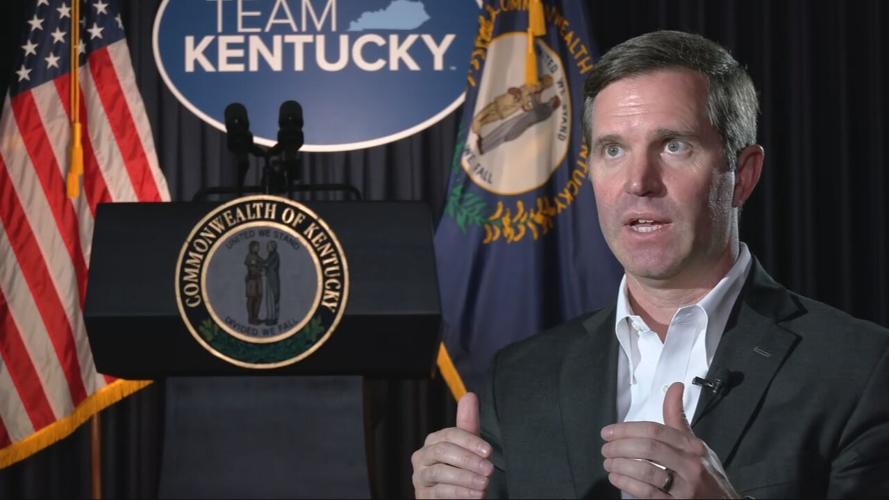
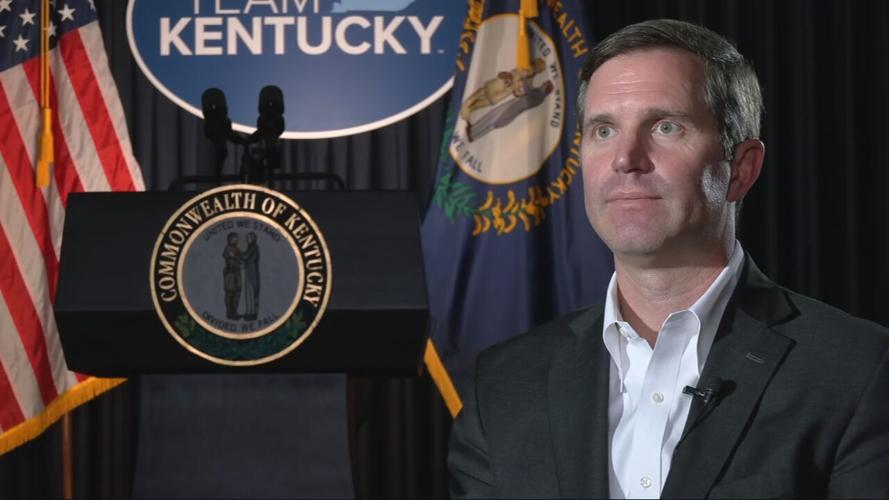
WDRB's Monica Harkins sat down with Beshear to review the year and look forward into the state's future on Tuesday.
Beshear shared his budget on a televised speech Monday night about two weeks before the state's Republican-dominated legislature reconvenes in January. Beshear pressed for boosts in education funding, child care support and pay raises for state workers.
Governors traditionally reveal their budget plans in a televised speech when the legislature is in session. This time, Beshear opted for a pre-session speech after House Republicans preempted him in early 2022 by unveiling their budget plan before the governor could present his blueprint.
"If we can start at a better place in what's the biggest budget in our history, it can mean that more of the transformational investments that we've proposed end up in that final product," Beshear said. "The goal wasn't about who was first or second, it was about if we could get our budget proposal out early, then they can look at it."
Beshear said he doesn't want important funding left out of the proposal. Beshear proposed increased funding for public universities, economic development and foster care. He also proposed hiring more state troopers and social workers, building more juvenile detention centers and investing more in regional airports.
In his latest two-year spending proposal, Beshear called for putting more than $2.5 billion of additional funding into preschool through high school education. He requested a proposed 11% pay raise for teachers and all other public school employees — including bus drivers, cafeteria workers and janitors.
"I believe we're having good dialogue on it, I believe everyone recognizes the overall need not just for teachers, but bus drivers and the rest of staff," Beshear said.
Beshear believes the raises will have a strong affect on local economies since school districts are some areas largest employers. He also hopes lawmakers will take into consideration Tennessee passed a 22% teacher raise this spring.
"That's who we're competing with," he said.
When Kentucky lawmakers meet next month for the 2024 Regular Session of the General Assembly, school choice, and what that could look like is expected to be brought up. Vouchers allow qualifying families to receive a credit to attend alternative schools, like private schools, but opponents say it would take away from public school funding.
Bills promoting charter schools and private school-related tax credits were among the most contentious faced by Kentucky lawmakers in recent years, splintering Republican supermajorities. Beshear vetoed those school-choice measures, but enough GOP lawmakers voted to override his action.
Last December, Kentucky's Supreme Court struck down a state law, House Bill 563, that allowed donors to receive tax credits for supporting private school tuition. The high court said the 2021 measure violated the state's constitution as the justices upheld a lower court ruling.
Beshear wants to see the state fully invest in public schools.
Governor Beshear is doing his end of year, one on one interviews today. We sat down to discuss education, red flag laws and the lessons he hopes other future candidates learn from his campaign. And oh yeah, there’s no presidential aspirations just yet from Beshear. @WDRBNews pic.twitter.com/WcEf3vCmR7
— Monica Harkins WDRB (@MonicaHarkinstv) December 19, 2023
"I oppose anything that would send public dollars to private schools," Beshear said. "The answer is to fully invest and improve our public schools, that way we leave nobody behind."
Beshear has also pushed for universal pre-Kindergarten. Beshear said 54% of Kentucky children aren't ready for Kindergarten when they begin school.
His proposal calls for every 4-year-old in Kentucky to be provided preschool. The governor's budget plan includes $172 million each year of the two-year budget to accomplish that. His similar proposals previously made no headway with lawmakers.
"That will free up the work force and save our parents money," Beshear said.
The program would extend preschool education to an estimated 34,000 additional 4-year-olds, according to Beshear.
Beshear also wants additional funds allocated to support children and the people providing care to them.
Nearly 90 Kentucky foster children have slept on cots in government buildings and showering at YMCAs this year after not being placed in the care they need. The Cabinet for Health and Family Services (CHFS) said 87 foster kids since the beginning of this year have had to spend the night in a social workers office, a hotel or even state park.
The reasons for lack of placement range from a history of violence or fighting to intellectual disabilities.
"We have to find a safe place to have that child until we can make another placement and we are in talks, different groups that provide a lot of services to be able to provide that temporary service," Beshear said.
Beshear admitted Jefferson County Public Schools, the state's largest school district with 96,000 students, has its challenges. JCPS has struggled transporting 65,000 students on school buses this year after changing its busing policy.
Kentucky Republican leaders said they don't plan to draft legislation this upcoming session aimed at splitting up JCPS, rather planning to study the district before deciding if a split is necessary.
Kentucky Gov. Andy Beshear shares his thoughts on this year with a one-on-one interview with WDRB's Monica Harkins.
The idea will be to build a commission to look into the district. The focus on Louisville's public school system stems from its difficult start to the school year, the failed rollout of a new busing system that led to six days of school being canceled.
A group of Kentucky House Republicans sent an open letter to JCPS students, parents and teachers after the first day of school calling the massive bus issues an "epic failure," saying the district "failed in its most fundamental obligation, which is to keep our kids safe."
Meanwhile, Beshear pointed out the legislature cut $20 million from JCPS' transportation funding. JCPS confirmed this number and said all districts received 30% less than they needed to be fully funded for transportation.
Beshear disagrees with the General Assembly's potential attempt to direct the Louisville school district.
"The law sets up our school districts to be locally run," Beshear said. "I don't think it's fair for the General Assembly to say 'we're going to allow for local leadership to run school district A, but if we disagree with them not School District B.'"
He said some of the issues like attendance and behavior aren't specific to just JCPS.
In September, a group of Louisville lawmakers announced they'll introduce legislation called the Safer Kentucky Act, a proposal aimed at reversing what's been a multi-year surge in violent crime. The Safer Kentucky Act covers a lot of ground. One emphasis is an expansion of the death penalty for several types of crimes, including fentanyl dealers, those convicted in a deadly carjacking and those convicted of killing a police officer.
The proposal is highlighted by 18 main points, all focused on addressing violent crimes at every level, from increased police resources in new areas of the state to implementing harsher sentences and tweaking the judicial process.
A draft of the bill was released Friday, but it's unlikely it's in its final form with lawmakers not in session yet.
"I need to see it in writing, right now it's a bunch of bullet points," Beshear said. "Some of it can have some unintended consequences."
"Our focus needs to be on policing, we need to make sure our citizens are safe and also early intervention."
Beshear believes Kentucky should pass a Red Flag Law. Kentucky is not among 19 states that have passed so-called "red flag" or "extreme risk" legislation, including the bordering states of Indiana, Illinois and Virginia. Bills creating such laws have failed to gain traction in the Kentucky General Assembly in recent years, even with bipartisan sponsorship, the backing of mass shooting survivor Whitney Austin and U.S. Senate Minority Leader Mitch McConnell's support of a bill providing funding to states that approve the laws.
A 25-year-old Old National Bank employee shot and killed five co-workers with an AR-15 that he purchased legally from a local gun dealer on April 4, according to police.
"Red flag law respects everyone's Second Amendment rights," Beshear said. "All it does it allow the police to go to courts the moment before someone is about to murder other people."
In his first four years as governor, Beshear has led Kentucky through the COVID-19 pandemic, two deadly natural disasters shook Kentucky to its core, tornadoes tore through Western Kentucky in December, and months later flooding devastated the eastern part of the state, and a mass shooting at Old National Bank.
Through those challenges, Beshear said he's seen Kentuckians support other Kentuckians, rushing to help in the most challenging times.
"Every day brings something different in this job. You can be at the lowest point and the next day you see something miraculous," Beshear said.
He said Kentucky is becoming a leader nationally after economic development and thousands of jobs coming to the state over the past few years.
"We have a record setting economy that we couldn't even have dreamed of before," Beshear said. "Suddenly we're in the national conversation about economic leaders, the hottest for economic development."
And with great success on the books, he hopes others remember to be kind, even in politics.
"We got a chance to leave a better world, more opportunity. And I hope that we can have that leadership both on an economic level but also on a moral level," he said.
With four years left in his final term as governor, Beshear dismissed any notions of planning to pursue federal positions.
"I love being governor, this is where I'm from, this is where we're raising our family," Beshear said. "I have no plans on heading to DC, I don't know what's next for me. And for the first time I'm not worried about it. This is such a special job and I want to spend every day that I have in it left focused on it and I don't want to spend one day looking forward to anything else."
As with any governor's proposal, the legislature will have the final say on the budget — the state's main policy document. The governor can make line-item vetoes to the spending bill, but GOP legislative supermajorities can wield override power. The state's next two-year budget period starts next July 1.
The General Assembly is scheduled to convene on Jan. 2, 2024 for 60 legislative days.
Related Stories:
- Fresh off reelection in Kentucky, Democratic Gov. Beshear presents budget plan in televised speech
- Kentucky governor renews pitch for higher teacher pay, universal pre-K as legislative session looms
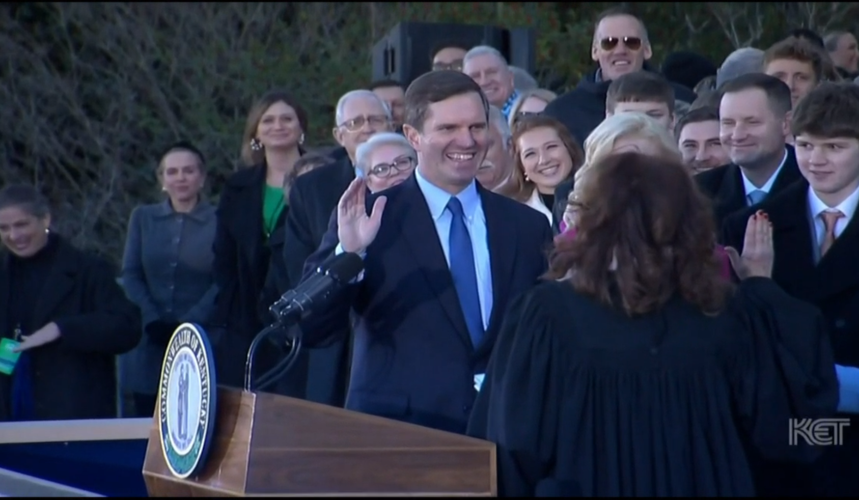
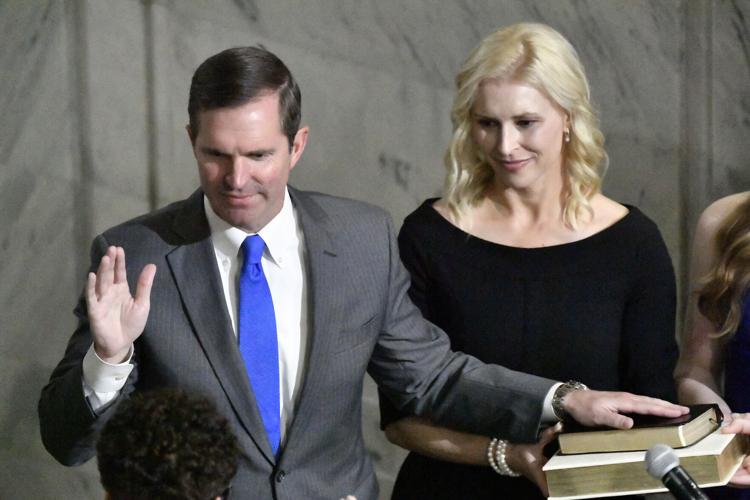
- Historic Day | Beshear sworn-in for 2nd term as Kentucky's Governor during Frankfort ceremony
- Fresh off resounding win, Kentucky Gov. Beshear strives to have 2nd term that 'makes people proud'
- Democratic Gov. Andy Beshear wins reelection in Kentucky
Copyright 2023 WDRB Media. The Associated Press contributed to this report. All Rights Reserved.


