

LOUISVILLE, Ky. (WDRB) -- More than a year after the U.S. Department of Justice released the findings of its yearlong investigation into the Louisville Metro Police Department, citizens are still pushing to see real change.
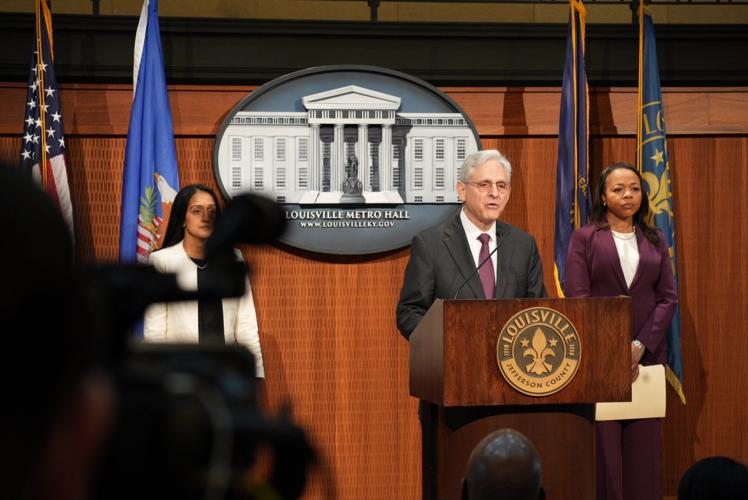
Wednesday evening, officials with the DOJ answered questions from the community about the ongoing consent decree negotiations with the city and LMPD for federal mandated police reform.
"The consent decree requirements are going to be designed to address the legal violations that we found in our investigation," Assistant U.S. Attorney Jessica Malloy said.
The process began more than a year ago, when the DOJ came to Louisville and released a scathing report into the city's police department with its findings from a yearslong investigation prompted by the March 2020 police killing of Breonna Taylor.
In the report, the DOJ said they believe LMPD and Metro Government engaged in practices that violated the U.S. Constitution and federal law for years, including excessive use of force and searches based on invalid search warrants.
The DOJ ordered Louisville's police department to enter a consent decree. The oversight agreement sets tangible requirements for change, metrics to measure improvement and timelines to achieve them. It's all approved by a federal judge, legally binding and then overseen by a independent monitor who must regularly report progress or any problems to the public.
In February, officials with the city and LMPD began negotiations with the DOJ. While work has been done over the last year — with a new police chief and a new mayor — a lot of that work has been done behind the scenes. It's a growing concern for some residents, who attended a forum with DOJ officials Monday evening and said they want real change.
The federal investigation into LMPD cites 63 different incidents of alleged misconduct, according to an appendix of a 90-page report the U.S. Department of Justice released last March following their roughly two-year investigation into LMPD. By 2022, at least nine officers had been convicted in federal court and several more cases are pending.
Examples of excessive force provided in the first section of the appendix include the use of neck restraints and police dogs against "people who pose no threat," an "unreasonable and unsafe" use of tasers, using takedowns, strikes and bodily force "disproportionate to threat or resistance," and escalating encounters, leading to excessive force.
Months after negotiations began, the terms of the legal agreement for police reform are still being hashed out.
"We know how complicated this work is. The consent decree hasn't started, the work hasn't really begun here yet and if we don't have more specific answers for you, it's because it hasn't been decided yet," said Kit Reese, DOJ investigator.
The city still has to agree to the terms of the consent decree, find an independent monitor to oversee the reforms, and appoint a judge to oversee the process.
During another public meeting with DOJ officials a month ago, concerned citizens said their patience is running out to see some real change in the city's police department.
Previous Coverage:
- LMPD reveals reforms being made after Department of Justice mandated changes
- 'I want to be hopeful' | Residents push for real change as LMPD, DOJ consent decree negotiations continue
- Process to reverse bad policing practices in Louisville began 1 year ago with release of DOJ report
- City of Louisville, LMPD officials begin negotiations with DOJ for police reforms
- Louisville police chief testifies DOJ consent decree is in a 'holding pattern,' negotiations haven't begun
- City fights to keep Department of Justice findings out of lawsuits against Louisville police
- LMPD chief says 'many' officers cited in DOJ probe were previously disciplined, but no further investigations
- Greenberg releases details of Louisville police incidents reviewed by DOJ
- 'All we want is justice' | DOJ meets with community members about policing in Louisville
- DOJ investigation cites more than 60 different examples of alleged misconduct by Louisville police
- Calls for more information before LMPD, DOJ negotiate agreement to improve policing in Louisville
- Former Louisville police chief agrees with many items in DOJ report
- 10 years into their consent decree, New Orleans police say Louisville has long road ahead
- Former LMPD officers say changes to department after DOJ probe could take some time
- Louisville police union says DOJ report is 'unfair assessment' of most Louisville police
- Victims of LMPD policing react to federal investigation findings as they continue rebuilding their lives
- What's next: Federal probe prompts mandated reforms in LMPD
- Department of Justice issues scathing report into Louisville police practices
Copyright 2024 WDRB Media. All Rights Reserved.


